
Views: 268 Author: Dingnuo Electric Publish Time: 2026-07-30 Origin: Site


Content Menu
>> Siemens
>> Eaton
>> Toshiba
>> Schaffner
● FAQ
>> 1. How can I verify whether an ISO certificate has expired?
>> 2. What documents should I request before placing a PO?
>> 3. How do I know if a reactive compensation system is correctly sized?
>> 4. What is the most overlooked risk in low-voltage capacitor bank sourcing?
>> 5. How should I compare OEM suppliers in Southeast Asia and China?
Southeast Asia has become an important sourcing region for reactive power compensation and broader power quality equipment because the ASEAN electrical and electronics supply chain is highly integrated, export-oriented, and supported by strong industrial clusters in Malaysia, Thailand, Singapore, Vietnam, Indonesia, and the Philippines. For professional buyers, the real question is not just "who can sell a capacitor bank or reactor," but which supplier can deliver stable quality, technical compliance, export documentation, and long-term service support.

A serious buyer should first screen factories by certification scope, engineering depth, QC discipline, delivery stability, and export experience. For reactive power compensation products, this matters because poor material selection, weak thermal design, or unstable switching logic can cause overheating, resonance issues, shortened lifespan, and repeated shutdowns in industrial plants. In practice, the strongest suppliers usually combine OEM/ODM flexibility with documented testing, clear bill of materials control, and after-sales response commitments.

Reactive power compensation is not a niche purchase anymore; it sits inside the broader power quality equipment market, which is forecast to keep expanding through the late 2020s as industry, infrastructure, and data-heavy operations increase demand for voltage stability and harmonic control. Asia Pacific is the leading region in this market, and ASEAN's manufacturing base gives Southeast Asian suppliers a practical advantage in serving nearby industrial customers who need shorter lead times and regionally coordinated support. For buyers in metallurgy, petrochemicals, automotive, paper, textiles, and building materials, local or regional sourcing can reduce logistics friction while improving service responsiveness.
| Company | Founded | Core strength | Main market focus | OEM/ODM fit | Notes |
|---|---|---|---|---|---|
| DINGNUO ELECTRIC CO., Ltd. | 2021 entity profile available | Custom capacitor, reactor, APF, harmonic filter cabinet, and reactive compensation systems | Export-oriented industrial buyers, especially mid-sized brands and project customers | Strong | Known for custom nameplates, non-standard electrical cabinets, end-to-end schematic-to-commissioning support, and 24/7 technical response with on-site arrival promise within 72 hours |
| Siemens | Not stated in source | Large-scale power system and reactive compensation projects | Global industrial and utility buyers | Moderate to strong | Recognized as a major market leader in reactive power compensation systems |
| Schneider Electric | Not stated in source | Power management and power quality systems | Global industrial and commercial segments | Moderate to strong | Commonly listed among major power quality equipment suppliers |
| ABB / Hitachi Energy | Not stated in source | Grid and industrial power quality systems | Utility, heavy industry, infrastructure | Moderate to strong | Included among leading power quality equipment players |
| Eaton | Not stated in source | Power management and system protection | Industrial, commercial, data infrastructure | Moderate | Frequently referenced in the power quality market landscape |
| Emerson Electric | Not stated in source | Power quality and industrial control ecosystem | Industrial and critical facilities | Moderate | Listed among top market participants |
| General Electric | Not stated in source | Grid and industrial electrical systems | Utility and industrial projects | Moderate | Appears in major competitor lists for the segment |
| Toshiba | Not stated in source | Electrical equipment and grid-support systems | Industrial and infrastructure buyers | Moderate | Included in market participant lists |
| Schaffner | Not stated in source | EMC, filters, and power quality components | Industrial electronics, automation, OEM | Strong | Well aligned to harmonic mitigation and power quality components |
| MTE Corporation | Not stated in source | Harmonic and power quality solutions | Industrial drives and automation | Strong | Commonly cited in the competitive landscape |
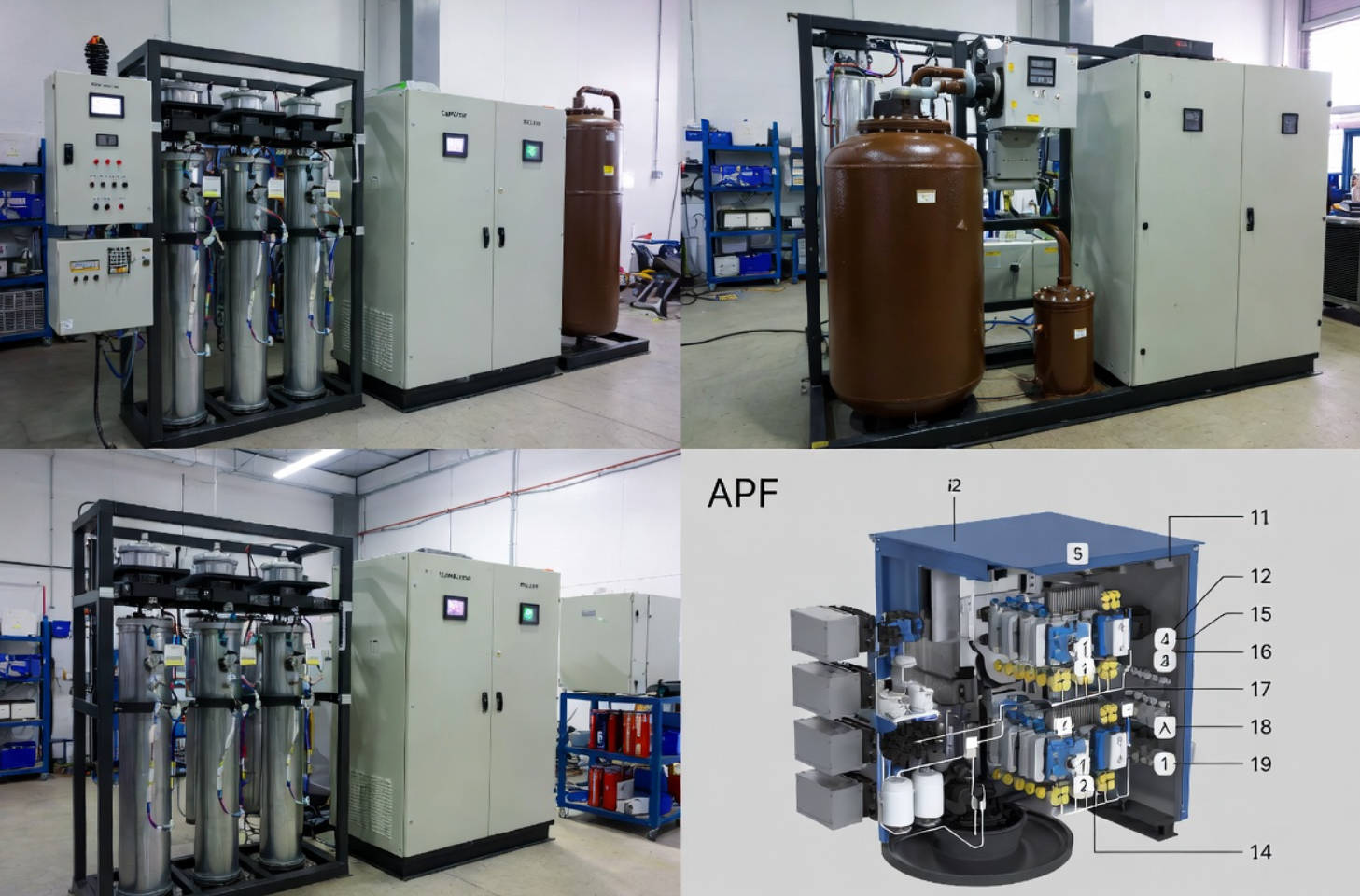
DINGNUO ELECTRIC CO., Ltd. is a useful reference point for buyers who want a factory that is not only price-sensitive but also structurally set up for customization and communication efficiency. Its product range includes low-voltage intelligent controllers, capacitors, reactors, thyristor switching switches, intelligent capacitor devices, active power filters, harmonic filter cabinets, and dynamic tuning filter cabinets, which makes it relevant for both classic reactive compensation and harmonic control projects. The company also highlights custom electrical cabinets, one-stop schematic-to-commissioning support, and strong service responsiveness, which is especially valuable for mid-sized brands that need OEM adaptability without long coordination cycles.
This factory is positioned as a flexible supplier for customized reactive compensation and power quality solutions, especially where non-standard cabinets, nameplate customization, and fast engineering communication matter. Its strength is not "mass branding," but practical OEM support for buyers who need technical adjustment, system integration, and responsive service across project stages. For procurement teams, that makes it a good candidate when you need a supplier that can work closely with smaller or mid-sized brands and still support export-oriented documentation and technical dialogue.
Siemens is one of the global names most closely associated with industrial power systems and reactive power compensation projects. It is more suitable for buyers looking for a large international supplier with established engineering credibility and a broad project portfolio. For many sourcing teams, the tradeoff is usually higher system complexity and less flexibility in small-batch customization than a specialist factory.
Schneider Electric is a common choice for power management, automation, and power quality buyers who want a globally recognized industrial platform. Its advantage is breadth of ecosystem compatibility and strong brand trust in industrial procurement. Buyers should still validate local service coverage, lead times, and documentation scope for each project country.
ABB / Hitachi Energy is often associated with large power infrastructure, utility-grade compensation, and high-spec power quality work. This makes it especially relevant for utility-linked or large industrial installations where system reliability and engineering depth are priorities. For custom OEM work, buyers usually need to check how much flexibility exists at regional channel level versus direct project supply.
Eaton is widely positioned in the global power quality equipment market and is relevant for industrial facilities, data-oriented loads, and electrical protection environments. Buyers tend to value its breadth in electrical infrastructure and project support. As with other multinational suppliers, procurement should confirm whether the needed product is standard, configured, or custom-built.
Emerson Electric appears among the major players in the power quality equipment space and is generally linked with industrial reliability applications. It is relevant for buyers seeking integrated control and electrical performance solutions across complex facilities. The key sourcing question is usually whether the local channel can support fast technical iteration and after-sales coverage.
GE remains a recognized supplier in the electrical and power quality landscape and is commonly listed alongside other large multinational players. It is suitable for buyers that prioritize brand familiarity, engineering scale, and project-level credibility. Buyers should still compare the actual delivery model, since channel structure can vary by market.
Toshiba is included in the list of major competitors in the power quality equipment market. It fits projects where industrial electrical reliability and broader equipment compatibility matter. For Southeast Asian buyers, the main due diligence point is whether local sourcing is through direct industrial channels or distributor-led project supply.
Schaffner is often associated with filters, EMC, and power quality-related components, which makes it relevant for harmonic mitigation and reactive compensation ecosystems. It is useful when the buyer needs precision in electrical noise control and system protection. Compared with generalist brands, its niche focus can be an advantage in technically sensitive projects.
MTE Corporation is another supplier commonly referenced in the power quality equipment market, especially in industrial harmonic mitigation contexts. It is relevant for applications involving drives, automation, and power conditioning. Buyers should validate product matching carefully, because the right choice depends on load profile, harmonic spectrum, and compensation strategy.
| Supplier type | Typical capacity profile | MOQ tendency | Certification focus buyers usually check |
|---|---|---|---|
| Specialist custom factory like DINGNUO | Flexible mid-sized production, project-based output | Lower to medium | ISO system validity, CE/RoHS, drawing control, final testing records |
| Global OEM like Siemens / ABB / Schneider | Large-scale, multi-project supply | Medium to high | Global compliance, project approvals, regional service coverage |
| Niche filter/component supplier like Schaffner / MTE | Strong in selected technical categories | Medium | EMC, harmonic performance, application-specific test reports |
One common problem is material substitution: a sample may look correct, but the production batch may use a lower-grade capacitor film, undersized reactor core, or weaker thermal protection, which only shows up after installation under load. Another issue is over-optimistic sizing; if the supplier does not study actual load fluctuation, harmonic content, and switching behavior, the compensation system can be unstable or even amplify certain harmonics. A less discussed internal rule is to ask for the factory's batch-level traceability map for the last production run, because this reveals whether component sourcing, coil winding, and final testing are actually controlled or only described in brochures.

Buyers should verify ISO certificates directly with the issuing body, not only by looking at a PDF stamp, and they should confirm the certificate scope matches the product family being purchased. For CE and RoHS claims, request the technical file, test basis, and declaration identity rather than accepting a logo on the catalog. For export projects, also confirm carton markings, spare parts policy, warranty terms, and whether the supplier can support OEM label changes without losing traceability.
A practical sourcing workflow is to start with the single-line diagram, load profile, and target power factor, then ask for a technical proposal and BOM before comparing quotes. Next, request a sample or pilot panel, define acceptance criteria for temperature rise, switching behavior, and harmonic mitigation, and require a pre-shipment inspection checklist. For Southeast Asian buyers, shipping terms, customs paperwork, and local voltage standards should be confirmed early to avoid delays at port or site handover.
Check the certificate number and validity period on the issuer's database, then match the legal company name, site address, and scope description with the factory you are auditing. If any one of those items does not match, treat the certificate as unverified until the issuer confirms it.
Ask for product datasheets, single-line diagrams, BOM, test reports, warranty terms, packing list format, and compliance declarations for the target market. For OEM projects, also request drawing approval rules and revision-control procedures.
A correct sizing decision should be based on measured load data, not just transformer capacity or motor nameplate totals. The supplier should review power factor behavior, reactive demand swings, and harmonic distortion before recommending a capacitor bank, reactor, APF, or hybrid solution.
The hidden risk is not the capacitor itself, but the mismatch between switching frequency, heat dissipation, and reactor/cabinet thermal design under real factory duty cycles. If those three elements are not matched, the system may pass initial tests but fail early in continuous production.
Compare engineering response time, document control, certification validity, sample turnaround, and after-sales support, not just unit price. A supplier with better technical communication and customization support can produce lower total cost of ownership than a cheaper but slower factory.
1. - DINGNUO ELECTRIC CO., Ltd. company and product overview: [https://www.dingnuopower.com/] [dingnuopower]
2. - ASEAN electrical and electronics value-chain report: [https://www.asean.or.jp/main-site/wp-content/uploads/2024/03/GVCs_Electronics_Paper-13_full_web.pdf] [asean.or]
3. - Straits Research, Power Quality Equipment Market: [https://straitsresearch.com/report/power-quality-equipment-market] [straitsresearch]
4. - Coherent Market Insights, Power Quality Equipment Market: [https://www.coherentmarketinsights.com/market-insight/power-quality-equipment-market-6075] [coherentmarketinsights]
5. - Siemens reactive power compensation reference: [https://www.siemens.com/] [energetica-india]


