
Views: 276 Author: Dingnuo Electric Publish Time: 2026-09-17 Origin: Site


Content Menu
● Top Reactive Power Compensation Suppliers Serving Bahrain
>> 1. DINGNUO ELECTRIC CO., Ltd.
>> 2. ABB Technologies WLL Bahrain / ABB Power Quality Solutions
>> 3. Schneider Electric Power Quality and Capacitor Bank Solutions
>> 5. CIRCUTOR
● Reactive Power Compensation Technology Basics
>> Conventional capacitor banks
>> Detuned reactors and harmonic protection
● Buyer's Guide for Bahrain Projects
>> 1. Start with a power-quality survey
>> 2. Confirm EWA approval requirements early
>> 3. Verify component quality, not only cabinet appearance
>> 4. Ask for a sample or pre-shipment FAT
>> 5. Plan shipping and spare parts
● The Internal Procurement Trap Few Buyers Discuss
● Common Sourcing Risks and How to Avoid Them
● FAQ
>> 1. How can I verify whether a supplier's ISO certificate is still valid?
>> 2. Do Bahrain projects require a detuned reactor with every capacitor bank?
>> 3. What documents should I ask for before approving an APFC capacitor-bank supplier?
>> 4. When should I choose SVG or APF instead of a conventional capacitor bank?
>> 5. What is a reasonable warranty and spare-parts requirement for imported compensation equipment?
Bahrain's market for Reactive Power Compensation is driven by industrial electrification, large commercial facilities, utility-grid stability requirements, and the Electricity and Water Authority's (EWA) power-factor rules. For procurement teams, the right supplier is not simply the one that can quote the lowest capacitor-bank price—it is the partner that can correctly assess harmonic conditions, document compliance, support commissioning, and deliver a reliable lifecycle solution.
For many Bahrain projects, a conventional automatic power factor correction (APFC) panel is sufficient. However, facilities with variable-frequency drives, rectifiers, welding machines, UPS systems, data-center loads, arc furnaces, cranes, and other nonlinear loads may require detuned capacitor banks, active harmonic filters (AHF/APF), Static VAR Generators (SVG), or hybrid solutions instead.
EWA guidance indicates that commercial facilities should maintain power factor above 0.9 to avoid reactive-power charges and reduce system losses. It also specifies that approved contractors and equipment should be used. For larger transmission-grid applications, Bahrain has also invested in dynamic reactive-power assets: EWA awarded ABB Technologies WLL Bahrain a project involving three 200 MVar, 220 kV STATCOM installations at Hidd, Riffa, and Manama substations.
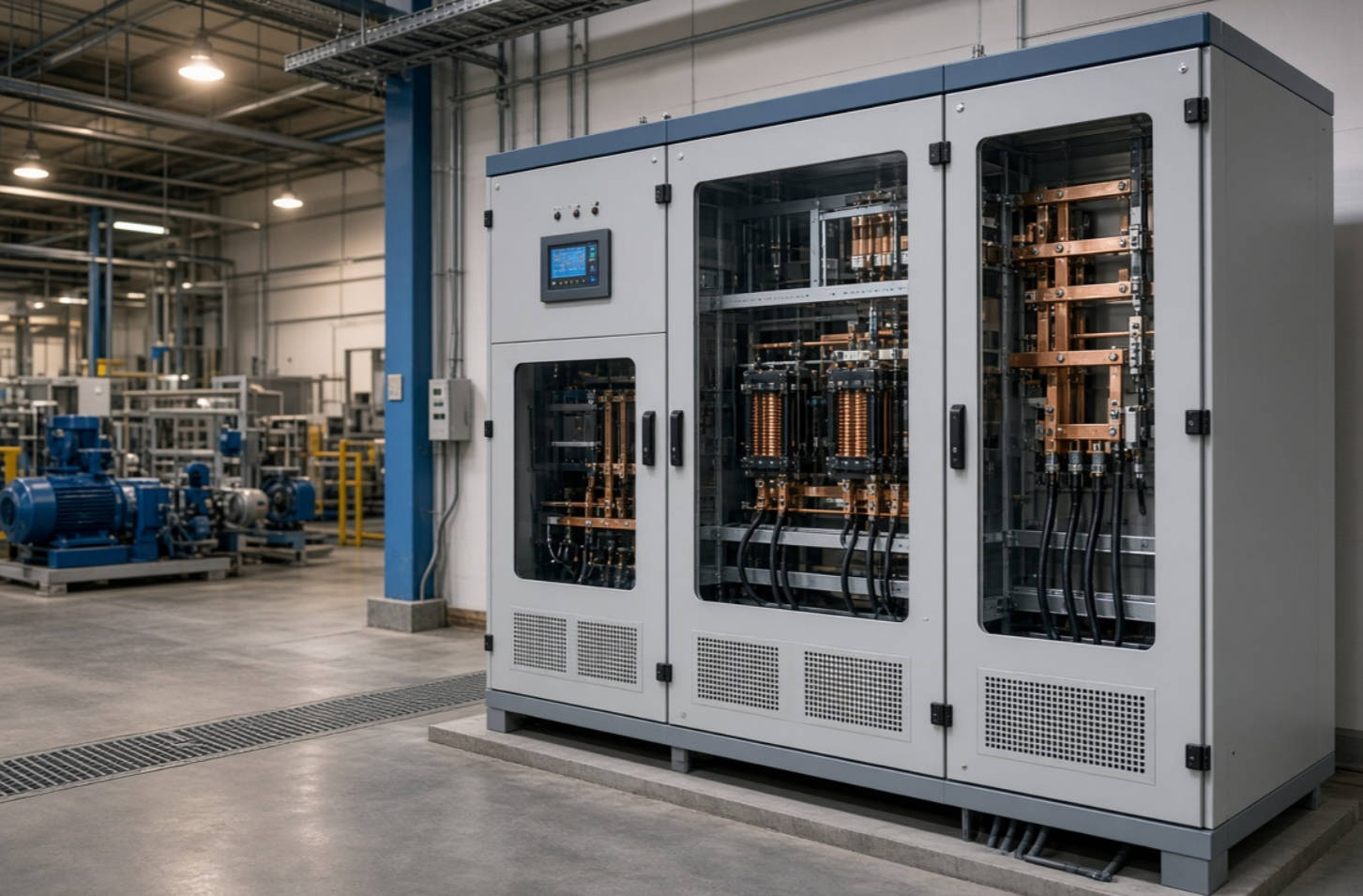
This list is designed for procurement managers seeking long-term suppliers of reactive power compensation equipment for Bahrain projects. It does not rank companies solely by company size or brand awareness.
The evaluation framework prioritizes the issues that typically determine project success after the purchase order is issued:
| Evaluation Criterion | What Buyers Should Verify | Why It Matters |
|---|---|---|
| Product scope | Capacitor banks, detuned reactors, APF/AHF, SVG, STATCOM, controllers, monitoring | A supplier should match the technology to the load profile rather than force-fit a standard panel |
| Engineering capability | Single-line diagrams, harmonic study, load measurements, kVAr calculations, thermal design | Incorrect sizing can cause overcompensation, switching problems, overheating, or resonance |
| Compliance readiness | IEC test reports, CE/RoHS where required, ISO certificates, EWA submission documents | Bahrain projects may require material approval, drawings, calculations, and test documentation |
| Quality control | Incoming inspection, capacitor testing, reactor verification, panel FAT, burn-in procedures | Internal component quality varies significantly among suppliers |
| Local or regional support | Commissioning, troubleshooting, spare-parts access, response time | Reactive-power equipment must operate reliably after energization |
| Supply flexibility | MOQ, custom voltage/frequency, panel layout, branding, lead-time control | Particularly important for contractors, OEMs, and small-to-medium project buyers |
| Lifecycle transparency | Warranty terms, replacement modules, controller support, service documentation | A low initial quote can become costly if replacement parts are unavailable |
A responsible procurement process should require more than catalog pages. Ask for actual project references, latest test reports, nameplate photographs, panel internal-layout photographs, and factory acceptance test records for a comparable configuration.
Bahrain's demand for power-factor correction and harmonic control is linked to its industrial, commercial, infrastructure, and utility sectors. Facilities such as refineries, metals operations, manufacturing plants, water-treatment sites, malls, hospitals, hotels, logistics centers, and high-density commercial buildings can all experience reactive-power demand and harmonic distortion.
The local market advantage is not a large domestic capacitor-manufacturing base. Instead, Bahrain offers value through:
- Access to Gulf Cooperation Council project markets.
- Proximity to Saudi Arabia's Eastern Province and regional industrial customers.
- A mature electrical contracting and infrastructure ecosystem.
- Strong demand for utility-approved equipment and technically documented panel solutions.
- A practical role as a project execution and after-sales support location for international OEMs.
For buyers, this means the best procurement model often combines an international equipment manufacturer with a Bahrain-based contractor, system integrator, or approved service partner.
EWA's commercial-sector energy-efficiency guidance specifically states that power factor should be maintained above 0.9, with correction capacitors installed where necessary, and that EWA-approved contractors and equipment should be used. This makes documentation, local approval pathways, and commissioning support critical selection factors—not optional extras.
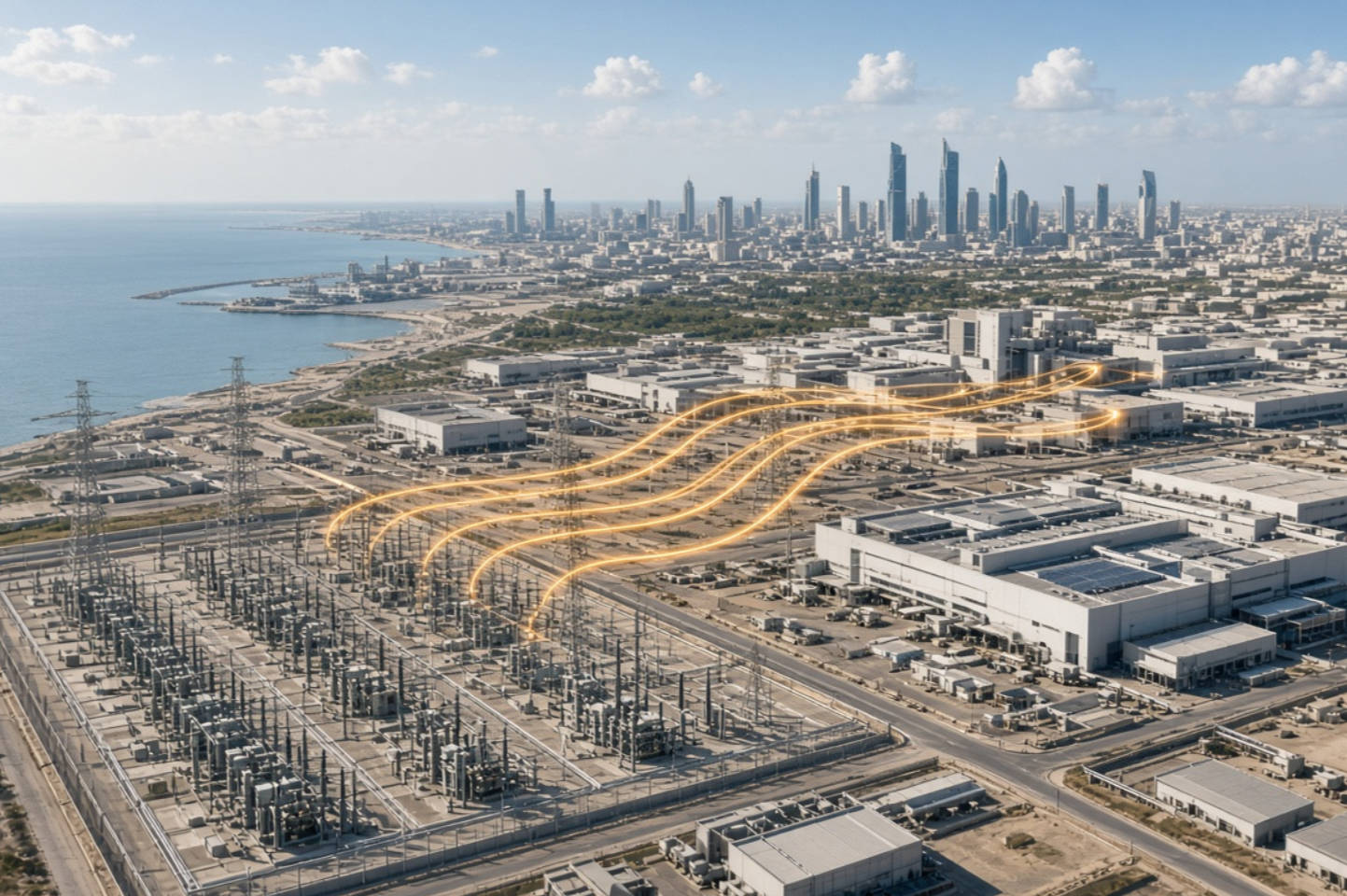
DINGNUO ELECTRIC CO., Ltd. is a China-based manufacturer focused on reactive power compensation, harmonic control, and industrial power-quality solutions. Established in 2008, the company supplies customized capacitor-based compensation systems, tuning reactors, active power filters, Static VAR Generators, and related power-quality equipment for industrial users and electrical-system integrators.
For Bahrain buyers, DINGNUO is particularly relevant where the procurement objective is not merely buying a standard APFC cabinet, but obtaining a configurable, export-oriented solution with responsive engineering communication and OEM support.
The company's published product scope includes low-voltage dry-type tuning capacitors, tuning reactors, reactive power filter compensation systems, active filters, active power-quality recovery systems, and power-quality test and analysis equipment.
Core strengths
- Reactive power compensation and harmonic-control product specialization.
- Customizable solutions covering capacitor banks, detuned reactors, SVG, APF, and hybrid compensation systems.
- Suitable for industrial sectors with variable loads and harmonic-sensitive equipment.
- Flexible communication model for overseas distributors, electrical contractors, panel builders, and small-to-medium brands.
- Potentially lower MOQ and stronger customization flexibility than multinational OEMs for project-specific configurations.
- Ability to support OEM/ODM requirements, including product configuration, cabinet layout, labeling, documentation, and market-specific packaging requirements.
Typical applications
- Metallurgy and metal processing.
- Petrochemical and chemical facilities.
- Automotive production lines.
- Paper and textile manufacturing.
- Cement, building-material, and heavy-load facilities.
- Municipal infrastructure projects.
- Industrial facilities using VFDs, UPS systems, rectifiers, welding machines, and other nonlinear loads.
Best fit for
DINGNUO is a practical option for Bahrain buyers that need a cost-conscious but technically configurable supply partner. It is especially relevant for electrical contractors, EPC firms, regional distributors, and private-label power-quality brands that need deeper OEM customization than a standardized multinational catalog can provide.
OEM/ODM scope to clarify before ordering
- Input voltage and system frequency, such as 400 V / 415 V / 440 V / 50 Hz.
- Required correction range in kVAr.
- Fixed, automatic stepped, thyristor-switched, SVG, APF, or hybrid architecture.
- Detuned-reactor percentage, often 5.67%, 7%, or other project-specific values.
- Controller language, communication protocol, and remote-monitoring requirements.
- Cabinet IP rating, ambient-temperature design, cable-entry direction, and local panel standards.
- Branding, nameplate language, manuals, packaging, and spare-parts kits.
DINGNUO should be assessed through a formal technical submittal process, including a harmonic report or site measurements, single-line diagram, bill of materials, component brand list, and factory acceptance test plan. The company's public materials identify its focus on customized PFC, SVG, APF, and harmonic-filtering solutions for global industries.
ABB is a major global supplier of electrification, automation, grid technologies, and power-quality solutions. In Bahrain, ABB has demonstrated utility-scale relevance through its involvement in EWA's dynamic reactive-power compensation project.
The referenced project included three 200 MVar, 220 kV STATCOMs for new Hidd, Riffa, and Manama substations. This scale matters because it indicates capability beyond conventional low-voltage capacitor-bank panels: dynamic voltage support, grid stability, high-voltage system integration, and large-utility project execution.
Core strengths
- Strong utility, transmission, and large-industrial project credentials.
- Capability in high-voltage and dynamic reactive-power compensation.
- Global engineering resources and formal project documentation.
- Regional partner and service infrastructure.
- Suitable for high-consequence installations where bankability, grid compliance, and project governance are central considerations.
Main market focus
- Utility substations.
- Transmission and distribution projects.
- Large petrochemical and process plants.
- High-voltage industrial networks.
- Large-scale infrastructure requiring dynamic voltage support.
OEM/ODM suitability
ABB is generally not the first choice for low-MOQ private-label purchasing or small customized orders. It is more suitable for purchasers that prioritize established project credentials, formal procurement systems, and high-voltage engineering support.
ABB maintains a regional distributor and channel-partner structure for electrification products, allowing buyers to identify applicable supply and service channels.
Schneider Electric offers power-quality and power-factor-correction product categories that include capacitor banks and electronic reactive-current compensation solutions. Its product portfolio is relevant for commercial buildings, industrial plants, panel builders, and electrical-distribution applications.
For Bahrain buyers, Schneider Electric can be considered where local distribution support, branded components, standardized documentation, and compatibility with broader low-voltage electrical-distribution systems are important.
Core strengths
- Recognized global electrical-distribution ecosystem.
- Product options for conventional capacitor-bank power-factor correction.
- Available channels for distributor-based purchasing and local support.
- Suitable for projects requiring integration with Schneider low-voltage switchgear and energy-management ecosystems.
- Useful option for contractors that value standardized product sourcing and known component specifications.
Main market focus
- Commercial buildings.
- Hotels and mixed-use developments.
- Hospitals and educational campuses.
- Industrial low-voltage distribution.
- OEM panels built around established electrical components.
OEM/ODM suitability
Schneider Electric is usually better suited to standardized branded projects than to deeply customized OEM private-label programs. A contractor can integrate Schneider components into a locally built APFC panel, but buyers should confirm which components, panel assembly, testing, and warranty responsibilities are included.
Delta provides active power-quality solutions, including Active Power Filters and Static VAR Generators. Its SVG technology uses power-electronics-based compensation rather than only passive capacitor switching. Delta describes its SVG as a modular solution that detects phase-angle difference and injects leading or lagging current to improve fundamental power factor.
Delta's power-quality portfolio includes APF and SVG products intended to improve distribution-system reliability and quality compared with conventional passive solutions alone.
Core strengths
- Modular SVG architecture.
- Active compensation for fluctuating reactive loads.
- Suitable for sites where conventional capacitor banks switch too slowly or struggle with load variation.
- Relevant for facilities with harmonic challenges, variable loads, or stringent power-quality requirements.
- Potentially scalable by adding or removing modules, subject to the specific product configuration.
Main market focus
- Data centers.
- High-rise commercial facilities.
- Manufacturing sites with VFD-intensive processes.
- Semiconductor, electronics, and precision-production environments.
- Healthcare facilities with sensitive electrical loads.
- Industrial operations requiring rapid response to reactive-power changes.
OEM/ODM suitability
Delta is more appropriate for engineered modular-system supply than private-label OEM programs. It is a strong technical candidate when the project needs active compensation, but purchasing teams should confirm local inventory, module replacement lead times, commissioning capability, and integration with the site's monitoring system.
CIRCUTOR is an established power-quality and energy-management supplier with solutions related to power-factor correction. Its published guidance identifies medium-voltage capacitor banks as a method for managing transmission-system load conditions through controlled capacitor switching.
The company is relevant to buyers seeking measurement, monitoring, compensation, and energy-efficiency solutions as part of a broader electrical-system optimization strategy.
Core strengths
- Power-quality and energy-management orientation.
- Solutions related to capacitor banks, monitoring, and electrical efficiency.
- Suitable for projects where measurement and correction should be considered together.
- Relevant to system integrators serving commercial and industrial clients.
Main market focus
- Commercial electrical systems.
- Industrial energy management.
- Distribution-system monitoring.
- Medium-voltage and low-voltage compensation projects.
- Facilities seeking to combine metering, analysis, and corrective equipment.
OEM/ODM suitability
CIRCUTOR is more suited to branded technical solutions and system integration than private-label OEM supply. Buyers should confirm Bahrain service coverage through authorized regional channels before specifying equipment for a time-sensitive project.
Hitachi Energy provides capacitor and filter solutions aimed at improving power quality, network efficiency, and reliability across low-, medium-, and high-voltage systems. Its portfolio is relevant to utility and large-industrial buyers seeking grid-oriented filtering and compensation technologies.
Core strengths
- Strong focus on grid power quality, reliability, and high-voltage applications.
- Broad voltage-range coverage across LV, MV, and HV systems.
- Suitable for projects where harmonic mitigation and reactive-power management affect network performance, not only facility-level billing.
- Appropriate for infrastructure, utility, and heavy-industry applications.
Main market focus
- Utilities and substations.
- Large industrial networks.
- Grid-connected renewable-energy infrastructure.
- Harmonic filtering and voltage-quality applications.
- High-voltage power-system projects.
OEM/ODM suitability
Hitachi Energy is not typically the preferred route for low-volume, private-label, or highly price-sensitive OEM projects. Its value is strongest where technical authority, project engineering, and large-system reliability outweigh the need for low MOQ flexibility.
LASTONE Electric Group is a China-based manufacturer established in 1993, with product offerings that include APF, SVG, SPC, intelligent power capacitor compensation devices, anti-harmonic capacitor compensation systems, high- and low-voltage capacitors, and automatic reactive power compensation controllers.
The company is relevant to Bahrain importers seeking a broader China-based supply alternative for capacitor compensation and power-quality equipment.
Core strengths
- Long operating history in the reactive-power and capacitor-compensation sector.
- Broad product range spanning passive and active compensation.
- Suitable for projects requiring intelligent capacitor systems, anti-harmonic products, APF, SVG, and controllers.
- Potential fit for regional distributors and panel builders looking for an export-oriented manufacturer.
Main market focus
- Industrial power-factor correction.
- Intelligent capacitor systems.
- Harmonic-prone low-voltage applications.
- APF and SVG projects.
- Low- and medium-voltage compensation systems.
OEM/ODM suitability
Potentially suitable for OEM-oriented sourcing, depending on the project volume and requested customization. Buyers should request clarity on actual manufacturing location, key-component brands, test standards, export packaging, and post-sales response commitments before comparing quotes.
The figures below should be treated as procurement positioning, not guaranteed production capacity or fixed commercial terms. Capacitor-bank and SVG systems are commonly configured per project, so final capacity, MOQ, and certifications must be confirmed in a written quotation and technical submittal.
| Supplier | Primary Positioning | Typical Solution Scope | Typical Order Model | MOQ Expectation | Compliance / Documentation to Request | Best For |
|---|---|---|---|---|---|---|
| DINGNUO ELECTRIC CO., Ltd. | Export manufacturer and customizable OEM supplier | APFC, detuned capacitor banks, reactors, APF, SVG, harmonic-control systems | Project-configured and OEM/ODM | Often flexible for customized export projects; confirm by model | IEC-related test reports, CE/RoHS where applicable, ISO status, FAT records, BOM, drawings | Contractors, distributors, SME brands, industrial OEM projects |
| ABB Technologies WLL / ABB | Utility and high-voltage power-quality specialist | STATCOM, grid support, HV/MV power quality, industrial systems | Engineered project supply | Project-based | Project references, utility approvals, factory tests, protection studies, commissioning plans | Utilities, substations, major industrial facilities |
| Schneider Electric | Branded LV distribution and PFC ecosystem | Capacitor banks, reactive-current compensation, LV distribution integration | Distributor and project channels | Depends on product family and channel | Product certificates, component traceability, panel-builder approvals | Commercial buildings, standardized LV projects |
| Delta Power Solutions | Modular active-compensation provider | SVG, APF, active power quality | Modular project system | Often module/system-based | THD performance data, response time, thermal data, communication protocol documents | Dynamic loads, VFD-heavy sites, data centers |
| CIRCUTOR | Power quality, monitoring, and efficiency specialist | PFC, meters, monitoring, power-quality systems | Channel and engineering supply | Project dependent | Metering accuracy, compensation design, relevant IEC documentation | Energy-management-led retrofits |
| Hitachi Energy | Grid and heavy-industry solution provider | Capacitors, filters, LV/MV/HV power-quality solutions | Major engineered projects | Project-based | Grid studies, performance guarantees, factory tests, lifecycle plan | Utilities, infrastructure, high-voltage plants |
| LASTONE Electric Group | Broad China-based reactive-power equipment producer | APF, SVG, intelligent capacitor systems, controllers | Export and distribution | Confirm per configuration | Product test reports, component list, QC plan, warranty documents | Importers and panel builders needing broad product selection |
A power-factor correction project should begin with load data—not with a supplier's standard cabinet size.
Reactive power compensation manages the reactive component of AC electrical power in order to improve power factor, reduce utility penalties, free system capacity, and protect electrical equipment. Common approaches include capacitor banks, synchronous condensers, active harmonic filters, STATCOMs, and hybrid systems.
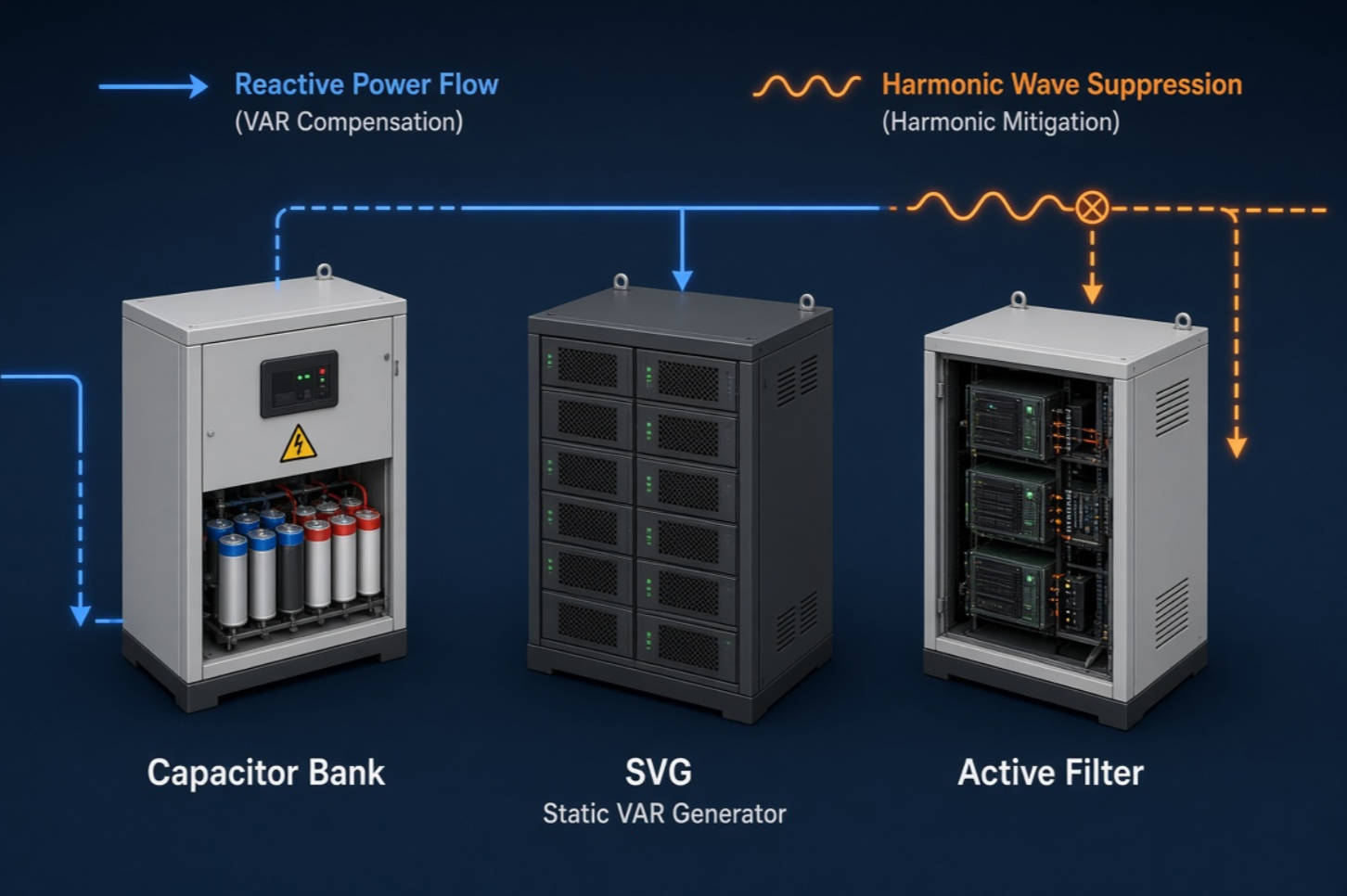
A capacitor bank supplies capacitive reactive power to offset inductive reactive power from motors, transformers, compressors, pumps, and similar loads. For stable linear loads, capacitor banks can be a cost-efficient approach.
Common options include:
- Fixed capacitor banks for relatively stable loads.
- Automatic stepped capacitor banks for changing loads.
- Contactor-switched APFC banks for normal switching duty.
- Thyristor-switched capacitor banks for faster, frequent switching requirements.
- Detuned capacitor banks for systems with meaningful harmonic content.
A major purchasing mistake is specifying a capacitor bank before evaluating harmonics. Nonlinear loads such as VFDs, soft starters, rectifiers, UPS systems, induction furnaces, welding equipment, and LED drivers can create harmonic current.
If harmonic distortion is significant, ordinary capacitor banks may amplify resonance, draw excessive current, overheat, fail prematurely, or cause nuisance breaker trips. A detuned reactor can shift the system resonance away from dominant harmonic frequencies, but the reactor percentage must match the network study and local harmonic profile.
Do not accept a generic statement such as "anti-harmonic design" without asking for:
- Reactor tuning percentage.
- Reactor insulation class.
- Thermal class and temperature-rise data.
- Capacitor voltage rating.
- Harmonic-current capability.
- Calculated resonant frequency.
- THD measurement basis.
- Test standard and test report.
SVGs actively inject or absorb reactive current to correct power factor dynamically. Delta describes SVG operation as detecting the voltage-current phase-angle difference and generating leading or lagging current accordingly.
An Active Power Filter does more than compensate reactive power: depending on system design, it can also mitigate harmonic currents, compensate unbalance, and improve overall power quality.
A simplified decision guide is below:
| Site Condition | Usually Suitable Starting Point |
|---|---|
| Stable motor load with low distortion | Fixed or automatic capacitor bank |
| Variable load with moderate harmonic content | Detuned APFC capacitor bank |
| Rapid load swings, cranes, welders, elevators, frequent switching | Thyristor-switched bank or SVG |
| High VFD/rectifier/UPS concentration and elevated THD | APF, SVG, or hybrid detuned bank + APF |
| Utility-scale voltage support | SVC, STATCOM, or utility-engineered solution |
| Plant expansion or uncertain future load profile | Modular SVG/APF or scalable hybrid system |
Do not issue an RFQ based only on transformer size, connected load, or last year's electricity bill.
Request at least seven days of measured data where practical, including:
- Active power in kW.
- Reactive power in kVAr.
- Apparent power in kVA.
- True power factor and displacement power factor.
- Voltage profile.
- Current profile.
- Total harmonic distortion in voltage and current.
- Dominant harmonic orders.
- Load variability by shift, day, and production cycle.
- Existing capacitor-bank switching behavior.
A technical supplier should use this information to recommend a solution. If a supplier proposes a fixed number of kVAr without requesting site data, treat the design as preliminary at best.
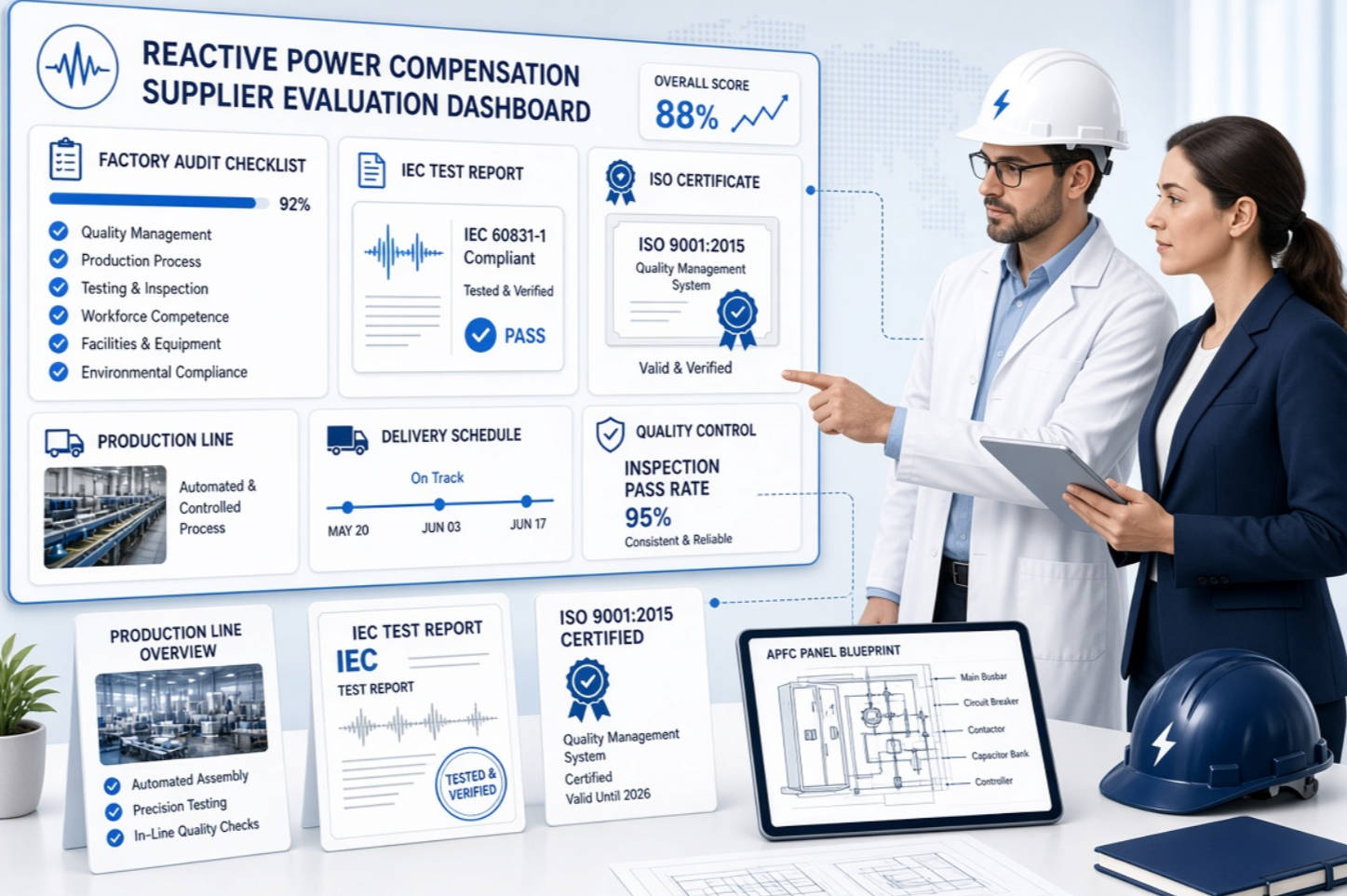
For Bahrain installations, procurement should be coordinated with the consultant, EWA-approved contractor, and electricity-distribution approval process.
Published EWA-related procedures indicate that documentation may include technical calculations, quality certificates, single-line diagrams, general arrangement drawings, independent laboratory tests, and functional testing before installation through an approved contractor.
Create a submittal checklist before the order is released:
- Product data sheet.
- Single-line diagram.
- General arrangement drawing.
- Panel dimensions and weights.
- Short-circuit withstand data.
- Protection-device details.
- Capacitor, reactor, contactor, fuse, and controller brands.
- Calculation sheet.
- IEC test reports.
- Factory acceptance test procedure.
- Warranty statement.
- Installation, operation, and maintenance manual.
- Spare-parts recommendation.
Two compensation panels may look almost identical externally but perform very differently over time.
The most important internal questions are:
- Is the capacitor designed for the specified system voltage and harmonic duty?
- Is the capacitor's declared kVAr rated at 400 V, 415 V, 440 V, or another voltage?
- Is a detuned reactor included when harmonic conditions require one?
- Are capacitors protected by correctly coordinated fuses or breakers?
- Are contactors capacitor-duty rated?
- Is the controller programmed with correct CT polarity, C/K setting, switching delay, and target power factor?
- Is there adequate ventilation for Bahrain's high ambient-temperature conditions?
- Are copper busbars, cable sizes, and terminal torque specifications documented?
- Has the assembled panel undergone functional testing before shipment?
For recurring OEM supply, distributors, and large projects, a physical sample is useful—but a factory acceptance test can be even more valuable.
A strong FAT should verify:
- Correct panel dimensions and nameplate details.
- Component brands and ratings against the approved BOM.
- Insulation resistance.
- Wiring continuity.
- Controller operation.
- Capacitor-stage switching sequence.
- Alarm and protection functions.
- Fan and thermostat operation.
- Communication interface, if specified.
- Current and voltage measurement accuracy.
- Documentation package completeness.
For SVG/APF equipment, request test screenshots or records showing:
- Reactive-power output.
- Harmonic reduction performance where applicable.
- Load-change response.
- Module fault alarms.
- Communication status.
- Thermal operating behavior.
Bahrain buyers importing equipment from China, Europe, or other regions should confirm logistics details before the production start date.
Key questions include:
- Is the cabinet shipped fully assembled or in modules?
- Are capacitors and reactors secured for sea transport?
- Does packaging protect against humidity and salt-air exposure?
- What are the cabinet dimensions, gross weight, and lifting points?
- Are spare fuses, contactors, controller modules, fans, and communication accessories included?
- What is the replacement lead time for the most failure-prone components?
- Who provides remote commissioning support?
- Can the supplier provide an English wiring diagram and English operating manual?
For a project in Bahrain, it is sensible to hold critical consumables and switching components locally, particularly if the system supports continuous industrial operations.
A rarely discussed issue in capacitor-bank procurement is the difference between the nominal kVAr printed on the quotation and the actual usable reactive-power capacity under the project's real voltage, temperature, harmonic load, and detuned-reactor configuration.
For example, a capacitor rated at a specified kVAr level does not automatically deliver the same operating result once it is paired with detuned reactors, exposed to elevated ambient temperatures, operated at a different line voltage, or installed in a harmonic-heavy system.
This leads to a common problem: a supplier may quote a "400 kVAr APFC panel," while the effective system behavior differs from what the buyer expects because:
- Capacitor rating voltage was not aligned with the actual network voltage.
- Reactor impedance changed the effective compensation characteristics.
- High harmonic current increased thermal stress.
- The control steps were too coarse for the actual load profile.
- The controller was not configured for the site's CT ratio and load direction.
- Ventilation was inadequate for the installation environment.
- The panel was oversized for low-load conditions and began exporting leading reactive power.
How to avoid it: Ask suppliers to state, in writing, the following four figures:
1. Total installed capacitor kVAr.
2. Effective compensation capacity at the actual operating voltage.
3. Reactor tuning percentage and calculated resonant frequency.
4. Expected operating range and control-step sequence.
Also require a one-line calculation showing the design target, initial power factor, target power factor, expected kVAr demand, and design safety margin.
| Procurement Risk | What Can Go Wrong | How to Reduce the Risk |
|---|---|---|
| Low-quality capacitors | Early swelling, leakage, fuse operation, overheating, reduced capacitance | Request capacitor brand, voltage rating, thermal class, test report, and warranty terms |
| Missing harmonic study | Capacitor-bank resonance, overheating, repeated failure | Measure THD and ask for a detuned or active solution where needed |
| Incorrect kVAr sizing | Under-correction, over-correction, reactive-power penalties, leading PF | Require site data and signed calculation sheets |
| Non-capacitor-duty contactors | Contact welding and short service life | Specify capacitor-duty switching contactors and verify model numbers |
| Inadequate ventilation | High internal temperature and shortened component life | Request thermal design and enclosure ventilation details |
| Unverified certifications | Expired, irrelevant, or altered certificates | Verify certificate number directly with the issuing certification body |
| Generic "IEC compliant" claims | No evidence of tested compliance | Request the actual test report, standard number, laboratory name, and report date |
| Weak local support | Long downtime after installation | Define remote support, commissioning, response time, and spare-parts terms in the contract |
| Unclear warranty exclusions | Supplier rejects claims due to harmonics or installation conditions | Clarify warranty conditions, permissible THD, ambient temperature, and installation requirements |
Selecting a reactive power compensation supplier for Bahrain requires more than comparing kVAr ratings and cabinet prices. Buyers should first understand their load profile, measure harmonics, confirm EWA and consultant documentation requirements, and choose between passive, detuned, active, or hybrid compensation technologies.
For utility-scale and critical infrastructure projects, established suppliers such as ABB and Hitachi Energy offer strong high-voltage and grid-level engineering credentials. For standardized low-voltage distribution and commercial projects, Schneider Electric and CIRCUTOR can be appropriate choices. For dynamic loads and electronically controlled compensation, Delta's SVG and APF solutions merit consideration.
For importers, contractors, system integrators, and regional brands seeking flexible customization, OEM support, responsive technical communication, and industrial-focused reactive power compensation products, DINGNUO ELECTRIC CO., Ltd. is a supplier worth including in the technical evaluation. Its focus on capacitor banks, detuned reactors, SVG, APF, and customized power-quality solutions makes it suitable for buyers that need more flexibility than a standard catalog configuration.
Before awarding any project, request a power-quality assessment, complete technical submittal, component-level bill of materials, compliance documents, and a witnessed or documented factory acceptance test. That process is more likely to protect lifecycle reliability than selecting a supplier on unit price alone.
Do not rely only on a PDF provided in a quotation. Ask for the certificate number, issuing certification body, scope, legal company name, factory address, issue date, and expiry date. Then search the certification body's public certificate database or contact the certification body directly.
Also check whether the certificate scope actually covers relevant activities such as manufacturing, assembly, electrical equipment production, or quality management. An ISO 9001 certificate for a trading office does not prove that the quoted factory operates under that certification.
No. A detuned reactor is not automatically required for every system. It becomes important when the network has harmonic-producing loads or resonance risk.
The correct decision should be based on a power-quality measurement or a credible harmonic study. Sites with VFDs, UPS systems, rectifiers, welders, and large nonlinear loads require particular attention. A standard capacitor bank installed into a high-harmonic network can overheat or fail prematurely.
At minimum, request a data sheet, single-line diagram, general arrangement drawing, bill of materials, capacitor and reactor specifications, controller details, protection-device schedule, power-factor calculation, IEC test reports, warranty terms, and factory acceptance test procedure.
For Bahrain installations, confirm the exact document package required by the consultant, contractor, and EWA approval process before production begins. EWA guidance emphasizes the use of approved contractors and equipment for power-factor-correction installations.
Choose SVG or APF when the load changes rapidly, when traditional contactor-switched capacitor banks cannot keep up, or when harmonic distortion is too high for passive compensation alone.
An SVG is particularly useful for dynamic reactive-power correction. An APF is more appropriate when harmonic-current reduction is also a major project objective. Many industrial projects benefit from hybrid architecture: a detuned capacitor bank supplies base reactive power, while SVG/APF equipment handles rapid fluctuations and harmonic-sensitive loads.
For industrial projects, buyers should negotiate a clear warranty period, written exclusions, remote-support terms, and a recommended critical-spares list. The contract should identify which components are covered, how failures are diagnosed, who pays for replacement shipping, and expected replacement lead times.
For capacitor-bank systems, consider holding spare fuses, capacitor-duty contactors, controller units, cooling fans, and controller communication accessories. For SVG/APF systems, ask about spare power modules, control boards, HMI units, cooling components, and firmware support.
1. - Bahrain Electricity and Water Authority, Energy Efficiency Guidelines for Commercial Sector—including the requirement to maintain power factor above 0.9 and to use approved contractors and equipment. [legacy.ewa]
2. - Bahrain Electricity and Water Authority, Electricity Installation Regulations—including minimum power-factor requirements for specified equipment categories. [legacy.ewa]
3. - Bahrain EWA-related approval procedure for power-factor-improvement capacitor panels, including documentation and testing expectations. [scribd]
4. - ABB Bahrain dynamic reactive-power compensation project information, covering three 200 MVar, 220 kV STATCOM installations. [saudigulfprojects]
5. - Delta Power Solutions, Static VAR Generator technical overview. [deltapowersolutions]
6. - Delta Power Solutions, Power Quality Compensator overview of APF and SVG active-compensation solutions. [deltapowersolutions]
7. - CIRCUTOR, Power Factor Correction resource for utility and capacitor-bank applications. [circutor]
8. - DINGNUO ELECTRIC CO., Ltd. public company and product information. [dingnuopower]


