
Views: 269 Author: Dingnuo Electric Publish Time: 2026-08-06 Origin: Site


Content Menu
● Vietnam's Position in Reactive Power Compensation
● How Experienced Buyers Evaluate High‑Quality Suppliers
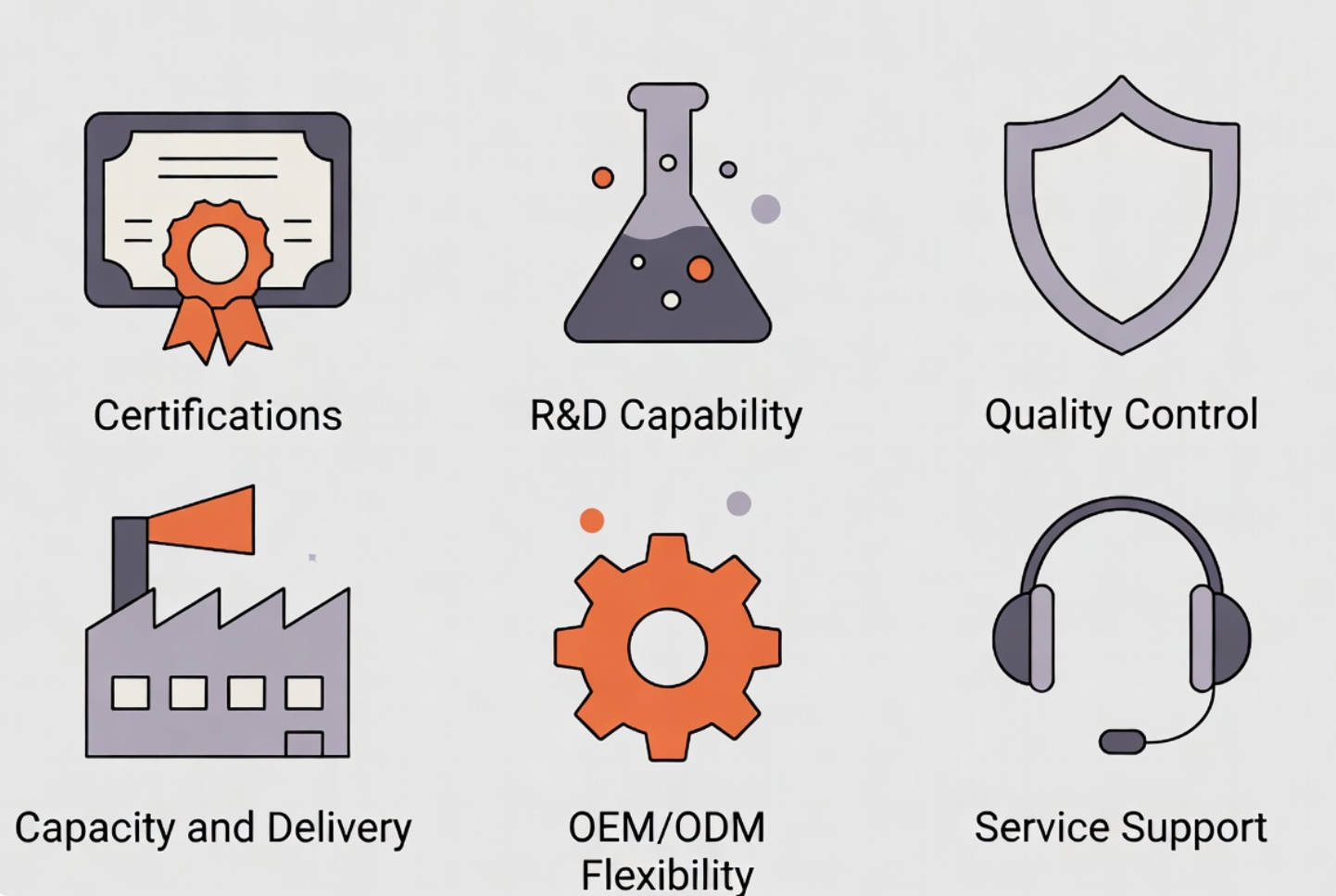
>> 1. Factory certifications and compliance
>> 2. R&D and engineering capability
>> 3. QC processes and traceability
>> 4. Production capacity and delivery stability
>> 5. OEM/ODM flexibility and communication
● Technical Perspective: What Reactive Power Compensation Really Involves
>> Key equipment and system types
>> Materials, design and process standards
● Vietnam's Industrial Cluster Advantage
● Transparent Selection Criteria for This Top Supplier List
● Top Reactive Power Compensation Manufacturers and Suppliers Serving Vietnam
>> 1. DINGNUO ELECTRIC CO., Ltd. – Flexible OEM Partner for Vietnam Projects
>> 2. ABB Ltd. – High‑Voltage Capacitors and Grid Solutions
>> 3. Siemens AG – Integrated Power Quality Solutions
>> 4. Schneider Electric – Industrial Power Factor Correction
>> 5. Regional Cabinet Manufacturers Supplying ASEAN Projects
>> 6. Vietnam‑Based Electrical Panel and Cabinet Manufacturers
● Comparative Overview: Supplier Archetypes for Vietnam Projects
● Hidden Industry Pain Points and Internal Pitfalls
>> 1. Material downgrading that still passes initial tests
>> 2. Design changes without synchronized BOM and QC updates
>> 3. Excellent samples but downgraded mass production
>> 4. Inadequate harmonic assessment leading to system failure
>> 5. Expired or inappropriate certifications
● Buyer's Guide: Verifying Factories, Samples and Logistics
>> 1. Verifying factory and certifications
>> 2. Sample and pilot‑lot strategy
>> 3. Logistics and packaging for Vietnam projects
>> 4. Contract and warranty clauses
● FAQ: Advanced Procurement Questions
>> Q1. How can we verify whether a supplier's ISO certification is still valid and covers our products?
>> Q3. How can we assess whether a compensation cabinet design is robust under high harmonic levels?
>> Q4. For Vietnam projects, should we prioritize local integrators or overseas OEM manufacturers?
>> Q5. How can we benchmark the lifetime cost of different reactive power compensation solutions?
Vietnam has emerged as a strategic hub for power quality equipment, including reactive power compensation, thanks to rapid industrialization, strong FDI into electronics and manufacturing, and a fast‑growing power sector. Installed power capacity in Vietnam is projected to reach over 95 GW by 2026 and grow to around 153 GW by 2031, driven by industrial parks, data centers and renewables. As voltage levels increase and networks become more complex, industrial and utility users are investing heavily in capacitor banks, reactors and compensation cabinets to stabilize voltage, improve power factor and reduce losses.
Global market studies show that power quality equipment and reactive power compensation solutions are expanding steadily, with Asia‑Pacific leading growth due to grid modernization and stricter power quality regulations. Vietnam is part of this trend, with demand for power factor correction and harmonic mitigation in metallurgy, petrochemical, automotive, paper, textiles, building materials and large municipal projects. For procurement managers, this means Vietnam‑related projects offer both opportunities and risks: the right supplier can improve reliability and cost efficiency; the wrong one can trigger frequent failures, penalties and unplanned downtime.
From an experienced industrial buyer's viewpoint, identifying a reliable reactive power compensation partner goes far beyond comparing prices. Professional procurement teams typically assess suppliers against at least five dimensions.
A qualified factory should be able to demonstrate:
- Valid ISO 9001 (quality), ISO 14001 (environment), and ISO 45001 (occupational health and safety), covering the relevant production site.
- Product‑level certifications such as CE and RoHS, and where necessary UL/CSA or country‑specific marks, aligned with the project's destination markets.
- Type‑test reports for capacitors and reactors (short‑circuit withstand, dielectric strength, temperature rise, partial discharge) from recognized laboratories.
For Vietnam projects, compliance with IEC 60831 (low‑voltage power capacitors), IEC 60871 (high‑voltage capacitors), IEC 60076 (reactors and transformers), and IEC 61439‑1/‑2 (low‑voltage switchgear assemblies) is particularly important.
Reactive power compensation is not simply about adding capacitors:
- Suppliers must be able to design LV and MV capacitor banks, shunt reactors and hybrid compensation cabinets tailored to site‑specific load profiles and harmonic conditions.
- In‑house electrical engineers should be capable of power factor correction studies, harmonic analysis and optimized filter design (detuned and tuned filters, anti‑resonance strategies).
- Continuous product improvement is critical: adoption of advanced dielectric materials, compact modular designs, and integration with monitoring and control systems.
Robust quality control and traceability practices are essential:
- Documented incoming material inspection (film, core steel, copper conductors, insulation systems), in‑process testing, and final routine tests.
- Batch‑level traceability for critical components (capacitor elements, reactors, switching devices) to support warranty, root‑cause analysis and failure prevention.
- Clear acceptance criteria for capacitance tolerance, loss tangent (tan δ), partial discharge, temperature rise and mechanical robustness.
Procurement managers must ensure that the supplier can support both base load and peak project demands:
- Transparent monthly or annual output capacity for capacitor banks and reactors, matched to planned rollout schedules.
- Capability to handle project peaks without relaxing QC standards, backed by historical on‑time delivery records and references.
- Strong coordination with logistics providers for on‑time shipments to Vietnam ports and inland sites, considering weather and infrastructure constraints.
In global projects, OEM/ODM depth and communication quality often determine long‑term success:
- Ability to provide genuine OEM/ODM: adapting cabinet design, branding, documentation languages and wiring standards to the buyer's requirements.
- Fast response to RFQs, accurate CAD drawings, and clear technical communication in English (and other languages when needed).
- Transparent after‑sales support, including remote commissioning assistance and cooperation with local service partners in Vietnam.
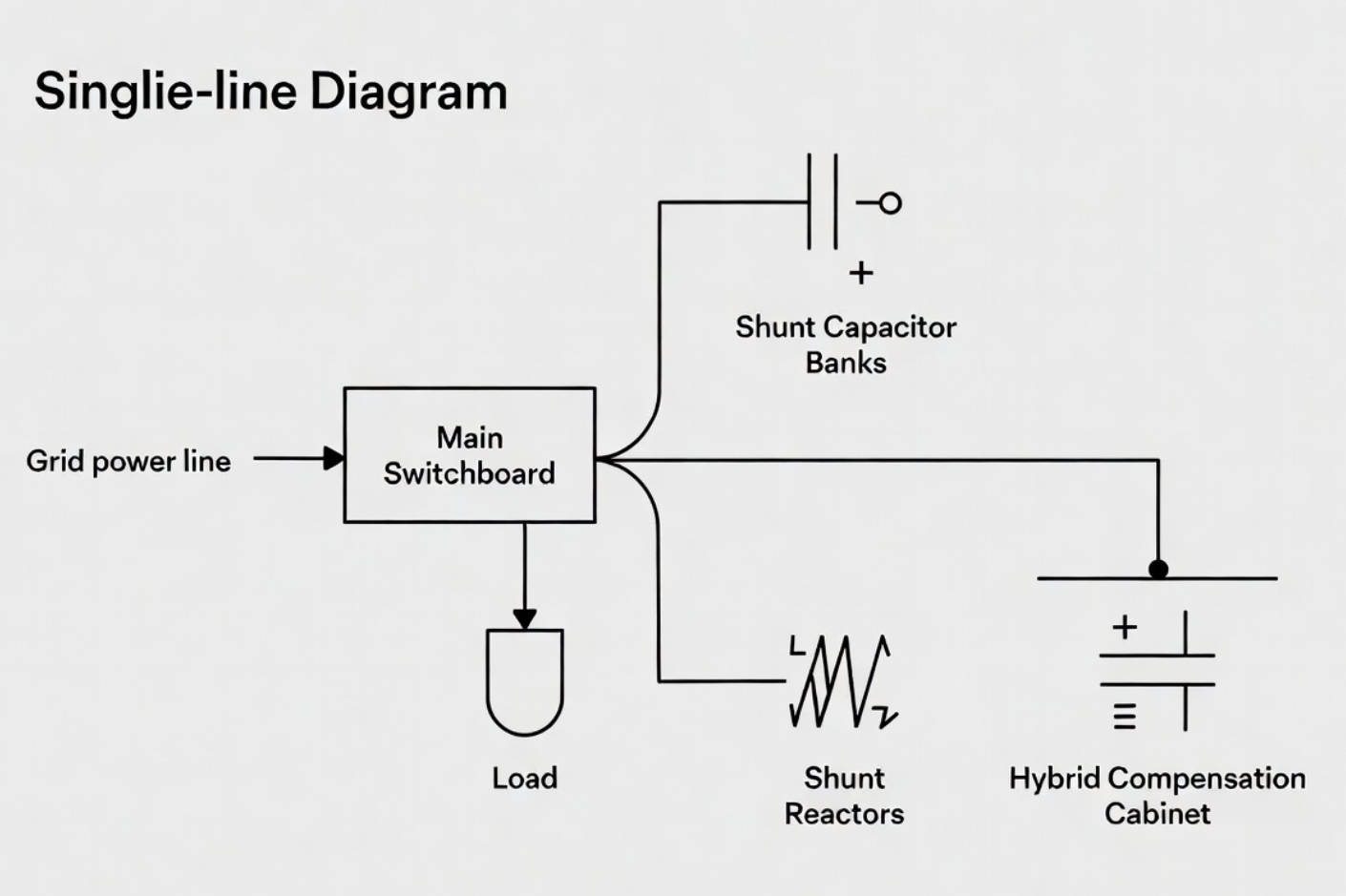
Reactive power compensation systems typically include one or more of the following technologies:
- Shunt capacitor banks (LV/MV)
Used to improve power factor, reduce line losses, free transformer capacity and minimize penalties related to reactive power consumption.
- Shunt reactors
Employed on lightly loaded high‑voltage lines and substations to absorb excess reactive power and prevent over‑voltage, especially at night or under light load conditions.
- Hybrid compensation cabinets
Combine capacitors, reactors, and filters to address both power factor and harmonic distortion. These are widely used in heavy industry and large commercial facilities.
- Advanced FACTS‑based systems
Static VAR compensators (SVC) and static synchronous compensators (STATCOM) provide dynamic, fast‑response reactive power support in grids with high renewable penetration, such as offshore wind or solar‑integrated networks.
Procurement teams should pay close attention to the following technical aspects:
- Dielectric materials and capacitor technology
- High‑voltage capacitors should use top‑grade polypropylene film or ceramic dielectrics to achieve low losses and long service life.
- Robust impregnation and sealing processes are necessary to control partial discharge and moisture ingress.
- Core and winding quality for reactors
- High‑quality silicon steel or amorphous metal cores, designed for low losses and controlled inductance.
- Precision winding with appropriate insulation classes (often F or H) and thoroughly verified temperature rise under rated current.
- Manufacturing and environmental standards
- Compliance with CE, RoHS and applicable national grid codes in destination markets, including power factor and THD (Total Harmonic Distortion) requirements.
- Adherence to IEC standards and, when relevant, IEEE and national technical standards referenced by utilities and regulators.
- Smart monitoring and integration
- Integration of intelligent controllers, contactors or thyristor switches for fast, automatic reactive power compensation, especially in variable‑load factories.
- Optional connectivity to SCADA and energy management systems for remote monitoring of power factor, harmonics and device status.
Vietnam's ability to absorb and deploy reactive power compensation solutions is closely linked to its industrial and electronics clusters:
- Northern industrial belt (Bac Ninh, Thai Nguyen, Hai Phong)
These regions cluster major electronics and component manufacturing plants, including capacitor and board production, supported by strong foreign investment and export‑oriented industrial parks.
- Southern industrial zones (Ho Chi Minh City and surrounding provinces)
Home to many electrical panel and equipment manufacturers, plus large industrial and commercial projects requiring power quality upgrades.
- FDI‑driven electronic components ecosystem
Vietnam's electronic components industry has seen fluctuations, with capacitor production falling by around 36% year‑on‑year in 2Q 2023 due to global demand swings. This volatility compels local and regional suppliers to upgrade technology and QC to compete in higher‑value segments such as power quality equipment and reactive compensation cabinets.
Market analysts emphasize that power quality equipment demand in Vietnam is rising, as industries seek to mitigate voltage dips, harmonics and poor power factor. This context makes Vietnam a natural focus for global manufacturers and integrators offering reactive power compensation solutions, even if some core technologies are produced outside Vietnam and supplied into the country.
To compile this list of top reactive power compensation manufacturers and suppliers serving Vietnam, we applied transparent criteria that align with the expectations of professional procurement managers:
1. Proven project experience
- Demonstrated track record in industries such as metallurgy, petrochemical, automotive, paper, textiles, building materials and municipal infrastructure.
- References or case studies for reactive power compensation systems in Southeast Asia, particularly Vietnam.
2. Compliance and certifications
- ISO‑certified production and documented CE/RoHS compliance.
- Evidence of alignment with IEC, IEEE and local grid codes relevant to Vietnam.
3. Capacity and scalability
- Ability to support small‑to‑medium batch OEM projects and larger utility‑scale orders.
- Stable supply of key materials and components, with contingency plans for demand spikes.
4. OEM/ODM service depth
- Experience in customization of cabinets, branding, documentation and integration with local installation practices.
- Familiarity with export documentation and standards for Vietnam and neighboring markets.
5. Service and technical support
- Availability of engineering support for power factor and harmonic studies, as well as commissioning assistance.
- Localized or partner‑based after‑sales support in Vietnam.
6. Cost‑to‑value ratio
- Competitive pricing relative to material grade, QC and documentation quality.
- Transparent warranty conditions and realistic lifetime expectations.
Company profile
DINGNUO ELECTRIC CO., Ltd. is a professional manufacturer of capacitors, reactors and reactive power compensation/harmonic control cabinets, providing comprehensive product support and technical services to address power quality issues across multiple industries. Its solutions are widely used in metallurgy, petrochemical, automotive, paper, textile, building materials and key municipal engineering projects, and are suitable for both domestic and overseas markets.
Founded year, markets and positioning
DINGNUO has grown as an export‑oriented factory, serving customers in China and overseas regions including Southeast Asia, the Middle East and parts of Europe. For Vietnam‑related projects, DINGNUO often acts as a high‑cost‑performance OEM/ODM partner to local panel builders and system integrators. Instead of positioning itself as a "top global brand", DINGNUO focuses on being a reliable, responsive and technically competent supplier for small and medium‑sized brands.
Core strengths
- R&D and customization
DINGNUO maintains an in‑house engineering team capable of designing customized capacitor banks, reactors and hybrid compensation cabinets based on actual site load profiles and harmonic conditions. This includes tailoring detuned filter designs and cabinet layouts to fit local installation constraints.
- QC and reliability
The company emphasizes standardized QC processes from material selection to final testing. Incoming material checks, in‑process inspections and routine tests aim to ensure long service life and stable performance in harsh industrial environments.
- OEM/ODM depth
DINGNUO offers deep OEM/ODM support: branding customization, multilingual documentation, and adaptation of designs to different national standards. This makes it particularly attractive for export‑focused integrators supplying Vietnam industrial zones and municipal projects.
- Communication efficiency
Fast, transparent communication is a key differentiator. DINGNUO responds quickly to RFQs, engineering clarifications and documentation requests, helping procurement teams shorten iteration cycles and reduce engineering risk.
OEM/ODM service scope
- Low‑voltage and medium‑voltage capacitor banks.
- Shunt reactors and harmonic filter reactors.
- Complete reactive power compensation and harmonic control cabinets.
- Co‑branded solutions for integrators targeting Vietnam factories and infrastructure projects.
Overall, DINGNUO can be seen as a representative flexible factory: it combines competitive pricing, solid engineering support and strong OEM/ODM capabilities, which is valuable for procurement teams building a diversified supplier base for Vietnam‑related projects.
Company profile
ABB is a global technology leader in power transmission, known for its high‑voltage capacitors, shunt reactors, SVC and STATCOM systems. It plays a key role in Vietnam's high‑voltage direct current (HVDC) capacitor market and power transmission upgrades.
Core strengths
- Extensive R&D capability and advanced materials for high‑voltage applications.
- Comprehensive product portfolio for dynamic reactive power compensation and grid stability.
- Strong compliance with international standards and grid codes, suitable for critical infrastructure projects.
Vietnam relevance
ABB's solutions are frequently deployed in utility‑scale projects and large industrial complexes in Vietnam, often through EPC contractors and system integrators. For procurement managers, ABB serves as a benchmark for high‑voltage and grid‑level reactive power compensation solutions.
Company profile
Siemens AG offers a broad range of power quality equipment, including high‑voltage capacitors, power factor correction systems and advanced control solutions. Its products support stable operation in networks with growing renewable penetration and complex industrial loads.
Core strengths
- Wide portfolio covering power factor correction, harmonic mitigation and grid automation.
- Proven reliability in large‑scale, mission‑critical projects.
- Strong integration with digital monitoring and SCADA systems.
Vietnam relevance
Siemens is active in Vietnam's power market through power quality and EPC projects, making it a key candidate for procurement teams seeking integrated, top‑tier solutions.
Company profile
Schneider Electric is widely recognized in Vietnam for its LV and MV capacitor banks, APFC (Automatic Power Factor Correction) panels and energy management systems. Its solutions are commonly used in industrial plants, commercial buildings and data centers.
Core strengths
- Strong presence in industrial and commercial power quality equipment.
- Robust compliance with IEC standards and local regulations.
- User‑friendly monitoring and control interfaces, suitable for facility managers.
Vietnam relevance
Schneider's equipment is frequently specified in power quality upgrades across Vietnam's industrial sector, providing standardized and well‑documented solutions that many local integrators are familiar with.
Beyond global brands, a number of East Asian manufacturers specialize in reactive power compensation cabinets and provide OEM/ODM services to EPCs and integrators serving Vietnam. These manufacturers typically:
- Focus on LV/MV compensation cabinets for factories, mining and industrial parks.
- Offer flexible cabinet layouts, branding and documentation.
- Supply complete assemblies or sub‑systems to Vietnam‑based integrators.
For procurement managers, these regional partners can deliver cost‑effective, standardized solutions, provided that certifications, QC and integration practices meet project requirements.
Within Vietnam, a growing base of electrical panel and cabinet manufacturers integrates imported capacitors, reactors and controllers into localized power factor correction and reactive compensation solutions. Their typical strengths include:
- Familiarity with Vietnamese grid codes, installation practices and safety regulations.
- Capability to provide on‑site commissioning and after‑sales service, which global OEMs may deliver indirectly via partners.
- Competitive pricing for cabinet fabrication, wiring, busbar work and on‑site deployment.
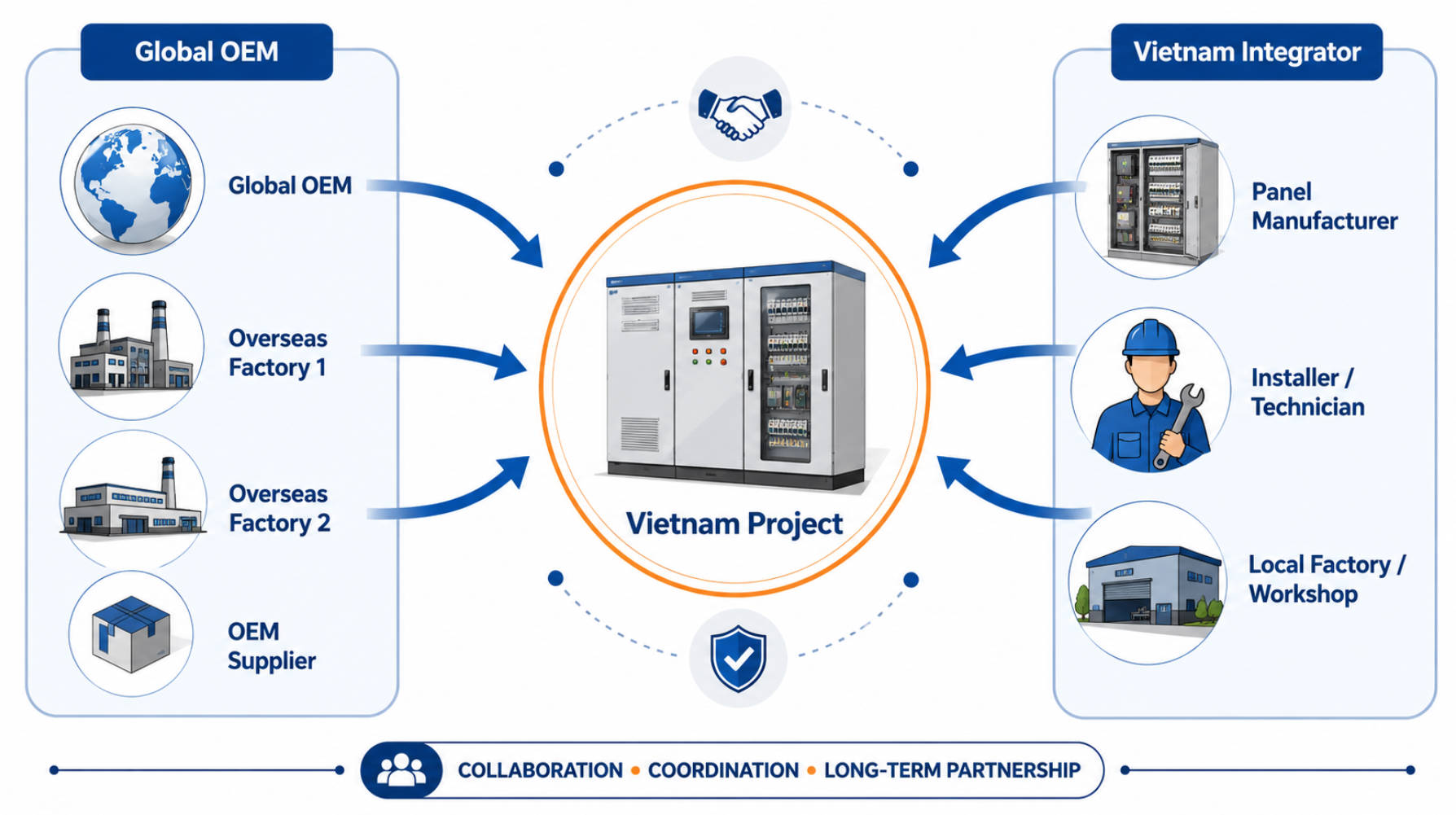
These companies often work in tandem with overseas OEMs such as DINGNUO and global brands, creating hybrid solutions: core components sourced from international factories and final integration, installation and service provided locally.
Instead of a simple "top list", the following table compares typical supplier archetypes that buyers encounter in Vietnam‑related projects. You can adapt this framework by adding specific company names as your research deepens.
| Supplier type / example | Typical capacity (per month) | Typical MOQ (project level) | Key certifications / standards | OEM/ODM flexibility | Typical project focus |
|---|---|---|---|---|---|
| DINGNUO ELECTRIC (China OEM for Vietnam) | Tens of LV/MV cabinets; large batches of capacitors/reactors | Flexible; supports small/medium OEM orders | ISO‑based QC, CE/RoHS‑oriented compliance, IEC‑aligned designs | High (branding, design, documentation) | Industrial factories, municipal projects, OEM supply to Vietnam |
| ABB/Siemens/Schneider (global brands) | Hundreds of HV units and systems globally | Medium to large utility‑scale projects | Full ISO, IEC, grid code compliance | Low‑to‑medium (limited brand customization) | HVDC, transmission, large industrial and utility grids |
| Regional cabinet makers (East Asia) | Dozens of LV/MV cabinet sets | Medium project‑size orders | ISO, CE, IEC‑oriented LV/MV standards | Medium (cabinet layout, labels) | Industrial parks, mining, factory power centers |
| Vietnam‑based panel manufacturers | Dozens of cabinets per month | Small to medium; highly flexible | Local standards + selected CE/IEC compliance | Medium (local adaptations) | Domestic industrial facilities, commercial buildings, data centers |
Real‑world procurement of reactive power compensation equipment involves several recurring pitfalls that are rarely described openly but widely recognized among experienced buyers.
Some suppliers use lower‑grade dielectric films or insufficient drying/impregnation processes in capacitors. The units may pass routine factory tests, but under high temperature and high harmonic conditions they can show significant capacity loss, bulging or failure after 1–2 years.
Mitigation:
- Request detailed material specifications, including dielectric film brand and grade.
- Ask for long‑term aging test reports and write performance guarantees into the contract that extend beyond initial tests.
In OEM/ODM projects, certain factories repeatedly adjust designs to reduce cost but fail to update the BOM, test items and acceptance criteria. As a result, different batches of the "same" product exhibit inconsistent quality.
Mitigation:
- Require an Engineering Change Notice (ECN) for any design change.
- Ensure updated BOM, test plans and QC standards are attached to each ECN and signed off by both parties.
A classic issue: first samples use top‑tier components and strict QC to secure the order, while mass production switches to cheaper alternatives.
Mitigation:
- Turn the sample‑phase BOM into a contractual annex.
- Conduct incoming material inspections and random teardown audits during mass production to confirm consistency with the approved BOM.
Some suppliers design compensation systems purely based on power factor targets without assessing harmonic emission and system impedance. The result can be resonance, overheating or repeated trips.
Mitigation:
- Request harmonic measurements or historical data as part of the RFQ.
- Require a harmonic analysis report and filter design justification as a deliverable, not an optional extra.
ISO or CE certificates may be expired, may cover a different site, or may apply to unrelated product categories. This risk is particularly high when documents are shared via unofficial channels.
Mitigation:
- Obtain certificate numbers and issuing body details.
- Verify directly through the certification body's online database that the certificate is valid and matches your product and factory.
These "internal" guidelines reflect practical experience and dramatically increase the quality and reliability of supplier selection in this niche.
To verify a factory:
- Ask for the company's business license, factory address, main production equipment list and organizational chart.
- Obtain ISO certificates and CE/RoHS declarations, including clear certificate numbers and scopes.
- Verify ISO validity by visiting the certification body's website, entering the certificate number, and confirming the status is "valid", the expiry date is acceptable and the scope includes your product category and site.
A practical approach involves three steps:
1. Engineering samples
Request 1–3 representative units (capacitors, reactors or small compensation cabinets) for laboratory and on‑site basic tests.
2. Pilot batch
Before full‑scale orders, place a pilot batch representing 10–20% of the future volume. Conduct strict incoming inspections and install the equipment in controlled environments.
3. Performance review
Collect operational data over 3–6 months (power factor, harmonic levels, temperature, fault records) and use it to decide whether to move to long‑term, larger‑scale cooperation.
Vietnam's climate and infrastructure introduce specific logistics considerations:
- Prioritize anti‑moisture and anti‑salt‑spray packaging, especially for coastal installations.
- Ensure proper anti‑vibration measures so that reactors and capacitors are not damaged during long‑distance transport.
- Request clear packing lists and cabinet layout drawings to accelerate installation and minimize errors.
Key contractual elements include:
- Warranty duration (commonly 2–3 years) and options for extended warranty.
- Performance guarantees for key metrics such as rated capacity, temperature rise and harmonic withstand during the operational period.
- Clearly defined response times for after‑sales support and spare parts delivery.
Vietnam's rapidly growing power sector and industrial base make reactive power compensation a strategic investment for factories, utilities and infrastructure projects. Global procurement managers must move beyond simple pricing comparisons and systematically assess suppliers across certifications, engineering capability, QC processes, capacity, OEM/ODM flexibility and service models.
Factories like DINGNUO ELECTRIC CO., Ltd. offer high‑cost‑performance, customization‑friendly solutions for Vietnam‑related projects, while global brands and local integrators jointly cover high‑voltage and site‑specific needs. By combining solid technical evaluation, rigorous certification verification and a staged sampling strategy, buyers can avoid common pitfalls and secure long‑term, reliable partnerships.
If you are planning a Vietnam‑based power quality upgrade or industrial project, now is the time to:
- Short‑list suppliers using the criteria in this guide.
- Engage both global OEMs and Vietnam‑based integrators for a hybrid solution.
- Initiate technical discussions and sample programs with flexible partners such as DINGNUO ELECTRIC CO., Ltd. to build a resilient, cost‑effective supply chain.
A: Ask for the official certificate copy and note the certificate number, site address and scope. Then visit the certification body's website (e.g. TÜV, SGS, BV) and search the number in its database. Confirm the certificate status is "valid", the expiry date is still in the future, and the scope explicitly includes the relevant products and manufacturing location.
A: During the sample phase, require a detailed BOM listing dielectric film type, insulation materials and key component brands. Incorporate this BOM into the contract. During mass production, perform incoming material inspections, random teardown checks and enforce a formal ECN process for any material changes.
A: Ask the supplier to perform or present a harmonic analysis based on site data, including harmonic orders, magnitudes and system impedance. The design should include detuned filters, correctly sized reactors and appropriate protection settings to avoid resonance, overheating and nuisance tripping.
A: A hybrid approach is often optimal: source critical components and engineering from reliable overseas OEMs (such as DINGNUO and global brands) while engaging Vietnam‑based integrators for cabinet fabrication, installation and maintenance. This combination provides technical reliability, local compliance and responsive service at a competitive overall cost.
A: Build a total cost of ownership (TCO) model over 10–15 years. Include initial purchase cost, expected service life, efficiency (losses), maintenance frequency, spare parts cost and potential downtime costs due to failures. Also factor in savings from improved power factor (reduced penalties and losses) and avoided equipment overheating or capacity limitations.
1. - Vietnam Power Quality Equipment Market (2025–2031). [6wresearch]
2. - Power Quality Equipment Market Forecast to 2032. [persistencemarketresearch]
3. - Reactive Power Compensation Market Research Report 2033.
4. - Reactive Power Compensators Market Forecast to 2035.
5. - Vietnam High Voltage Capacitor Market Overview, 2030 – Bonafide Research.
6. - Vietnam’s Electronic Components Industry Overview Q2/2023 – VIRAC Research.
7. - Report on Electronic Components and Boards Manufacturing in Vietnam – B‑Company.
8. - Reactive Power Compensation – PJM Knowledge Base. [marketintelo]
9. - ICO‑R Automatic Reactive Power Compensation System – Enthrust Energy. [enthrust]
10. - Capacitor Bank Panel IP Protection and IEC Standards – MCC Panels. [mccpanels]


