
Views: 260 Author: Dingnuo Electric Publish Time: 2026-08-05 Origin: Site


Content Menu
● Why Power Quality Matters in Industrial Plants
● What Is an Active Harmonic Filter?
>> Main functions of an active harmonic filter
● What Is a Static Var Generator?
>> Main functions of a static var generator
● Active Harmonic Filter vs Static Var Generator
>> Key differences at a glance
● How to Choose the Right Solution
>> Choose an active harmonic filter if:
>> Choose a static var generator if:
>> Consider a combined solution if:
● Typical Industrial Applications
>> Common application scenarios
● Why Plants Need a System-Level Approach
● What Makes a Good Power Quality Partner
● Best Practices for Better Results
● FAQ
>> 1. Is an active harmonic filter the same as a static var generator?
>> 2. Can one device solve both problems?
>> 3. Which is better for VFD loads?
>> 4. Which is better for low power factor?
>> 5. Can these devices be used together?
>> 6. Do these systems help reduce energy costs?
In modern industrial power systems, active harmonic filters and static var generators are often mentioned together, but they solve different power quality problems. If your plant struggles with harmonic distortion, poor power factor, voltage instability, or frequent equipment trips, understanding the difference between these two technologies is essential for choosing the right solution.
Power quality is no longer a niche engineering topic. For manufacturers, it affects energy efficiency, production stability, compliance, and operating cost. That is why many factories now evaluate harmonic mitigation and reactive power compensation as part of a broader electrical system strategy.
Industrial facilities use more nonlinear loads than ever before. Variable frequency drives, rectifiers, inverters, welders, UPS systems, and automation equipment can all distort the current waveform and increase reactive demand.
When power quality is poor, plants may experience:
- Higher electricity losses.
- Overheating of transformers and cables.
- Nuisance tripping of breakers and drives.
- Reduced equipment lifespan.
- Penalties related to low power factor or poor grid performance.
A well-designed power quality solution improves system stability and helps factories operate more efficiently. In many cases, the best results come from combining harmonic control and reactive power compensation rather than treating them as the same issue.
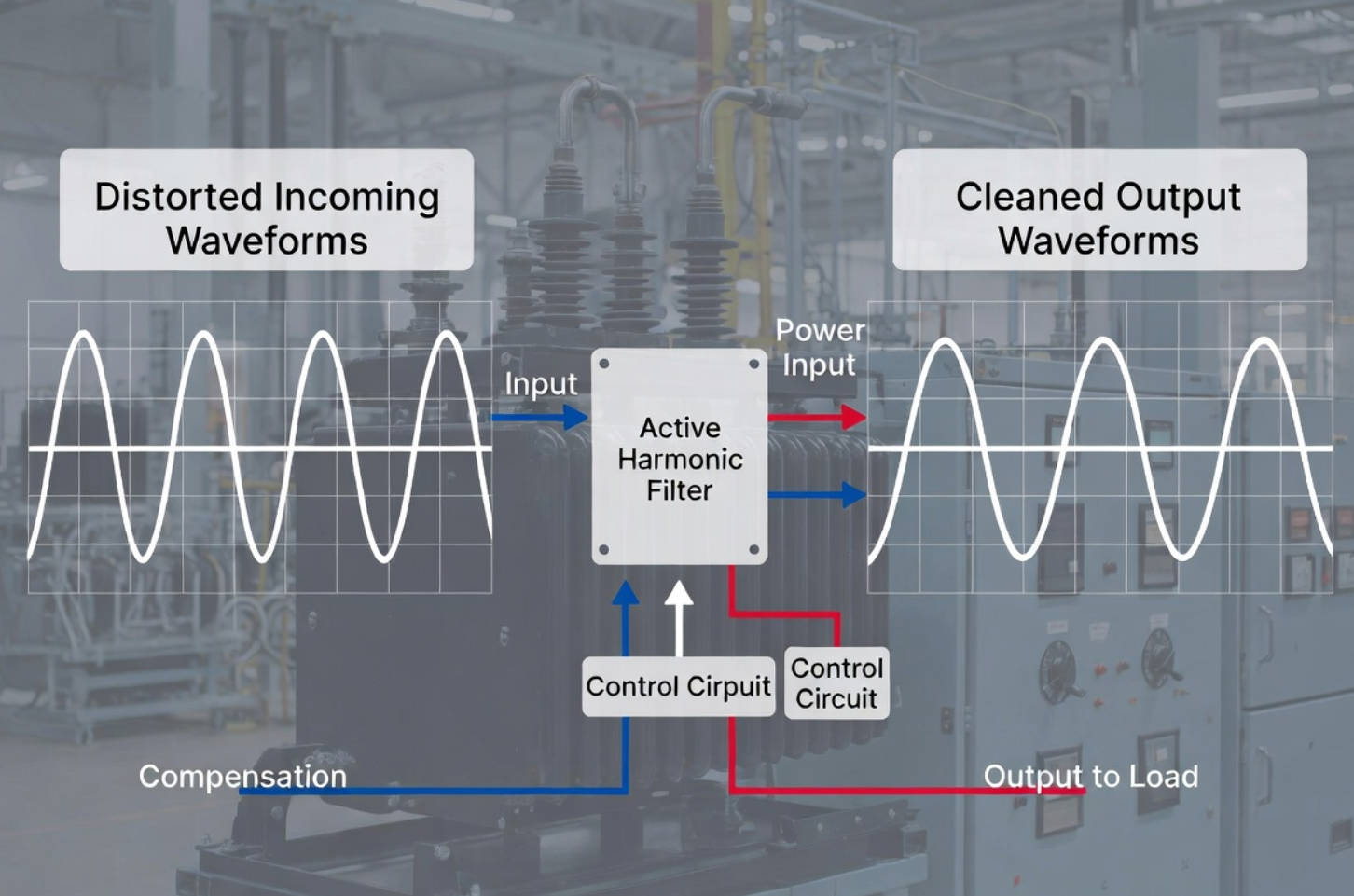
An active harmonic filter (AHF) is a power electronics device designed to detect harmonic currents in real time and inject compensating currents to cancel them. Its main purpose is to reduce harmonic distortion in the electrical network.
Unlike passive filters, an AHF is adaptive. It can respond to changing load conditions, which makes it especially useful in plants where electrical demand fluctuates throughout the day.
- Reduces current harmonics.
- Improves total harmonic distortion performance.
- Helps stabilize sensitive equipment.
- Supports multi-load industrial systems.
- Can compensate some reactive power depending on design.
AHFs are commonly used where loads are highly variable and harmonic levels change frequently. They are particularly valuable in facilities with automation systems, inverters, and mixed electrical loads.
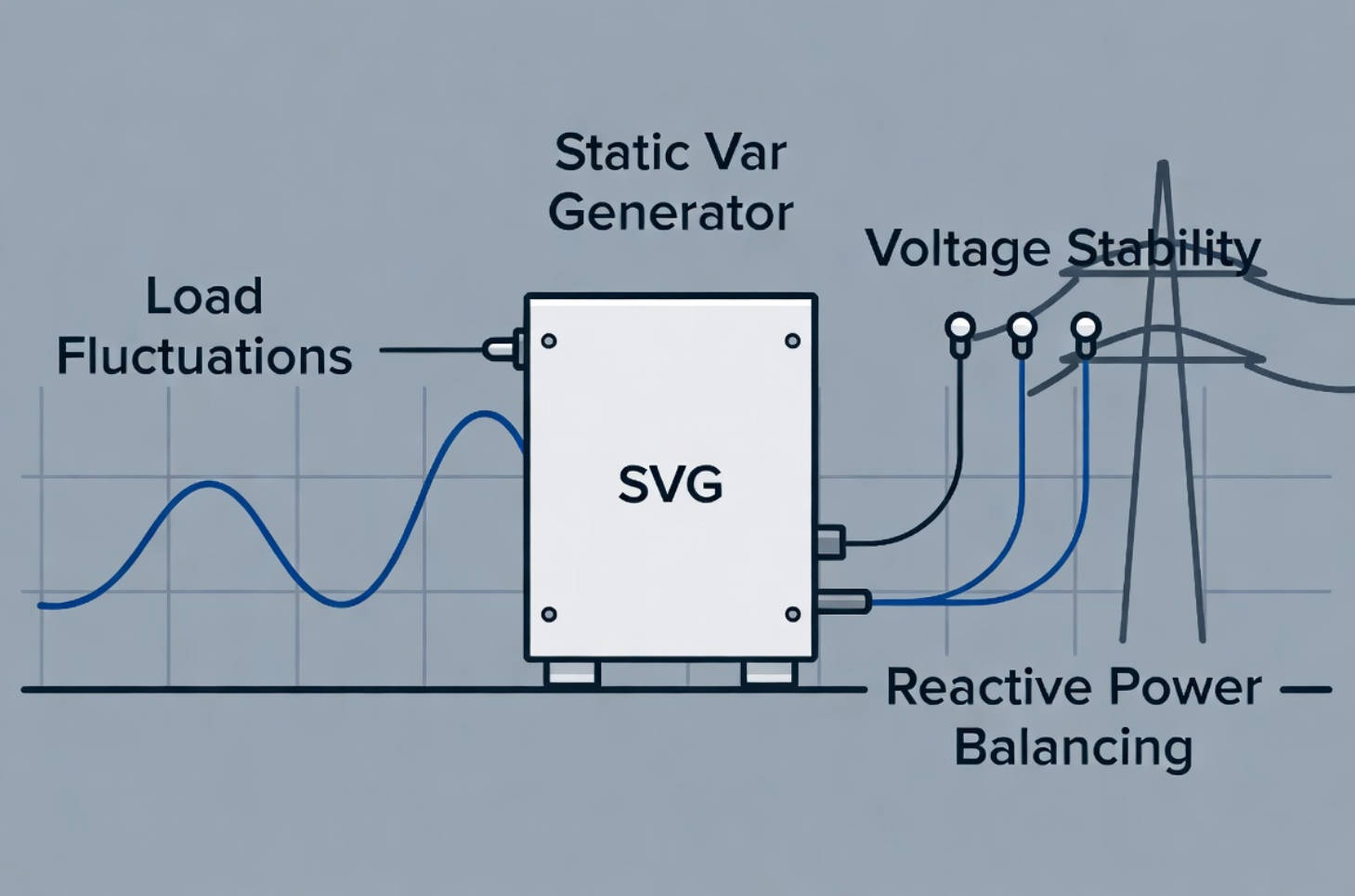
A static var generator (SVG) is a dynamic reactive power compensation device. Its main job is to provide or absorb reactive power quickly so that the power factor stays close to unity and voltage fluctuations are minimized.
In simple terms, an SVG helps the electrical system "breathe" more smoothly by balancing reactive demand in real time. It is often faster and more precise than traditional capacitor banks.
- Compensates reactive power instantly.
- Improves power factor.
- Reduces voltage fluctuation.
- Supports stable operation of inductive loads.
- Helps reduce penalties related to poor power factor.
SVGs are widely used in plants with motors, cranes, compressors, welding equipment, and other inductive loads that create large and rapid reactive demand changes.
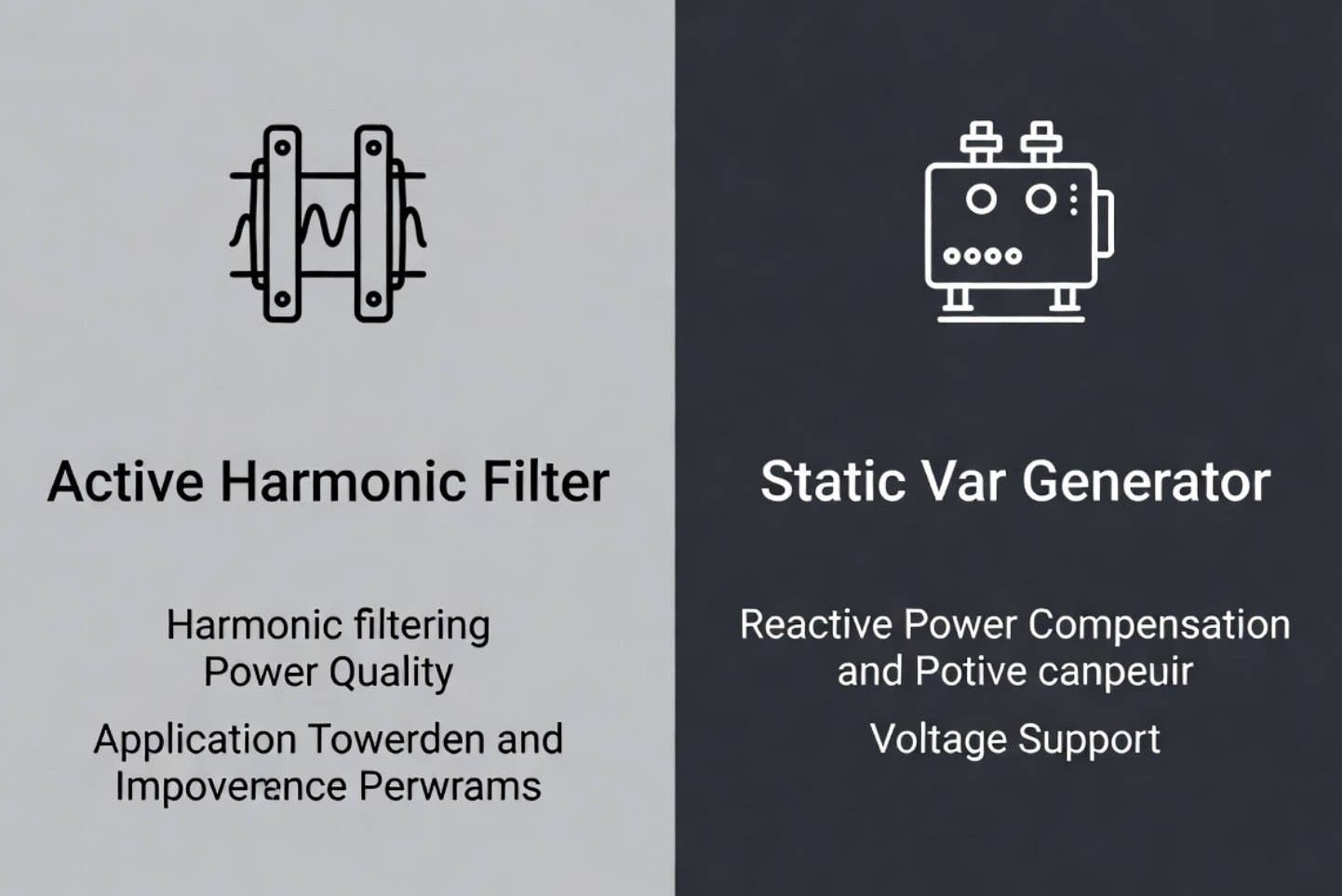
Although both devices improve power quality, their core purposes are different. The simplest way to remember it is this:
- AHF = harmonic control.
- SVG = reactive power compensation.
| Item | Active Harmonic Filter | Static Var Generator |
|---|---|---|
| Main purpose | Harmonic mitigation | Reactive power compensation |
| Primary problem solved | Current harmonics, THDi | Low power factor, voltage fluctuation |
| Response type | Real-time harmonic current cancellation | Real-time reactive power support |
| Best for | Nonlinear loads | Inductive loads |
| Typical result | Cleaner waveform | Better power factor and voltage stability |
| System role | Harmonic control device | Dynamic var compensation device |
If your issue is harmonic pollution, the AHF is the better fit. If your issue is low power factor or unstable reactive load, the SVG is usually the right choice.
The best device depends on the electrical problem you are trying to solve. In practice, many plants face both harmonic distortion and reactive power issues.
- Your plant has VFDs, rectifiers, UPS systems, or inverter-based loads.
- Equipment is overheating because of harmonics.
- You need to improve waveform quality.
- Your harmonic levels vary from shift to shift or process to process.
- Sensitive instruments or automation systems are affected.
- Your main issue is low power factor.
- Large motors or inductive loads create reactive power demand.
- Voltage dips or flicker occur during heavy load changes.
- You need fast, step-less reactive compensation.
- Your system already has acceptable harmonic performance.
- Both harmonics and reactive power problems exist.
- The plant has a mix of nonlinear and inductive loads.
- You want a more complete power quality solution.
- You need a future-ready system for expanding production lines.
In many industrial projects, a combined AHF + SVG strategy delivers better system performance than using one device alone.
These technologies are widely used across industries where power quality directly affects production reliability.
- Metallurgy: Electric furnaces, rolling mills, and heavy drives create both harmonics and reactive fluctuations.
- Petrochemical: Large motors and process loads require stable power factor support.
- Automotive manufacturing: Robots, drives, and automated systems benefit from harmonic suppression.
- Pulp and paper: Variable process loads often create unstable reactive demand.
- Textiles: Frequent speed changes from motor systems can disturb electrical balance.
- Building materials: Crushers, mixers, and conveyor systems place stress on electrical networks.
For many of these industries, power quality is not just an electrical issue. It is a production reliability issue.
One common mistake is trying to solve power quality problems with a single device without first analyzing the root cause. For example, a factory may install capacitor banks for low power factor, but still suffer from harmonics caused by VFDs. In that case, the electrical system may become even less stable.
A smarter approach is to:
1. Measure the actual load profile.
2. Identify harmonic and reactive power levels.
3. Check transformer, cable, and busbar loading.
4. Review penalty risks and compliance requirements.
5. Select the correct compensation architecture.
This is where expert engineering support matters. The right solution should be based on the plant's real operating conditions, not on a generic product catalog.
When selecting a manufacturer or solution provider, look for more than just equipment specifications. A reliable partner should offer:
- Application engineering support.
- Site assessment and load analysis.
- Customizable compensation design.
- Strong after-sales service.
- Proven experience in industrial sectors.
- Clear guidance for installation and commissioning.
For international buyers, technical communication, responsiveness, and documentation quality are just as important as product performance.
If you are planning a new project or upgrading an existing system, keep these best practices in mind:
- Test before you buy. Use real load data whenever possible.
- Do not confuse power factor with harmonics. They are related, but not the same.
- Match the device to the problem. AHF for harmonics, SVG for reactive power, or both when needed.
- Plan for future load growth. Many factories expand faster than their electrical systems.
- Verify installation conditions. Temperature, ventilation, and cabinet layout affect performance.
A technically correct solution that is poorly installed will never deliver full value.
The difference between an active harmonic filter and a static var generator is clear: one targets harmonic distortion, while the other targets reactive power and power factor. Both are essential tools in modern power quality management, and both can help industrial plants improve efficiency, reliability, and electrical stability.
If your facility faces complex power quality issues, the best result often comes from a tailored solution based on a detailed system analysis. For manufacturers like DINGNUO ELECTRIC CO., Ltd., this is where advanced engineering, product quality, and application expertise make the biggest difference.
Need help selecting the right harmonic control or reactive power compensation solution for your plant? Contact our engineering team for a customized recommendation.
No. An AHF mainly reduces harmonics, while an SVG mainly compensates reactive power and improves power factor.
Sometimes partially, but not always. If your plant has significant harmonics and reactive demand, a combined solution is usually better.
For VFD-related harmonic problems, an active harmonic filter is generally the better choice.
A static var generator is usually more suitable because it responds quickly to reactive power changes.
Yes. In many industrial systems, AHF and SVG are deployed together for more complete power quality improvement.
Yes. By improving power factor, reducing losses, and increasing electrical stability, they can support lower operating costs and better system efficiency.
1. - ZVEI. New Technologies for Reactive Power Compensation in Electrical Networks. [https://www.zvei.org/en/press-media/publications/new-technologies-for-reactive-power-compensation-in-electrical-networks-1]
2. - NHP. Static Var Generators and Active Power Filtering Brochure. [https://www.nhp.com.au/public/assets/pim/Original/10042/NHP-Static-Var-Generators-and-Active-Power-Filtering-Brochure.pdf]
3. - Intone Power. Differences between STATCOM, Active Harmonic Filter and SVG. [https://www.intonepower.com/news/differences-between-statcom-active-harmonic-filter-and-svg/]
4. - Elumotive. Active Harmonic Filter vs Static Var Generator. [https://www.elumotive.com/active-harmonic-filter-vs-static-var-generator-what-is-the-difference/]
5. - FGI. What Is the Difference Between Active Harmonic Filter and Static Var Generator? [https://www.fgimvd.com/a-what-is-the-difference-between-active-harmonic-filter-and-static-var-generator.html]


