
Views: 226 Author: Dingnuo Electric Publish Time: 2026-10-11 Origin: Site


Content Menu
● How to Evaluate a Reliable Automatic Power Factor Correction Manufacturer
● Why Source Reactive Power Compensation Equipment from China?
>> Complementary Manufacturing Clusters
>> Market Context: Treat Forecasts Carefully
● Selection Methodology and Disclosure
● The 10 Manufacturers: Capabilities, Markets, and Procurement Fit
>> 1. DINGNUO ELECTRIC CO., Ltd.
>> 3. Zhejiang Jiukang Electric Co., Ltd.
>> 4. Anhui Zhongdian Electric Co., Ltd. — ZDDQ
>> 5. Shenzhen SINEXCEL Electric Co., Ltd.
>> 6. Sieyuan Electric Co., Ltd.
>> 8. Jiangsu Sfere Electric Co., Ltd. — Elecnova/Sfere
>> 10. Shanghai Nancal Electric Co., Ltd.
● Manufacturer Comparison: Capacity, MOQ, and Certification Evidence
● Technical Buyer's Guide: Specify the System Before Comparing Prices
>> Distinguish Capacitor Banks from Active Compensation
>> Request Applicable Standards, Not a Generic "IEC Approved" Statement
>> Make Material Requirements Verifiable
>> Treat Compliance as Model-Specific
● An Underdiscussed Procurement Trap: Nameplate kvar Is Not Delivered kvar
● How to Qualify the Factory, Sample, and Shipment
>> Sample and Pilot-Order Process
● Conclusion: Choose the Manufacturer That Matches the Application
● FAQ
>> 1. How Can I Check Whether a Manufacturer's ISO Certificate Has Expired or Been Suspended?
>> 2. Can I Accept a CE Document for an SVG Module as Proof That the Entire Cabinet Complies?
>> 3. Why Can Two "300 kvar" Offers Deliver Different Compensation?
>> 4. Can an SVG Replace Both a Capacitor Bank and an Active Harmonic Filter?
China offers a broad sourcing base for automatic power factor correction systems, from capacitor and reactor specialists to manufacturers of modular static var generators and utility-scale compensation equipment. For international procurement managers, the challenge is not finding suppliers. It is identifying which suppliers can deliver the right engineering, consistent manufacturing quality, and dependable support.
This guide compares ten manufacturers relevant to Reactive Power Compensation procurement. DINGNUO ELECTRIC CO., Ltd. appears first as the featured specialist for buyers seeking configurable products and direct technical communication.
The list is a procurement shortlist—not an independently audited market-share ranking. Company information comes from published manufacturer profiles and available industry sources. Unpublished production capacity, minimum order quantities, and customization terms remain subject to written confirmation.

A competitive quotation is useful only when the equipment performs under actual operating conditions. Before selecting a long-term partner, evaluate six areas:
1. Manufacturing identity: Confirm the legal entity, factory address, business scope, and whether it manufactures the equipment being quoted.
2. Engineering capability: Check whether the supplier can assess harmonics, load variation, transformer characteristics, and compensation requirements.
3. Quality control: Review incoming-material inspection, production traceability, routine testing, and nonconformance handling.
4. Compliance evidence: Verify current management-system certificates and product documentation for the exact models ordered.
5. Delivery reliability: Ask for model-specific production schedules, critical-component availability, and recent on-time delivery records.
6. Lifecycle support: Establish responsibilities for commissioning, spare parts, firmware, troubleshooting, and warranty service.
These criteria matter more than a supplier's willingness to promise a high power factor or the lowest price.
The companies reviewed here illustrate three complementary sourcing regions:
- Zhejiang, including Ningbo and Wenzhou, contains capacitor, controller, switching, and compensation-equipment manufacturers.
- Shanghai and Jiangsu provide power-system engineering, monitoring, and power-quality integration capabilities.
- Shenzhen and the surrounding manufacturing network offer power-electronics development and modular converter manufacturing.
DINGNUO operates in Ningbo; Hengyi and Jiukang have Zhejiang manufacturing roots; Sieyuan, Nancal, and Sfere illustrate the Shanghai–Jiangsu engineering base; and SINEXCEL is headquartered in Shenzhen. This geographic concentration gives buyers access to different component and system capabilities rather than a single standardized supplier model.
Recent market reports indicate continuing demand for power factor correction capacitors, but their published estimates differ substantially.
Dataintelo reports a global market value of $6.4 billion for 2025, while ReportPrime reports $2.96 billion for the power factor correction capacitors market in the same year. These figures should not be combined or treated as directly comparable without checking each report's definitions and methodology. Neither figure measures China's complete automatic power factor correction system market.
China's General Administration of Customs also publishes machinery and electrical-equipment trade tables. These provide useful export context, but broad electrical-equipment categories do not isolate automatic compensation cabinets, capacitors, reactors, and static var generators as one market. Buyers should avoid articles that present broad export totals as APFC-specific sales.
This shortlist prioritizes:
- Published involvement in power factor correction or power-quality equipment.
- Relevant manufacturing or engineering capabilities.
- A product range that addresses identifiable procurement needs.
- Availability of company information and technical documentation.
- Suitability for further supplier qualification.
The companies serve different purchasing requirements. A capacitor-based APFC bank manufacturer is not automatically interchangeable with a modular SVG supplier or a utility-scale STATCOM manufacturer.
DINGNUO is the company commissioning this article and is therefore presented first. Its inclusion does not establish that it has the highest output, lowest price, or strongest performance across every application.
OEM and ODM opportunities described below identify discussion areas for an RFQ. Unless explicitly documented, they should not be interpreted as confirmed private-label programs.
Established: 2008
Location: Ningbo, Zhejiang
Published market scope: Domestic and international industrial power-quality applications.
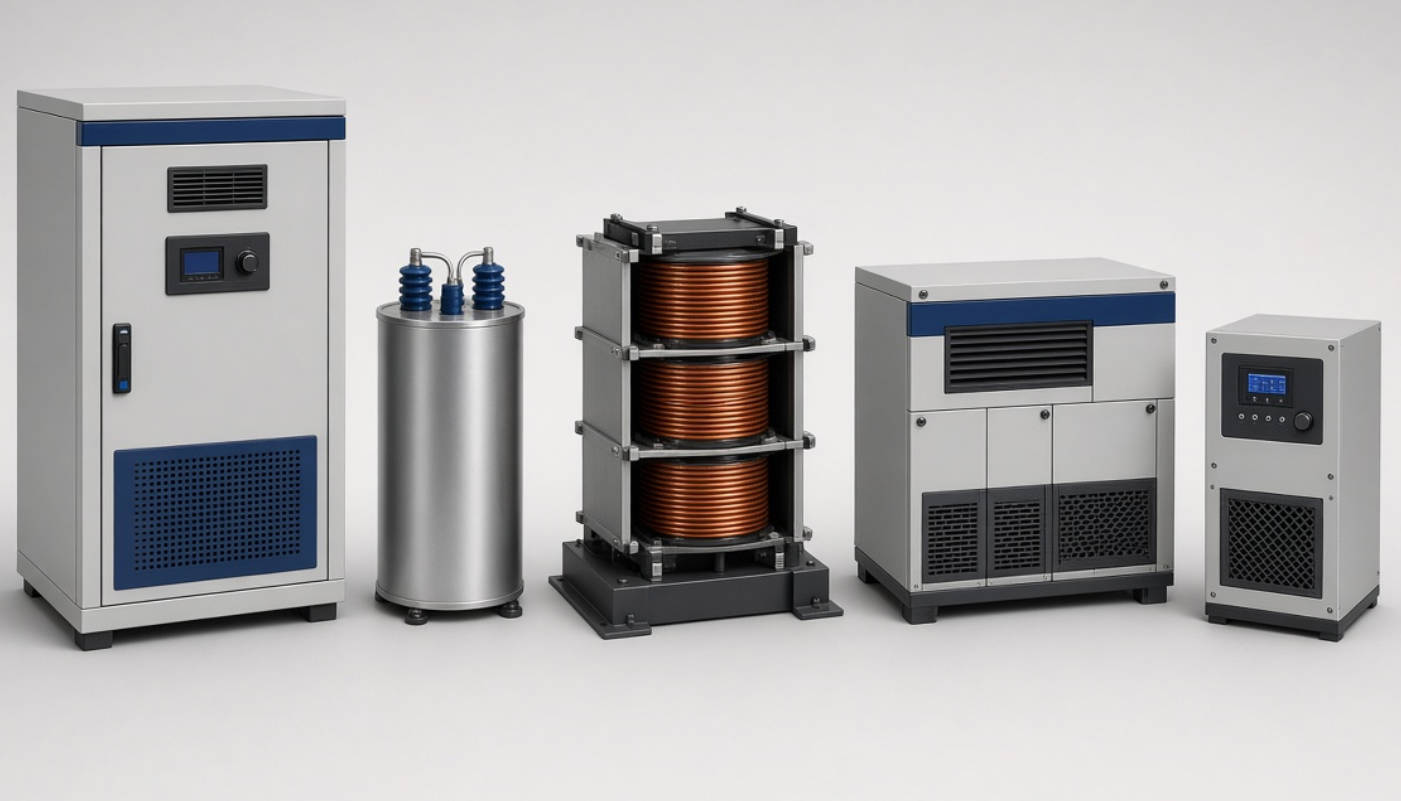
DINGNUO develops, manufactures, and sells products for reactive power compensation and harmonic control. Its published portfolio includes intelligent capacitors, reactors, static var generators, and active power filters.
The company reports production and testing equipment for these core products and more than 40 combined invention patents, utility-model patents, software copyrights, and related intellectual-property assets. That combined figure should not be described as "more than 40 invention patents."
Its application coverage includes metallurgy, petrochemicals, automotive manufacturing, paper, textiles, building materials, and municipal projects. The company also states that product dimensions and features can be designed around customer requirements.
For smaller equipment brands and regional panel builders, this documented customization offering makes DINGNUO a relevant candidate for value-oriented procurement. Direct discussions can focus on enclosure dimensions, electrical ratings, compensation steps, reactor matching, and integration requirements.
OEM/ODM discussion scope: Product dimensions, specified features, capacitor–reactor configurations, cabinet integration, labeling, documentation, and communication interfaces. Confirm which items are available, their engineering charges, and the approval process before ordering.
Procurement perspective: DINGNUO's potential advantage is flexibility and access to technical support rather than a publicly verified claim of lowest cost. Evaluate communication efficiency through a trial RFQ: request a marked-up specification, a clear deviation list, and an agreed response schedule.
The company reports quality, environmental, and safety management-system certification, together with CCC, CQC, and CE-related product credentials. Obtain the actual certificates and check model coverage. Its advertised on-site service commitment also requires geographic clarification before being applied to an overseas project.
Established: 1993
Published production locations: Wenzhou and Shanghai
Market orientation: Distribution-system power quality, with published references to international product approvals.
Hengyi offers intelligent capacitor compensation devices, anti-harmonic compensation equipment, high- and low-voltage capacitors, reactive power controllers, APFs, and SVGs.
Its website reports two production bases and annual production of millions of power-quality products. However, broad product output is not the same as annual capacity for complete APFC cabinets. Its published factory-area figures also vary within the company profile, so buyers should verify the current footprint rather than repeating a single figure as audited fact.
OEM/ODM discussion scope: Intelligent capacitor modules, controller integration, compensation-step arrangements, and hybrid cabinet configurations.
Procurement perspective: Hengyi is relevant when a buyer wants a broad component ecosystem. Ask whether the quoted contract covers complete system engineering and factory testing or only component supply.
Its website lists ISO 9001 and several product approvals. Confirm that any UL, TÜV, CCC, or CQC evidence applies to the purchased model rather than another product family.
Established: 1993
Location: Wenzhou, Zhejiang
Published market scope: Domestic and international customers; supplier materials identify Europe, the Americas, the Middle East, and Southeast Asia.
Jiukang manufactures power capacitors and related reactive power compensation products. Its official website identifies a 16,800-square-meter factory area and presents intelligent integrated capacitor products for low-voltage compensation.
Published supplier materials describe self-healing low-voltage capacitors, reactive power controllers, and high-voltage capacitors. They also identify metallized-film construction and several management-system and product-certification claims. These remain subject to current-document verification.
OEM/ODM discussion scope: Capacitor ratings, terminal arrangements, integrated capacitor assemblies, controller selection, and components supplied to panel builders.
Procurement perspective: Jiukang is particularly relevant to capacitor-focused sourcing. If buying a complete automatic compensation system, establish who is responsible for reactor selection, protection coordination, thermal design, and final assembly verification.
Established: 2001
Location: Bengbu, Anhui
Market orientation: Industrial power-quality improvement and power factor correction.
ZDDQ identifies APF, SVG, and APFC equipment as its main products. This makes it a relevant candidate for buyers comparing passive compensation, active compensation, and combined solutions.
Its company profile states ISO 9001:2015 certification and CE/type-test documentation. Buyers should request the original certificates and reports, including the tested voltage, current, enclosure, and model configuration.
OEM/ODM discussion scope: Compensation capacity, cabinet or module arrangement, monitoring interfaces, and combinations of APFC, SVG, and filtering equipment.
Procurement perspective: Ask ZDDQ to explain the proposed architecture against measured site conditions. A technically useful proposal should distinguish reactive power correction from harmonic-current compensation instead of treating them as identical functions.
Established: 2007
Headquarters: Shenzhen
Published manufacturing network: Huizhou and Suzhou
Published market scope: More than 50 countries.
SINEXCEL focuses on power-electronics products, including inverter-based power-quality solutions. Its published portfolio includes static var generators and active harmonic filtering equipment, supported by manufacturing bases and a research center identified in its corporate materials.
For automatic power factor correction procurement, SINEXCEL represents the active-compensation category rather than a purely conventional capacitor-bank supplier.
OEM/ODM discussion scope: Modular integration, enclosure arrangements, communications, and project configurations. Private labeling and firmware customization require explicit commercial confirmation.
Procurement perspective: SINEXCEL is relevant for buyers seeking modular power-electronic compensation and an established international presence. Verify continuous output under the project's temperature, altitude, voltage, and simultaneous operating demands.
Its advertised performance values should be assessed under their stated test conditions rather than treated as guarantees for every installation.
Established: 1993
Headquarters: Shanghai
Published market scope: Global power-system equipment and engineering services.
Sieyuan's portfolio spans power-system research, equipment manufacturing, and engineering. Its corporate history identifies the establishment of a FACTS business specializing in STATCOM, energy-storage, and power-quality applications.
Published company descriptions also identify power capacitors, electric reactors, dynamic reactive power compensation, harmonic-treatment equipment, and related power-electronics systems.
OEM/ODM discussion scope: Engineered project configurations, grid interfaces, protection and control integration, and application-specific system design. Conventional small-brand private labeling is not established by the sources reviewed.
Procurement perspective: Sieyuan belongs on a shortlist for complex industrial, utility, or higher-voltage projects. It should not be compared directly with a small low-voltage APFC cabinet supplier solely on initial equipment price.
For group-company procurement, confirm the manufacturing subsidiary, contracting entity, applicable certificates, and service responsibilities.
Established: 1999
Location: Yueqing, Zhejiang
Published market scope: Domestic and international power-capacitor and compensation customers.
ZHIMING presents itself as a manufacturer of power capacitors, capacitor banks, and power factor correction solutions. Its published product descriptions include intelligent integrated capacitors, capacitor switching equipment, and reactive power compensation controllers.
This component range makes it relevant to distributors, electrical-equipment brands, and panel builders developing capacitor-based automatic compensation systems.
OEM/ODM discussion scope: Capacitor assemblies, controller combinations, step arrangements, and project-specific compensation configurations.
Procurement perspective: Request a complete bill of materials and define whether the order covers components or a tested assembly. A broad component catalog does not establish the performance of every finished cabinet configuration.
Current capacity, MOQ, certificate coverage, and private-label terms require direct confirmation.
Established: 1998
Location: Jiangyin, Jiangsu
Market orientation: Power monitoring, industrial electrical systems, and power-quality management.
Sfere's published portfolio includes power meters, monitoring systems, motor protection, active harmonic filters, and static var generators. Supplier materials also identify capacitor banks.
Its manufacturing profile describes ISO 9001 quality management and the use of ERP, MES, and CRM systems. These systems can support traceability and production coordination, but they do not independently prove delivery performance.
OEM/ODM discussion scope: Metering and monitoring integration, power-quality modules, cabinet architecture, and communications.
Procurement perspective: Sfere is relevant when the compensation project must connect to a wider energy-management or electrical-monitoring system. Confirm the exact manufacturer and product family rather than assuming all related branding represents the same contracting entity.
Established: 2003
Published headquarters: Shanghai
Market orientation: User-side energy management, electrical safety, and microgrid applications.
Acrel combines electrical measurement, monitoring, and energy-management products. Its published company history identifies ISO 9001 certification, while its product materials include reactive power and harmonic hybrid compensation equipment.
This makes Acrel relevant where procurement involves both correction equipment and visibility into electrical-system performance.
OEM/ODM discussion scope: Compensation-system integration, communications, metering, monitoring, and project-specific interfaces. Confirm any private-label or platform customization separately.
Procurement perspective: Ask the supplier to identify the exact compensation model, functions, and rated operating conditions. Similar product descriptions do not mean that every model provides the same reactive, harmonic, or unbalance compensation capabilities.
Established: Not confirmed in the public sources reviewed
Location: Shanghai
Published market scope: Industrial power electronics, including documented applications in Pakistani factories.
Nancal manufactures power-electronics equipment, including medium-voltage drives, low-voltage industrial drives, APFs, and SVGs. Its official materials identify it as a subsidiary of a listed company and describe industrial engineering capabilities.
Its power-quality range includes APF, SVG, and SVGC products. This makes it relevant to facilities where compensation must operate alongside substantial drive loads.
OEM/ODM discussion scope: Application engineering, cabinet arrangements, drive-related power-quality integration, and project-specific system requirements.
Procurement perspective: Nancal reports ETL certification for specified 480 V APF and SVG modules. Request the listing details and determine whether the purchased configuration is covered. Module certification should not automatically be extended to an entire assembled cabinet.
The founding year should be confirmed from the contracting entity's registration documents rather than borrowed from its parent company.
The table separates published indicators from information that still requires supplier confirmation. None of the reviewed sources establishes a standardized, comparable annual APFC cabinet capacity across all ten manufacturers.
| Manufacturer | Main procurement focus | Published capacity indicator | MOQ | Published certification evidence |
|---|---|---|---|---|
| DINGNUO | Capacitors, reactors, configurable compensation and harmonic-control products | Production/testing equipment reported; annual output undisclosed | RFQ required | Management systems; CCC, CQC, CE claims |
| Hengyi | Intelligent compensation modules and broad component supply | Millions of power-quality products annually; not cabinet-specific | RFQ required | ISO 9001 and multiple product-approval claims |
| Jiukang | Power capacitors and integrated compensation devices | 16,800 m² factory reported; annual output undisclosed | RFQ required | ISO 9001/14001 and product-approval claims in supplier materials |
| ZDDQ | APFC, SVG, and APF systems | Annual system output undisclosed | RFQ required | ISO 9001:2015; CE/type-test claims |
| SINEXCEL | Modular active compensation | Manufacturing bases disclosed; model-specific capacity unconfirmed | RFQ required | Request certificates for selected models |
| Sieyuan | Engineered power-system compensation | Group manufacturing capability; comparable APFC output unconfirmed | Project-specific | Request subsidiary- and model-specific evidence |
| ZHIMING | Capacitors, controllers, and compensation assemblies | Annual system output undisclosed | RFQ required | Current documents require confirmation |
| Sfere | Monitoring-integrated power quality | Manufacturing and R&D resources described; APFC output undisclosed | RFQ required | ISO 9001 manufacturing claim |
| Acrel | Monitoring and hybrid compensation | Production lines described; APFC output undisclosed | RFQ required | Published ISO 9001 history; verify current status |
| Nancal | Industrial APF/SVG integration | APFC-specific annual output undisclosed | Project-specific | ETL claim for specified 480 V modules |
For meaningful capacity verification, request monthly output for the exact equipment family, current backlog, bottleneck processes, and available production slots.
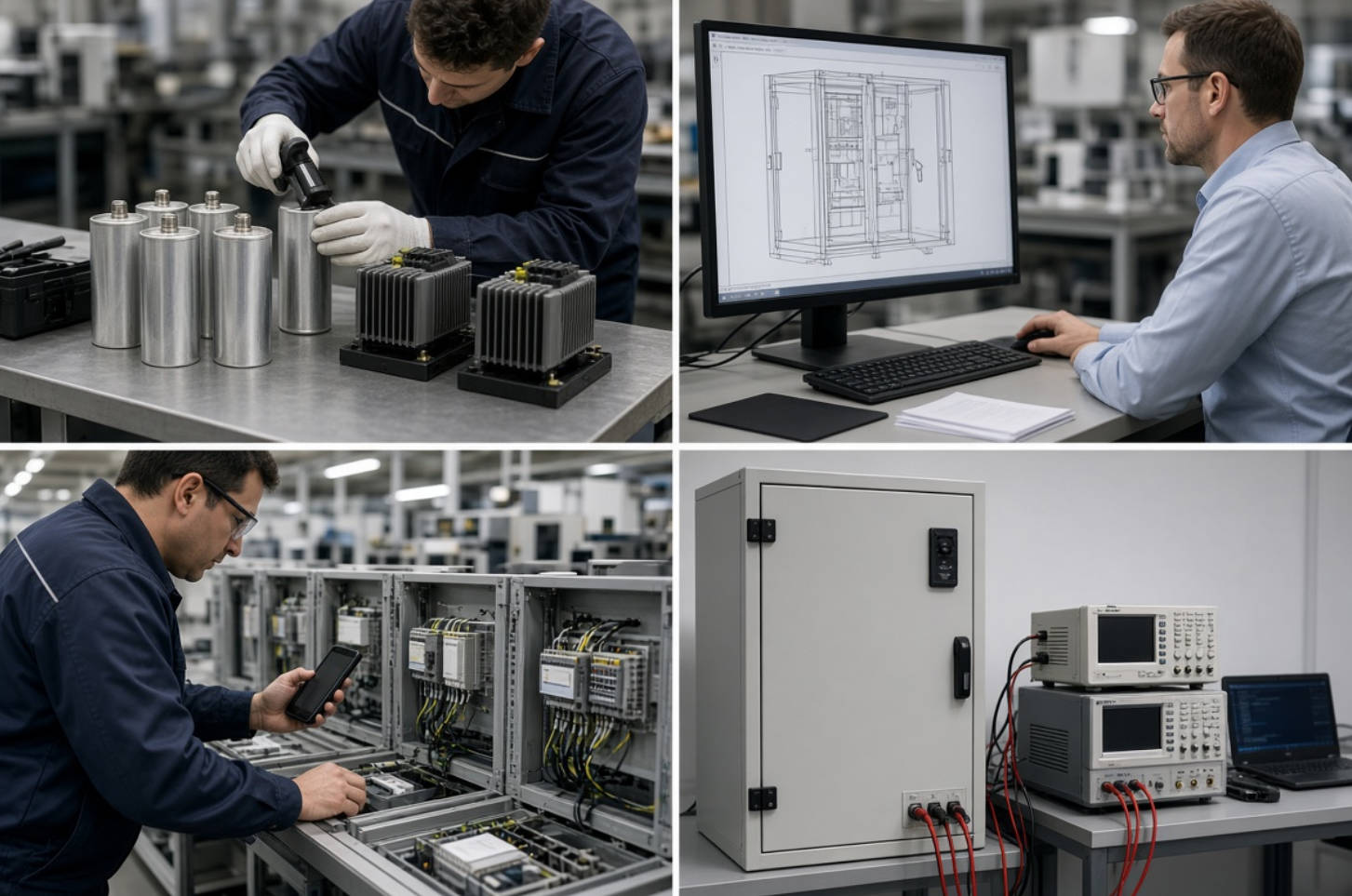
An automatic capacitor bank connects and disconnects capacitor steps to supply reactive power. An SVG uses power electronics to provide dynamic compensation, while an APF primarily addresses harmonic-current problems. Hybrid equipment can combine functions, but its allocation of capacity must be checked against the selected model's specifications.
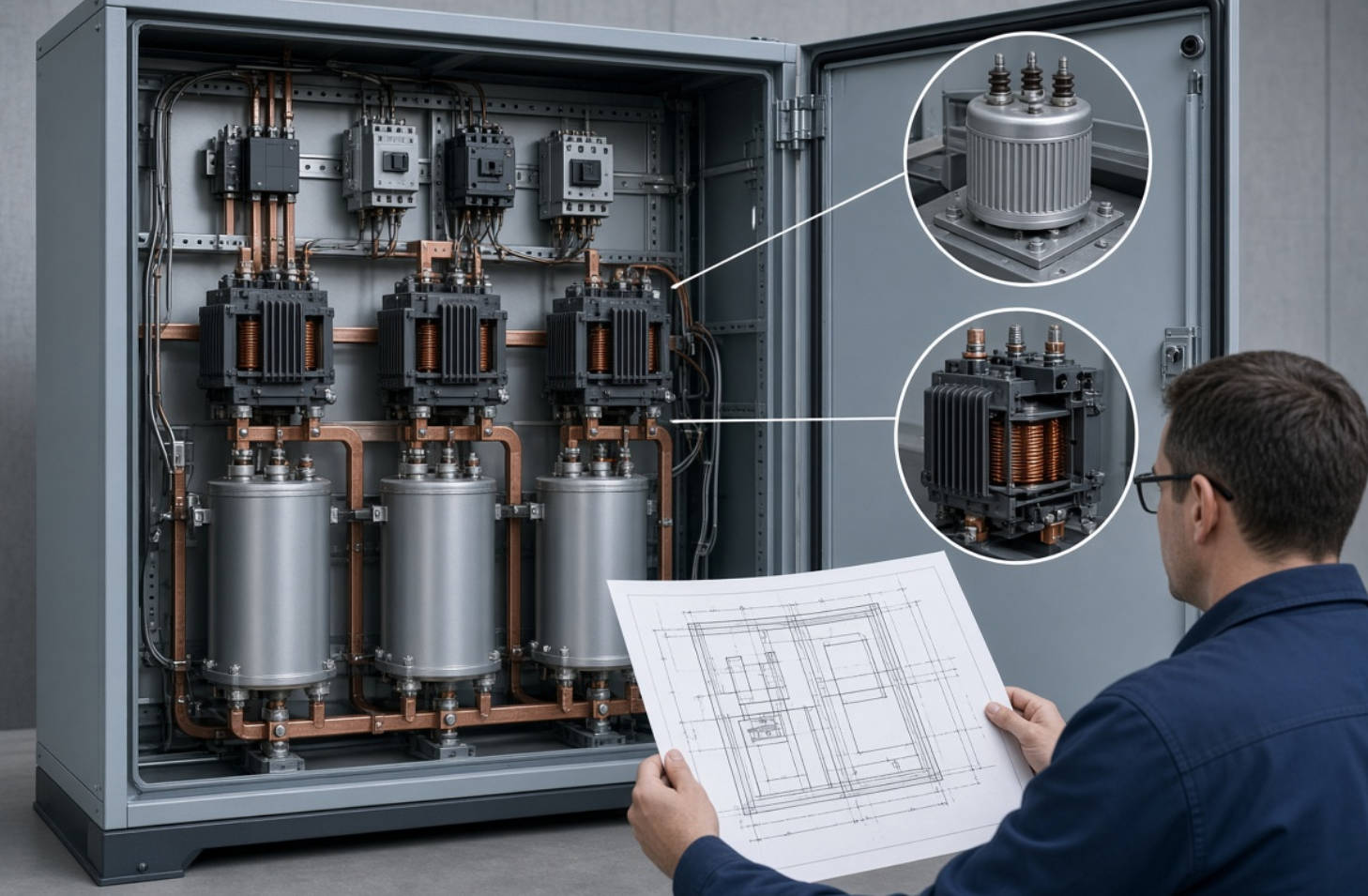
Do not assume that a detuned capacitor bank eliminates harmonic currents. Detuned reactors primarily protect the capacitor arrangement against problematic harmonic amplification by shifting the series resonance frequency.
For low-voltage capacitor-bank procurement, relevant standards include:
- IEC 61921 for low-voltage power factor correction banks.
- IEC 60831-1 and IEC 60831-2 for self-healing shunt capacitors.
- IEC 61439-1 and IEC 61439-2 where applicable to the assembly.
Ask the supplier to identify the editions, verification methods, and configuration covered by its documentation. A capacitor-component report is not sufficient evidence for the whole cabinet.
Specify material requirements as measurable purchasing conditions rather than vague "premium quality" language:
- Capacitor dielectric and metallization specifications.
- Reactor conductor material and winding construction.
- Insulation and temperature limits.
- Busbar material, dimensions, and protective finish.
- Switching-device ratings.
- Traceability of critical components.
Require an approved bill of materials and prohibit substitutions without written approval. If an alternative material or component is proposed, demand evidence that the revised design still meets the agreed electrical and thermal requirements.
ISO certification concerns management systems; it does not establish the performance of a particular APFC cabinet.
Similarly, RoHS concerns restrictions on specified hazardous substances in electrical and electronic equipment. It does not prove compensation accuracy, thermal endurance, or harmonic performance. Request the applicable compliance evidence for the actual product and destination market.
One of the most consequential quotation errors is comparing capacitor nameplate ratings with complete-bank output as though they were identical.
For a capacitor at unchanged frequency, reactive output varies with the square of voltage. A detuned circuit also changes the capacitor's operating conditions. The supplier must therefore calculate the complete capacitor–reactor combination, not simply add capacitor labels.
Vishay provides a useful example: delivering a 50 kvar step at 400 V with 7% detuning and 440 V-rated capacitors requires approximately 56.25 kvar of capacitor nameplate rating.
The practical lesson is verification: purchase guaranteed system output at the agreed bus voltage, not an unexplained sum of component ratings.
Require the quotation to state:
1. Net output per step at the system voltage.
2. Capacitor rated voltage and nameplate kvar.
3. Reactor detuning percentage and inductance tolerance.
4. Operating-current assumptions.
5. Thermal and harmonic limits.
6. The factory method used to verify output.
A 7% detuned arrangement is also not universally interchangeable between operating conditions. Schneider's published example identifies approximately 190 Hz tuning for a 50 Hz system; project selection must account for the actual frequency and harmonic environment.
Request the business license, manufacturing address, certificate holder details, and sample test reports before paying a deposit.
During a factory audit, examine:
- Incoming-material identification.
- Capacitor and reactor production processes where performed in-house.
- Calibration records.
- Serial-number traceability.
- Nonconformance records.
- Final testing and document retention.
A factory that outsources some components can still be suitable. The important issue is whether it controls suppliers, verifies incoming quality, and accepts responsibility for the completed system.
For engineered compensation equipment, a standard catalog sample may not represent the ordered system.
A more useful qualification sequence is:
1. Submit the site specification and available power-quality measurements.
2. Approve the proposed architecture and bill of materials.
3. Approve drawings, protection arrangements, and operating limits.
4. Order a pilot unit or representative assembly.
5. Agree a factory acceptance test.
6. Perform site commissioning and record results.
7. Release repeat orders after reviewing deviations and corrective actions.
Include control behavior, protection functions, output verification, and thermal performance in the acceptance plan.
Before shipment, approve cabinet dimensions, gross weight, lifting points, packing method, moisture protection, and handling instructions.
Agree which components require transport restraints or separate packing. Ask the importer or broker to confirm classification for the shipped product rather than assuming capacitors, reactors, active modules, and complete cabinets share one classification.
Finally, define commissioning responsibilities, spare-parts availability, remote-support hours, and who pays for an overseas site visit. "Technical support available" is not a complete service agreement.
China's automatic power factor correction supply base includes component specialists, configurable system manufacturers, active-compensation providers, and large power-system engineering groups.
The most reliable shortlist begins with the application:
- Capacitor-focused panel builders should examine component consistency and capacitor–reactor matching.
- Buyers of dynamic compensation should verify active-module performance under real operating conditions.
- Complex industrial and utility projects require broader engineering and integration capability.
- Smaller brands should evaluate customization depth, documentation quality, and communication discipline.
DINGNUO is a relevant starting point for buyers seeking capacitor, reactor, SVG, and APF capabilities with documented support for customized dimensions and features. Its suitability should be confirmed through the same technical and commercial qualification process applied to every supplier.
Send DINGNUO your system voltage, frequency, transformer details, load profile, harmonic measurements, target power factor, enclosure requirements, and destination market. Request a proposed configuration, a documented bill of materials, model-specific compliance evidence, and a factory acceptance plan before placing the order.
Use IAF CertSearch to check the company and certificate details. The platform supports validation of certification status, accreditation of the certification body, and the accreditation body's participation in the IAF multilateral recognition arrangement.
Match the legal entity, factory address, standard, certification scope, certificate number, and expiry date. If the record cannot be located, contact the issuing certification body directly. A missing search result should trigger further verification, not an automatic conclusion that the certificate is fraudulent.
Do not assume module-level evidence covers the completed assembly.
Request documentation for the supplied configuration, including applicable requirements, drawings, wiring, protection, and assembly verification. For capacitor-bank assemblies, IEC 61921 and applicable IEC 61439 requirements provide a more relevant technical framework than a generic certificate image.
The purchase contract should identify who takes responsibility for the finished cabinet's compliance.
The quotations may use different definitions: capacitor nameplate totals, nominal bank output, or guaranteed output at the specified bus voltage.
Capacitor voltage ratings and detuned reactor arrangements affect the relationship between installed capacitor ratings and usable system output. Vishay's 50 kvar example demonstrates why component totals cannot simply substitute for bank-output calculations.
Ask both suppliers to provide the same output basis, operating voltage, detuning assumptions, and acceptance-test method.
Only if the selected product's functions and capacity support the full requirement.
Some products provide reactive compensation, while hybrid equipment combines reactive and harmonic functions. Acrel's published hybrid-compensation description, for example, identifies reactive compensation and active filtering within the system. That does not mean every SVG model provides identical functionality.
Ask for the guaranteed simultaneous operating capability, priority logic, and performance limits—not just the maximum rating of each function considered separately.
Treat the change as a controlled engineering deviation.
Require the revised bill of materials, the reason for substitution, affected drawings, and an assessment of electrical, thermal, compliance, and service implications. Decide whether additional verification is required before approving production.
For compensation assemblies, component selection must remain consistent with the agreed system design and applicable verification framework. The replacement's matching current rating alone is not enough to establish equivalence.
1. - DINGNUO: Company history, product capabilities, customization, and published certification claims. [dingnuopower]
2. - Hengyi: Company profile, production bases, product output, and certification claims. [lastone-cn]
3. - Jiukang: Official company information, integrated compensation products, and supplier documentation. [jiukang]
4. - ZDDQ: Company profile and published compliance claims. [zddqelectric]
5. - SINEXCEL: Power-quality portfolio and manufacturing network. [sinexcel-re]
6. - Sieyuan: Corporate history and power-quality equipment scope. [en.sieyuan]
7. - ZHIMING: Company history and reactive compensation portfolio. [zmgs-global]
8. - Sfere: Manufacturing profile, product scope, and quality-management information. [sfere-elecric.en.made-in-china]
9. - Acrel: Company history and hybrid-compensation product information. [acrel]
10. - Nancal: Industrial product portfolio and specified-module certification announcement. [nancalelectric]
11. - General Administration of Customs of China: 2025 machinery and electrical-equipment trade tables; broad export context, not APFC-specific market data. [english.customs.gov]
12. - Dataintelo and ReportPrime: 2025 market estimates with differing published values and potentially differing scope. [dataintelo]
13. - International Accreditation Forum: Certificate-verification guidance and CertSearch. [iaf]
14. - IEC standards information: Low-voltage compensation banks, self-healing capacitors, and applicable assembly requirements. [www1.lk]
15. - Vishay: Capacitor-output calculations for detuned filter circuits. [vishay]
16. - Schneider Electric: Detuned-reactor purpose and published tuning example. [se]
17. - American Galvanizers Association: RoHS requirements and restricted-substance overview. [galvanizeit]


