
Views: 263 Author: Dingnuo Electric Publish Time: 2026-08-02 Origin: Site


Content Menu
● What Is a Reactive Power Compensation Device?
>> Common Types of Reactive Power Compensation Devices
● What Is an Automatic Power Factor Correction System?
>> How It Works
● Key Difference Between the Two
● When to Choose Each Solution
>> Choose a Reactive Power Compensation Device When:
>> Choose an Automatic Power Factor Correction System When:
● Why Power Factor Matters in Industrial Plants
● Industry Applications That Benefit Most
● Latest Industry Trends in 2026
>> Step 1: Measure the Load Profile
>> Step 2: Review Power Quality Data
>> Step 4: Match the Technology
● Why DINGNUO-Like Manufacturers Stand Out
● Best Practices for Buying the Right System
● FAQ
>> 1. Is an automatic power factor correction system the same as a reactive power compensation device?
>> 2. Which is better for factory use?
>> 3. Can reactive power compensation reduce electricity bills?
>> 4. Do these systems help with harmonics?
>> 5. What industries benefit most from power factor correction?
>> 6. How do I know which solution I need?
Industrial power quality problems are rarely caused by one issue alone. In most factories, the real challenge is a combination of reactive power demand, voltage fluctuation, harmonic distortion, and unstable load patterns. That is why choosing between a reactive power compensation device and an automatic power factor correction system is not just a technical decision—it is a business decision that affects energy efficiency, equipment life, and operating cost.
As an electrical power quality solution provider, we often see buyers use these two terms interchangeably. In reality, they overlap, but they are not always identical. Understanding the difference can help you select the right solution for manufacturing plants, metal processing lines, petrochemical facilities, textile mills, building materials factories, and municipal infrastructure projects.
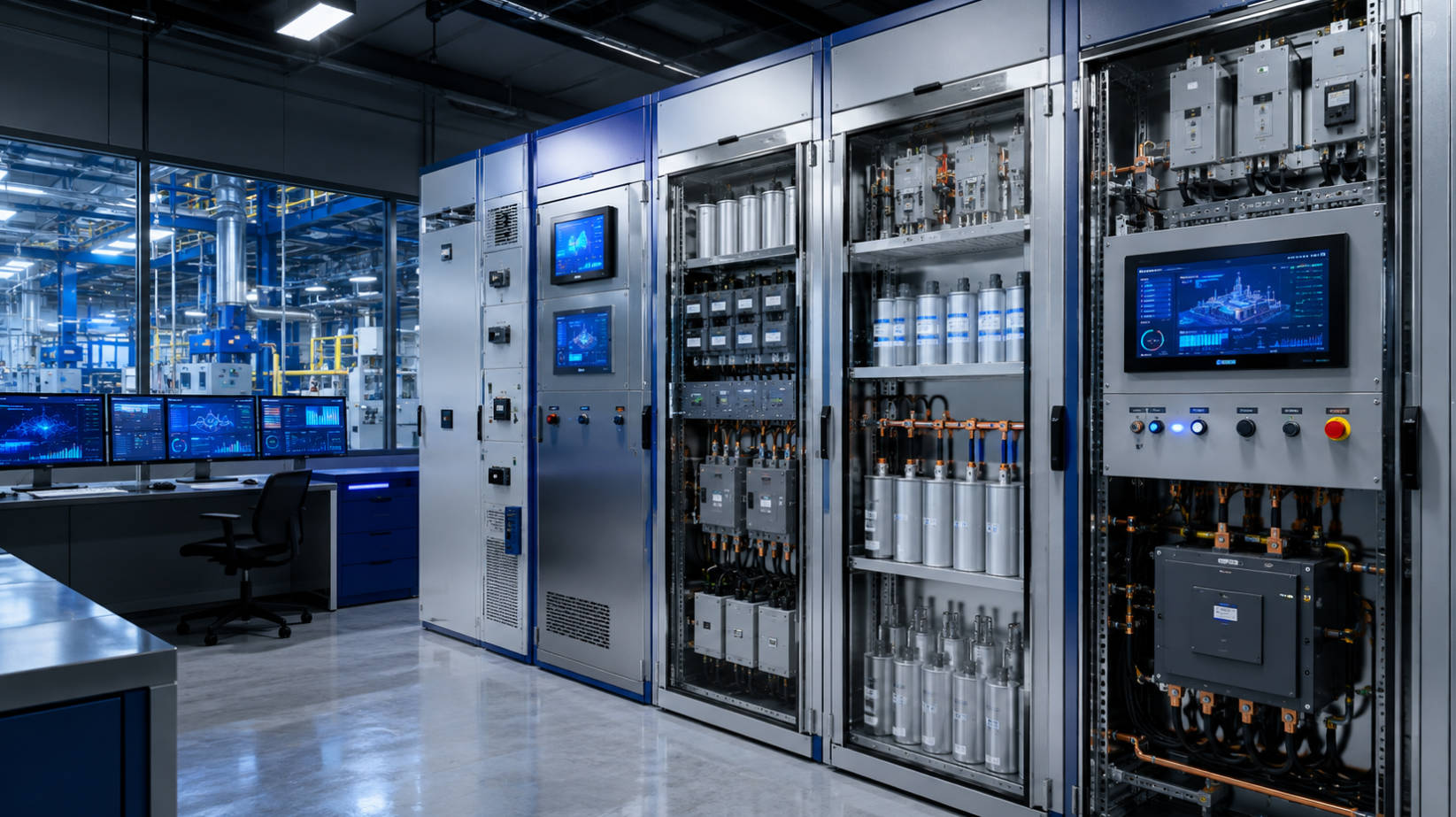
A reactive power compensation device is any electrical solution designed to offset reactive power in an AC power system. Its main purpose is to improve power factor, reduce unnecessary current flow, and support more stable voltage conditions.
In industrial environments, reactive power is usually produced by inductive equipment such as:
- Motors.
- Transformers.
- Pumps.
- Compressors.
- Welding machines.
- Induction furnaces.
When these loads consume reactive power, the system must draw more current from the grid than actually needed for useful work. A compensation device helps balance this demand.
Reactive power compensation is a broad category. It may include:
- Capacitor banks.
- Detuned reactor capacitor systems.
- Automatic capacitor banks.
- Synchronous condensers.
- Static VAR compensators.
- SVG / STATCOM-type solutions.
- Hybrid compensation systems.
In simple terms, a reactive power compensation device is the umbrella concept, while the actual technology can vary depending on load type, harmonic level, and control requirements.
An automatic power factor correction system is a specific type of reactive power compensation solution that measures power factor in real time and switches capacitor stages in or out automatically.
Instead of providing fixed compensation, it responds to changing load conditions. This makes it ideal for facilities where electrical demand changes throughout the day.
An automatic PFC system typically includes:
1. A power factor controller.
2. Current transformers.
3. Capacitor stages.
4. Contactors or thyristor switching devices.
5. Protective components such as fuses, reactors, and resistors.
The controller monitors the power factor continuously. When the load changes, it calculates the required compensation and connects the appropriate capacitor steps automatically.
This is especially useful in plants with:
- Intermittent machinery.
- Variable production schedules.
- Frequent motor start-stop cycles.
- Mixed inductive loads.
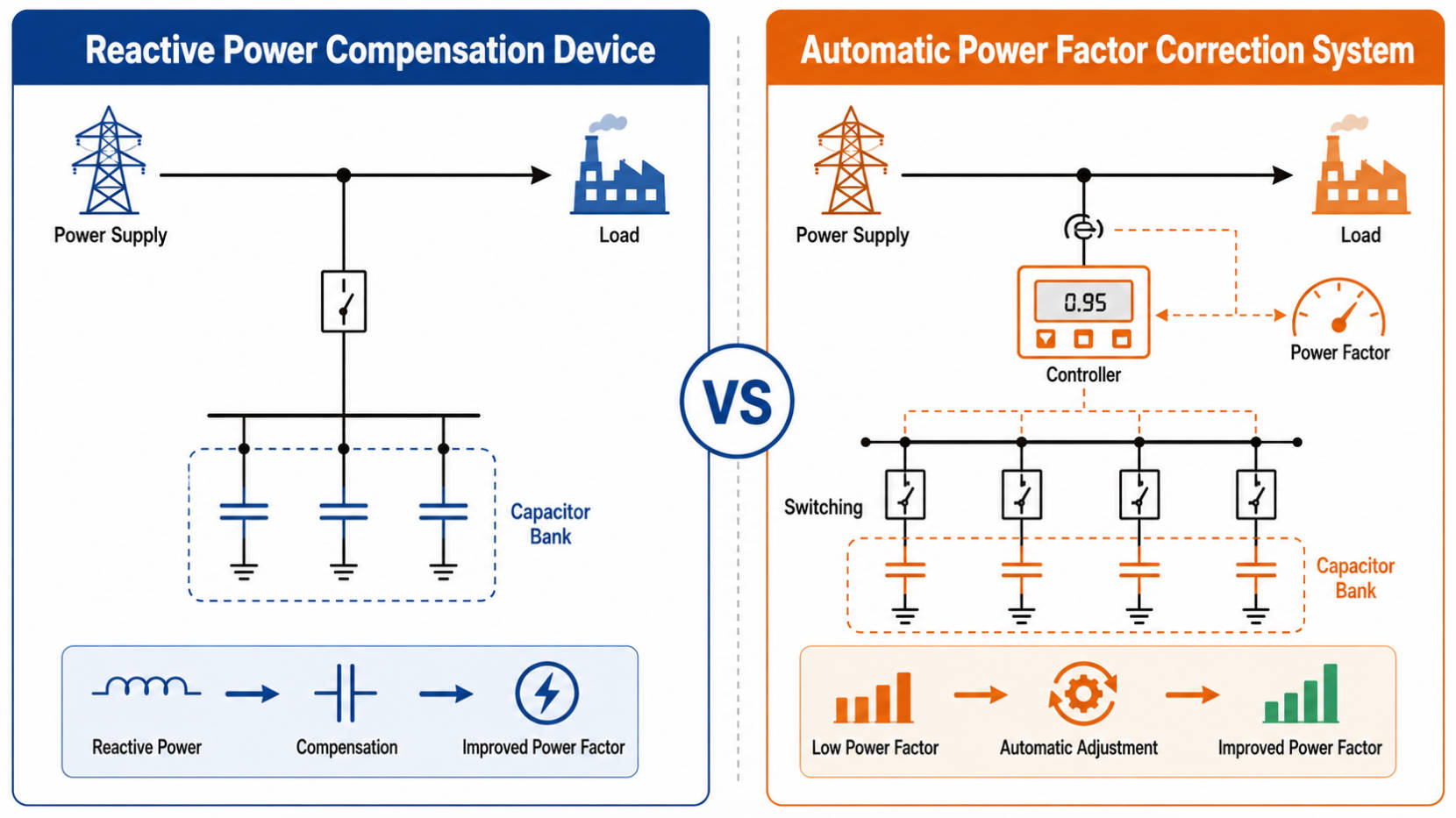
The simplest way to understand the difference is this:
- A reactive power compensation device is the broader category.
- An automatic power factor correction system is a specific type of reactive power compensation device.
| Item | Reactive Power Compensation Device | Automatic Power Factor Correction System |
|---|---|---|
| Scope | Broad category of solutions | Specific automatic capacitor-based solution |
| Main purpose | Reduce reactive power and improve power quality | Automatically maintain target power factor |
| Control | May be fixed, manual, or dynamic | Fully automatic, based on real-time load |
| Best for | Various industrial power quality needs | Loads that change frequently |
| Complexity | Can be simple or advanced | Moderate, with controller and switching logic |
| Cost | Wide range depending on technology | Usually lower than advanced dynamic systems |
| Harmonic handling | Depends on design | Often requires detuned reactors if harmonics exist |
From an engineering perspective, the comparison is not "which one is better" in every case. The real question is which one matches the load profile, harmonic environment, and performance target.
Choosing the right system depends on the plant's operating behavior. In our experience, this is where many projects succeed or fail.
- You need a general power quality improvement strategy.
- Your system includes harmonic-heavy loads.
- You need advanced voltage support.
- Your plant has special conditions such as furnace loads, renewable integration, or weak grid connection.
- You want a hybrid or customized solution.
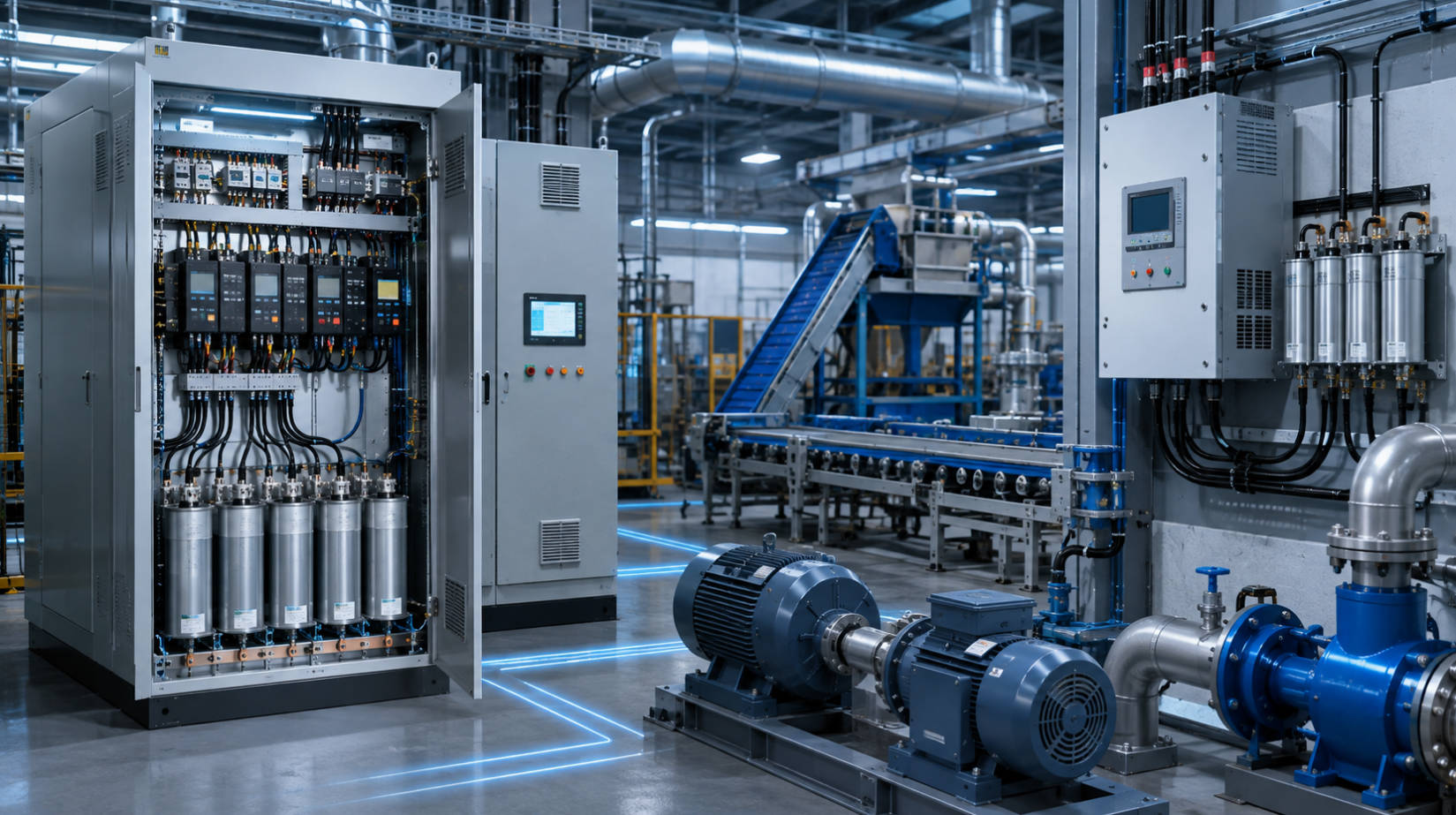
- Load demand changes throughout the production cycle.
- You want to avoid manual capacitor switching.
- Your target is to reduce utility penalties caused by low power factor.
- The plant mainly has inductive loads such as motors and transformers.
- You want a cost-effective, widely used solution for industrial facilities.
A textile plant with multiple motors, compressors, and intermittent sewing lines often benefits from an automatic PFC system because the load varies during production.
A steel mill with rapidly fluctuating arc furnace loads may need a more advanced reactive power compensation solution, possibly combined with dynamic compensation and harmonic filtering.
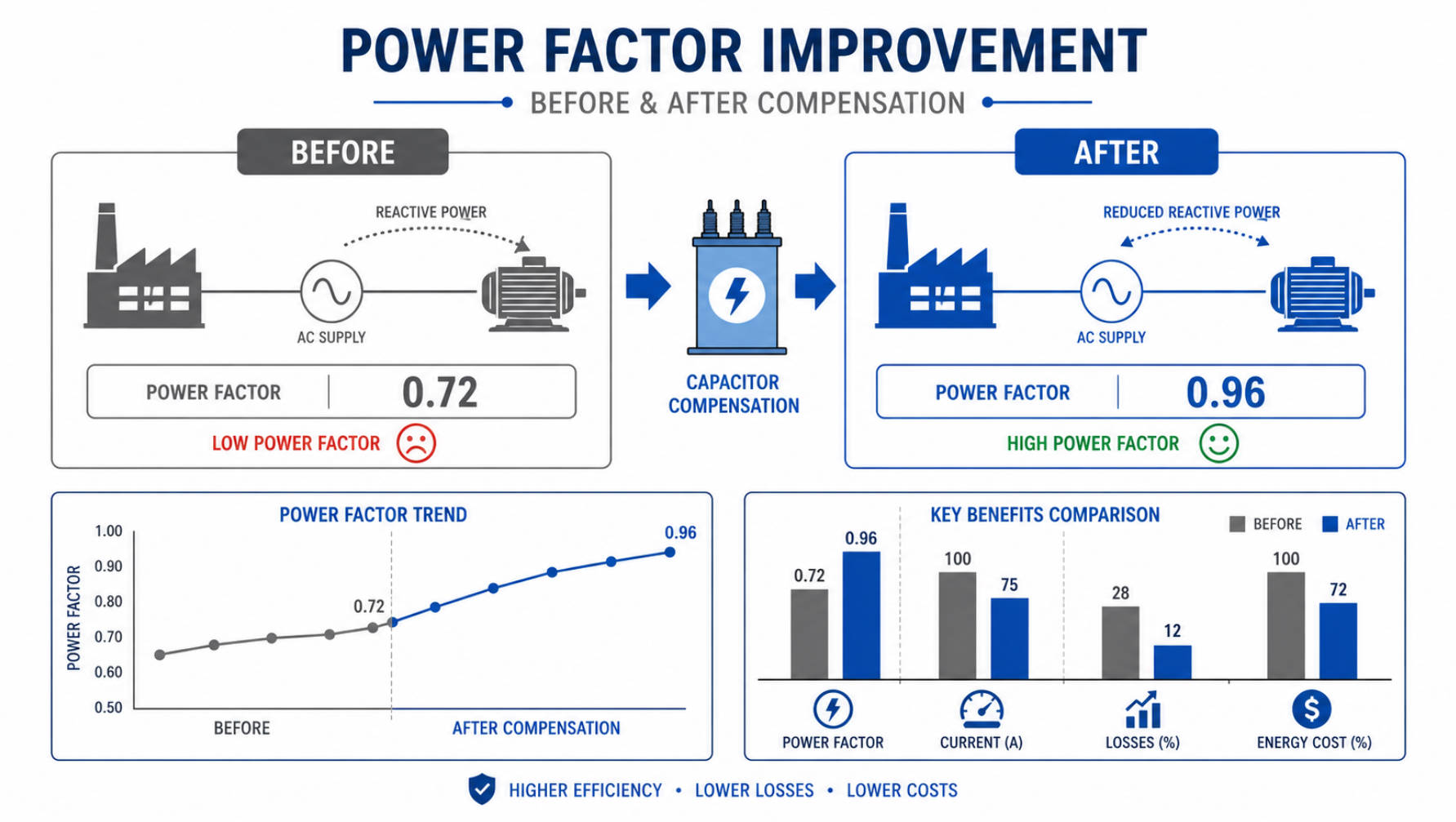
Power factor is not just a technical metric. It directly affects electrical efficiency, equipment utilization, and electricity costs.
When power factor is low:
- Current increases.
- Cable losses rise.
- Transformers run hotter.
- Voltage drop becomes more severe.
- Equipment capacity is wasted.
- Utility penalties may increase.
When power factor is improved:
- Electrical current decreases.
- System losses are reduced.
- Voltage stability improves.
- More capacity becomes available for productive load.
- Operating efficiency increases.
For manufacturers, this often translates into better plant performance and lower cost per unit of output.
Reactive power compensation and automatic PFC systems are widely used across industries where inductive loads are common.
- Metallurgy: rolling mills, arc furnaces, large motors.
- Petrochemical: pumps, compressors, process equipment.
- Automotive: assembly lines, robotics, HVAC systems.
- Paper making: large drive systems, vacuum equipment.
- Textiles: variable-speed drives, motor clusters.
- Building materials: crushers, mixers, conveyors.
- Municipal infrastructure: pumping stations, water treatment, rail systems.
These industries often operate under continuous or semi-continuous load patterns, making power factor correction highly valuable.
The market is moving beyond basic capacitor banks. Modern power quality systems are becoming smarter, more connected, and more adaptive.
1. Smart monitoring is becoming standard
More plants now want real-time visibility into power factor, harmonic distortion, and load behavior.
2. Hybrid systems are growing
Many facilities now combine capacitor banks, reactors, and active compensation to deal with both reactive power and harmonics.
3. Energy management is becoming integrated
Power factor correction is increasingly tied to energy dashboards, predictive maintenance, and digital factory systems.
For buyers, this means the best solution is no longer only about kVAr capacity. It is also about data visibility, response speed, and compatibility with plant automation.
From a project engineering perspective, here is a simple decision process.
Check whether the load is:
- Stable.
- Intermittent.
- Rapidly fluctuating.
- Harmonic-rich.
Look at:
- Average power factor.
- Peak reactive demand.
- Harmonic distortion.
- Voltage variation.
- Existing penalties from the utility.
Decide whether your main objective is:
- Lower electricity cost.
- Better voltage stability.
- Harmonic control.
- Capacity release.
- Compliance with utility requirements.
- Stable loads often suit automatic power factor correction systems.
- Complex or rapidly changing loads may need advanced reactive power compensation.
- Harmonic-heavy systems may require detuned or hybrid designs.
This structured approach reduces the risk of oversizing, under-sizing, or selecting the wrong technology.
In real projects, buyers do not just purchase equipment. They purchase engineering judgment, application support, and long-term reliability.
A strong capacitor and reactor manufacturer should provide:
- Application analysis.
- System sizing guidance.
- Harmonic assessment support.
- Customized panel design.
- Quality component selection.
- Installation and after-sales service support.
For industrial users, this matters as much as the product itself. A well-designed compensation system can protect valuable equipment, reduce operating costs, and improve plant stability over many years.
If you are evaluating a supplier or planning a new project, use this checklist.
- Confirm the actual load type and daily variation.
- Request a power quality survey before selection.
- Ask whether harmonics are present.
- Verify capacitor, reactor, and controller quality.
- Check protection design and thermal performance.
- Confirm whether the system can expand later.
- Ask for case references in similar industries.
- Make sure the supplier provides commissioning support.
A low-cost system that is poorly matched to the load can become expensive very quickly.
If your plant has stable inductive loads, an automatic power factor correction system is often the most practical and cost-effective choice. If your application is more complex, includes harmonics, or needs advanced voltage support, a broader reactive power compensation device strategy may be the better fit.
The best results come from proper load analysis, correct sizing, and a supplier who understands both electrical theory and real industrial operating conditions.
If you are planning a new project or upgrading an existing system, contact a professional power quality solution provider for a load assessment and customized compensation design.
No. An automatic power factor correction system is one type of reactive power compensation device, but the broader category also includes fixed, dynamic, and hybrid solutions.
For many factories with changing loads, an automatic PFC system is the most practical choice. For more complex electrical environments, a broader compensation solution may be better.
Yes, in many cases it can reduce utility penalties, lower losses, and improve electrical efficiency. The actual savings depend on your load profile and tariff structure.
Not always. Standard capacitor-based systems mainly improve power factor. If harmonics are present, detuned reactors or active filtering may be required.
Industries with large motors, compressors, pumps, furnaces, and variable loads usually benefit the most, including metallurgy, petrochemicals, textiles, building materials, and automotive manufacturing.
Start with a power quality survey. Then compare your load variation, harmonic level, and operational goals before choosing a fixed, automatic, or advanced compensation solution.
1. [Power Factor Correction Devices Market to Reach USD 4.9 Billion by 2036]
2. [Reactive Power Compensation Technology: Principles and Industrial Applications]
3. [Reactive Power Compensation vs Dynamic Reactive Power Compensation]
4. [Top Power Factor Correction Strategies for 2026 Success]
5. [North America Power Factor Correction Market Report 2026]
6. [Power Factor Correction Best Practices for Large Plants]


