
Views: 265 Author: Dingnuo Electric Publish Time: 2026-09-20 Origin: Site


Content Menu
● Why Source Electric Control Cabinets from China?
>> 1. DINGNUO ELECTRIC CO., Ltd.
>> 2. CHINT Group / CHINT Electric
>> 4. PEOPLE Electrical Appliance Group
>> 5. Guangzhou Baiyun Electric Equipment Co., Ltd.
>> 6. Shanghai Guangdian Electric Group Co., Ltd.
>> 7. Giantele / Zhejiang Zhegui Electric Co., Ltd.
>> 8. Hongfa Technology Co., Ltd.
>> 9. Great Wall Electrical Group / Lanzhou GreatWall Electrical
● Technical Requirements Buyers Should Specify
>> Electrical Design Requirements
>> Cabinet and Enclosure Requirements
>> Substitution of Components After Sample Approval
>> Unclear Cabinet Material Specifications
>> Incorrect Short-Circuit Assumptions
>> Generic or Misapplied Certificates
>> Step 1: Send a Technically Complete RFQ
>> Step 2: Verify the Manufacturer
>> Step 3: Approve Drawings Before Production
>> Step 4: Use a Sample or First-Article Inspection
>> Step 5: Define Shipment and Logistics Requirements
>> 1. How can I verify whether a supplier's ISO certificate is still valid?
>> 2. Is CE certification enough for an electric control cabinet sold in Europe?
>> 3. What is the difference between an electric control cabinet and a switchgear cabinet?
>> 4. What should I inspect during a factory acceptance test?
>> 5. How do I prevent a supplier from replacing components with cheaper brands?
China is one of the world's most important sourcing bases for electric control cabinets, low-voltage switchgear, industrial automation panels, power-distribution systems, and power-quality equipment. For overseas procurement teams, the opportunity is substantial—but so is the need for disciplined technical due diligence.
A control cabinet is not a commodity metal box with components inside. Its long-term performance depends on engineering design, component selection, heat dissipation, busbar sizing, ingress protection, wiring workmanship, protection coordination, test discipline, documentation, and the supplier's ability to support commissioning after shipment.
This guide identifies 10 Chinese manufacturers and suppliers worth evaluating for different types of electric control cabinet projects. The purpose is not to declare one universal "best" supplier. Instead, it is to help procurement managers match supplier strengths with their actual needs: custom OEM panels, low-voltage distribution cabinets, motor control centers, reactive power compensation cabinets, harmonic filtering systems, PLC control panels, or complete power-quality solutions.
China exported approximately USD 1.02 trillion in electrical machinery and electronics in 2025, making this its largest export category. That scale supports deep component supply chains, experienced assembly labor, and a wide range of electrical manufacturing clusters.
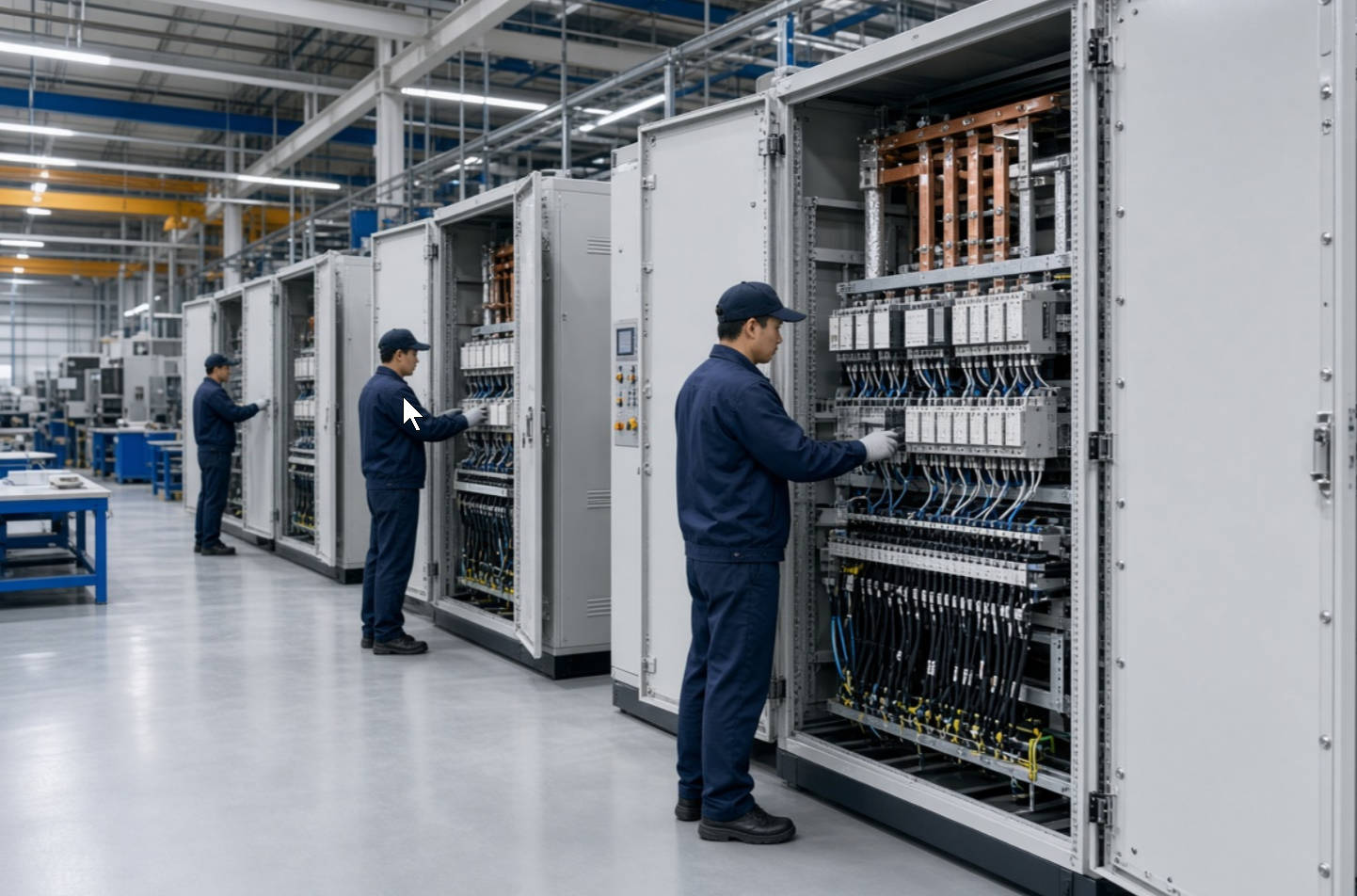
China's electrical-equipment ecosystem combines component manufacturing, enclosure fabrication, switchgear assembly, automation integration, testing capability, and export logistics. Buyers can source a basic wall-mounted control enclosure, a customized PLC panel, a low-voltage distribution cabinet, an MCC panel, or a harmonic-control system from the same national supply base.
The main manufacturing clusters include:
- Yueqing and Wenzhou, Zhejiang: Low-voltage electrical components, circuit breakers, contactors, relays, switchgear, and distribution equipment.
- Ningbo, Zhejiang: Industrial electrical equipment, power-quality products, intelligent capacitors, reactors, reactive power compensation systems, and export-oriented manufacturing.
- Shanghai and Jiangsu: Medium-voltage switchgear, industrial automation, large electrical equipment, engineering integration, and high-specification project delivery.
- Guangdong: Sheet-metal fabrication, electrical enclosures, industrial automation panels, export manufacturing, and customized control systems.
- Shandong, Hebei, and other industrial provinces: Power-distribution projects, machine-control panels, cabinet fabrication, and regional EPC supply.
For buyers, this industrial concentration can shorten sourcing cycles and improve component availability. However, the same concentration also creates a challenge: many suppliers may appear technically similar online while having very different engineering depth, test capability, production control, and export experience.
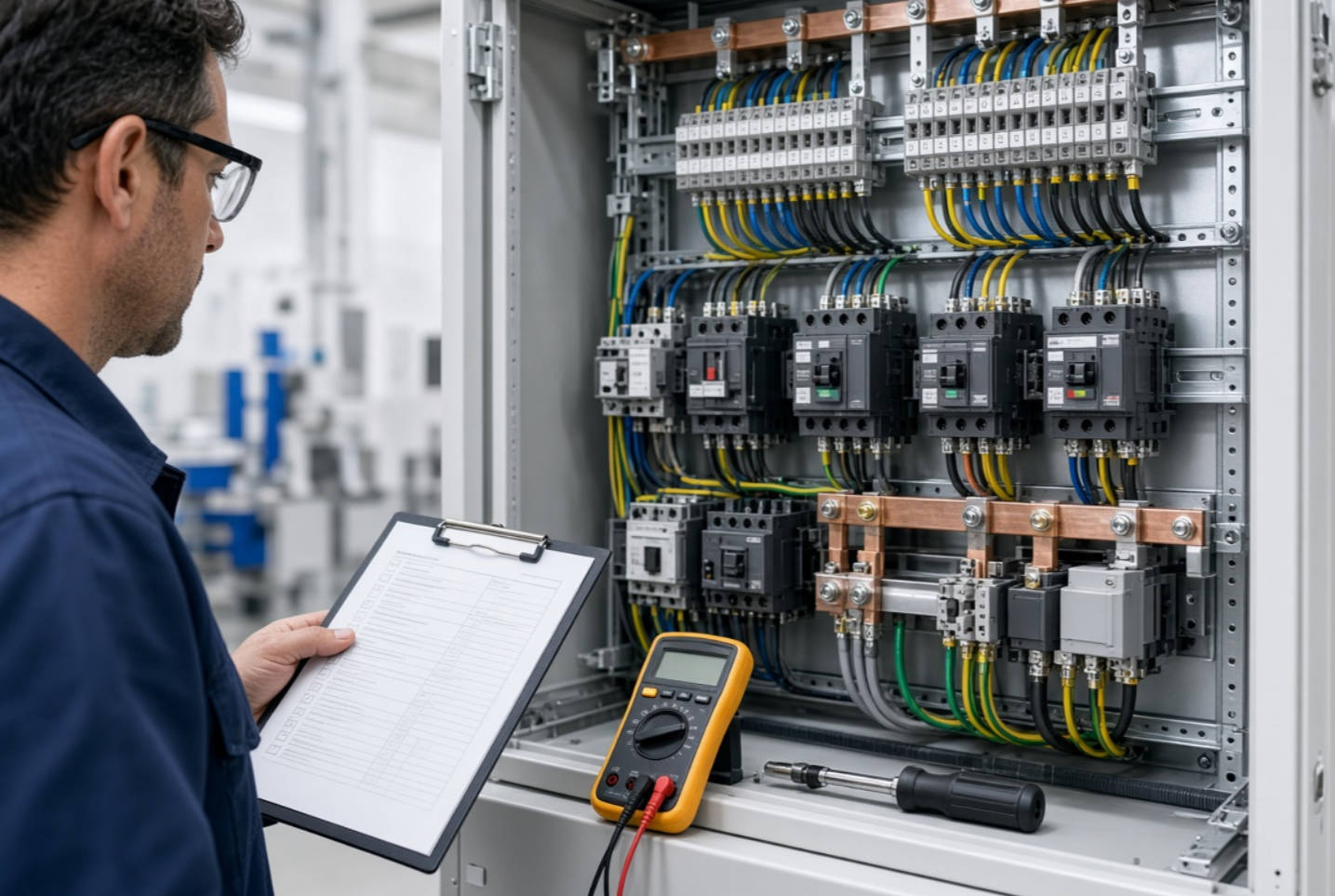
This list is designed for professional buyers seeking potential long-term manufacturing or engineering partners. The selection is based on publicly available corporate information, industry positioning, product coverage, export relevance, technical specialization, and alignment with control-cabinet procurement requirements.
A serious supplier evaluation should cover more than a website, product catalog, or quotation. The following criteria should be used before placing a production order.
| Evaluation Area | What Buyers Should Verify | Why It Matters |
|---|---|---|
| Company history | Legal registration, operational history, factory location, business scope | Reduces the risk of trading companies presenting themselves as manufacturers |
| Engineering capability | Electrical drawings, BOM optimization, thermal design, short-circuit considerations, PLC programming | Determines whether the cabinet is suitable for real operating conditions |
| Manufacturing process | Sheet-metal fabrication, powder coating, wiring, crimping, busbar forming, assembly workflow | Influences safety, consistency, appearance, and service life |
| Quality control | Incoming inspection, assembly inspection, dielectric testing, continuity testing, functional testing | Helps prevent wiring, insulation, and component-installation failures |
| Certification | ISO 9001, CE-related documentation, CCC, IEC test evidence, RoHS declarations where applicable | Required for compliance planning and buyer confidence |
| Component traceability | Brand, model number, country of origin, approved-vendor list, replacement policy | Prevents undisclosed component substitutions |
| Export support | English documents, packing specifications, labeling, spare parts, remote technical assistance | Important for overseas installation and after-sales service |
| Customization depth | Enclosure dimensions, IP rating, component brands, wiring standard, software, labels, manuals | Essential for OEM, EPC, and project-specific requirements |
| Delivery stability | Capacity planning, lead-time history, material sourcing, project management | Helps avoid production and site-installation delays |
A key standard for low-voltage switchgear and controlgear assemblies is IEC 61439-1:2020, which defines general requirements relating to service conditions, construction, technical characteristics, and verification of such assemblies. For power switchgear and controlgear assemblies, buyers should also discuss the applicability of IEC 61439-2 and request project-specific verification documentation rather than accepting a generic "IEC compliant" statement.
For European-market projects, CE marking must be linked to the applicable harmonized legislation and conformity-assessment process. A CE logo by itself is not evidence of complete product compliance. Where relevant, RoHS controls hazardous substances in electrical and electronic equipment and should be supported by declarations and material evidence.
Location: Ningbo, Zhejiang, China
Established: 2008
Core focus: Reactive power compensation, harmonic mitigation, intelligent capacitors, reactors, active power filters, static VAR generators, and customized power-quality control cabinets
Suitable for: Industrial users, electrical distributors, OEM brands, panel builders, engineering contractors, and small-to-medium buyers needing flexible customization
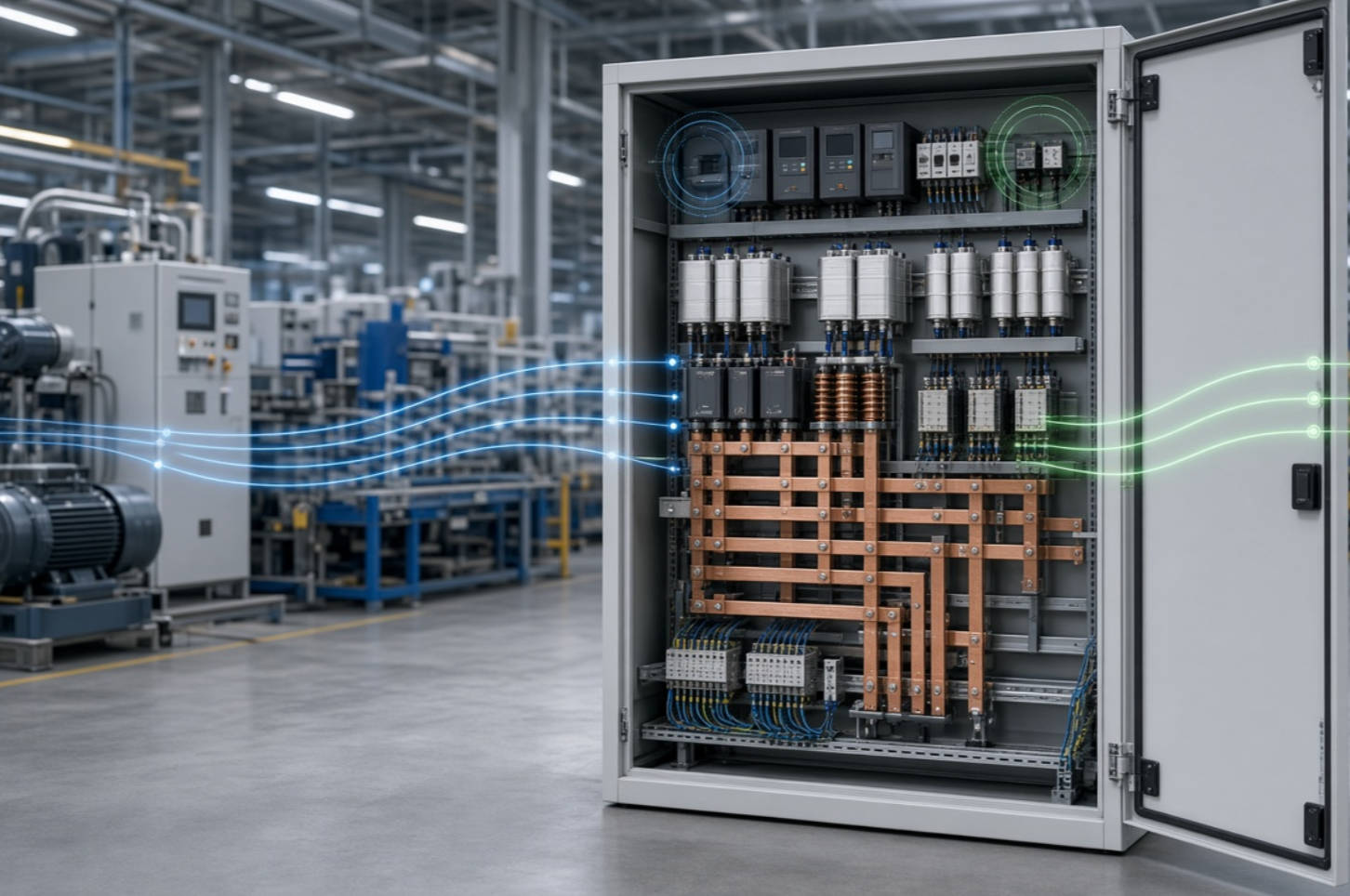
DINGNUO ELECTRIC CO., Ltd. is a Ningbo-based manufacturer focused on reactive power compensation and harmonic-control solutions for industrial power-distribution systems. Rather than positioning itself as a general-purpose enclosure supplier, the company's strength lies in integrating power-quality functions into practical cabinet-level solutions.
Its product scope includes intelligent capacitors, low- and high-voltage reactors, static VAR generators, active power filters, thyristor switching devices, multifunction meters, and compensation cabinets. The company states that it has production and testing equipment for core products and that its products have certifications including CCC, CQC, and CE. It also reports holding more than 40 invention patents, utility-model patents, and software copyrights.
DINGNUO is particularly relevant for buyers dealing with low power factor, harmonics, voltage fluctuation, capacitor-bank failure, reactive-power penalties, or power-quality instability caused by nonlinear loads.
Typical industrial applications may include:
- Metallurgy and metal processing
- Petrochemical facilities
- Automotive manufacturing
- Paper production
- Textile mills
- Building-materials plants
- Municipal infrastructure projects
- Industrial plants using VFDs, welding equipment, rectifiers, furnaces, or large motor loads
From an OEM/ODM perspective, DINGNUO is better suited to projects requiring flexible communication than highly standardized catalog-only procurement. The company states that it can customize product dimensions and functions according to buyer requirements and provides 24/7 phone and online support, with an on-site response commitment when remote resolution is not possible.
For smaller overseas brands, distributors, and engineering firms, this can be an important advantage. Large electrical groups may offer extensive product portfolios but may not prioritize lower-volume technical customization. A specialist manufacturer can often respond faster when the buyer needs a specific capacitor configuration, reactor tuning design, cabinet layout, communication protocol, component-brand preference, or power-quality solution tailored to site measurements.
What to request before ordering:
- Site load profile and harmonic-measurement assumptions
- Single-line diagram
- Capacitor-stage configuration and switching method
- Reactor detuning percentage and resonant-frequency calculation
- Component brand list and alternative-brand policy
- Thermal calculation or ventilation arrangement
- Factory acceptance test procedure
- Cabinet dimensions, IP rating, surface-treatment specification, and packing design
- Warranty terms, spare-parts list, and commissioning support plan
Location: Yueqing, Zhejiang, China
Established: 1984
Core focus: Low-voltage electrical products, switchgear, distribution systems, smart-energy solutions
Suitable for: Large-scale distribution projects, standardized electrical systems, multinational procurement, and brand-sensitive buyers
CHINT is one of China's most internationally recognized low-voltage electrical and smart-energy groups. The company was founded in 1984 and operates across green energy, intelligent electrical solutions, and smart low-carbon solutions. It reports business coverage in more than 140 countries and regions, more than 40,000 employees, and 2025 operating revenue of USD 25.91 billion.
For electric control cabinet buyers, CHINT is most relevant where standardized low-voltage switchgear, distribution boards, components, circuit protection, industrial electrical equipment, and international market coverage are priorities.
Its strengths include:
- Broad product ecosystem
- Strong component availability
- International brand recognition
- Large-scale manufacturing
- Established global sales network
- Standardized product documentation
- Suitability for larger projects and brand-led procurement
CHINT may be a strong candidate when buyers need control cabinets assembled around an established low-voltage component ecosystem. However, procurement teams should still distinguish between buying branded CHINT components, buying a CHINT-built cabinet, and buying a third-party panel assembled with CHINT components. These are different supply models with different responsibilities for design verification and warranty.
Location: China
Established: 1984
Core focus: Power distribution, industrial control automation, and electrical products
Suitable for: Industrial distribution, low-voltage control applications, component sourcing, and standardized electrical solutions
Delixi Electric is another established Chinese low-voltage electrical manufacturer with activities in power distribution, industrial control automation, and household electrical systems. The company states that it was established in 1984 and has industrial-control and power-distribution application coverage.
For control cabinet projects, Delixi is especially relevant as a component ecosystem and electrical-system supplier. Buyers may encounter its products in panel assembly through circuit breakers, contactors, protection devices, control components, and distribution equipment.
Delixi may suit buyers that prioritize:
- Established Chinese low-voltage brand supply
- Standardized electrical components
- Distribution and industrial-control applications
- Competitive pricing for mainstream industrial projects
- Alternative sourcing to Western component brands
Buyers should clarify whether a proposed cabinet is manufactured directly by Delixi, by a Delixi-authorized entity, or by an independent panel builder using Delixi-branded components. This distinction affects factory responsibility, documentation, and after-sales support.
Location: Yueqing/Wenzhou, Zhejiang, China
Origins: 1986
Core focus: Low- and medium-voltage electrical equipment, switchgear, controlgear, distribution cabinets
Suitable for: Low-voltage and medium-voltage switchgear, distribution equipment, and industrial electrical sourcing
PEOPLE Electrical Appliance Group emerged from Yueqing's low-voltage electrical manufacturing cluster. Its corporate history traces back to 1986, when its predecessor began operations in Yueqing. The company later expanded through restructuring, mergers, and alliances with electrical manufacturers in the Wenzhou area.
The group offers low-voltage main distribution cabinets, indoor switchgear and controlgear, medium-voltage switchgear, and high-voltage switchgear product categories.
This supplier category can be worth evaluating for buyers seeking:
- Conventional power-distribution cabinet solutions
- MV and LV switchgear product coverage
- China-based industrial electrical manufacturing
- Competitive solutions for regional infrastructure and industrial projects
- Suppliers close to the Yueqing component ecosystem
Because product ranges can be broad, buyers should request the exact factory, design standard, test procedure, approved components, and project-reference scope for the specific cabinet series being quoted.
Location: Guangzhou, Guangdong, China
Established: 1989
Core focus: Switchgear, transformers, capacitors, frequency converters, automatic control, intelligent electrical components
Suitable for: Utility, transportation, industrial, and large electrical-engineering projects
Guangzhou Baiyun Electric Equipment was founded in 1989 and provides a broad range of electrical equipment. Its portfolio includes high-voltage GIS, medium-voltage C-GIS, medium-voltage metal-enclosed switchgear, ring main units, DC traction switchgear, low-voltage switchgear, distribution boxes, intelligent bus systems, and related electrical equipment.
The company is relevant to buyers working on higher-complexity power-distribution projects, particularly those involving:
- Medium-voltage distribution
- Utility infrastructure
- Rail and traction applications
- Industrial projects requiring multiple electrical subsystems
- Larger engineering, procurement, and construction packages
For overseas buyers, the practical question is not only whether the company can manufacture the required cabinet but whether it can deliver the necessary language documentation, local-grid compatibility, type-test evidence, site-service availability, and export packaging for the destination market.
Location: Shanghai, China
Established: 1986
Core focus: Medium-voltage switchgear, low-voltage switch cabinets, ring-network cabinets, power cabinets, control cabinets, active filters
Suitable for: Industrial electrical systems, control cabinets, MV/LV projects, and power-quality-related applications
Shanghai Guangdian Electric Group is an established electrical-equipment manufacturer founded in 1986. Its product range includes AC medium-voltage switchgear up to 40.5 kV, low-voltage switch cabinets, ring-network cabinets, DC switch cabinets, power cabinets, control cabinets, lighting boxes, transformers, high-voltage inverters, and active filters.
Its inclusion is particularly relevant because it combines cabinet-level electrical equipment with power-electronic and filtering products. That makes it a candidate for applications where the buyer needs more than simple power distribution, such as:
- Industrial control systems
- Medium-voltage distribution
- Power-factor correction
- Harmonic filtering
- Transformer and switchgear integration
- Industrial upgrade or retrofit projects
Buyers should ask whether the proposed configuration is an established, verified design or a project-specific assembly. In the latter case, the electrical design responsibility should be clearly assigned in the contract.
Location: Zhejiang, China
Established: 2013
Core focus: LV/MV power-distribution equipment, motor control centers, distribution boards, ring main units, compact substations, power-factor-correction systems
Suitable for: Factory, mining, utility, EPC, and customized distribution projects
Giantele, associated with Zhejiang Zhegui Electric Co., Ltd., is a Zhejiang-based manufacturer founded in 2013. It designs and builds low- and medium-voltage power-distribution equipment, including motor control centers, distribution boards, ring main units, compact substations, and power-factor-correction systems.
The company states that it serves factories, mines, utilities, EPC contractors, and engineering consultants, and holds CE, GOST, ISO 9001, ISO 14001, and ISO 45001 certifications.
This makes it relevant for buyers seeking:
- Distribution equipment for industrial facilities
- MCC and motor-control applications
- LV/MV electrical packages
- Factory and mine electrification
- EPC-oriented project support
- Suppliers able to work with multiple compliance frameworks
As with any certification claim, buyers should request current copies, verify the certification body, check the scope of certification, and confirm that the certificate applies to the actual manufacturing entity—not merely a related sales company.
Location: Xiamen, Fujian, China
Established: 1984
Core focus: Relays, low-voltage devices, switchgear, distribution cabinets, low-voltage switch cabinets
Suitable for: Projects requiring strong control-component integration and low-voltage cabinet solutions
Hongfa Technology is widely known for relay manufacturing and also offers low-voltage devices, switchgear, distribution cabinets, and low-voltage switch cabinets. The company was founded in 1984 and is headquartered in Xiamen.
For control cabinet buyers, Hongfa can be relevant where the project depends heavily on reliable relay, signal, protection, and control components in addition to cabinet assembly. It may be considered for:
- Control and protection cabinets
- Industrial automation interfaces
- Low-voltage switchgear
- Distribution cabinets
- Electrical control systems requiring high relay content
Buyers should separate the evaluation of component reliability from cabinet-system engineering. A supplier may be highly credible in components but still require project-specific confirmation of enclosure quality, busbar design, thermal performance, labeling, wiring, and final assembly testing.
Location: Lanzhou, China
Established: 1998
Core focus: High- and medium-voltage switchgear, low-voltage distribution and control products, automation devices
Suitable for: Heavy industry, infrastructure, petroleum, chemical, rail, and large industrial projects
Lanzhou GreatWall Electrical provides high- and medium-voltage switchgear, low-voltage electrical components, low-voltage distribution and control products, electromechanical equipment, and automation devices. It was incorporated in 1998 and serves sectors including power, petroleum, chemicals, building materials, metallurgy, coal, water conservancy, railways, and urban infrastructure.
This profile makes the company relevant for buyers in heavy industrial environments where cabinets must operate under demanding conditions such as:
- High dust loads
- Elevated ambient temperatures
- Corrosive atmospheres
- Large motor loads
- Continuous process operations
- Power-distribution expansion
- Infrastructure and rail-related facilities
For these projects, buyers should request environmental-duty information, enclosure IP rating, anti-corrosion treatment, temperature-rise data, seismic requirements where relevant, and maintenance-access design.
Location: Dongguan, Guangdong, China
Core focus: Custom PLC panels, VFD panels, ergonomic console panels, industrial automation cabinets
Suitable for: OEM machinery builders, automation integrators, custom panel projects, and international buyers needing enclosure fabrication
Weimiao Manufacturing specializes in custom PLC control panels, PLC-plus-VFD control panels, auxiliary console systems, MCC cabinets, and industrial enclosures. It describes in-house capabilities including CNC punching and bending, fiber-laser cutting, and fabrication for custom panel work.
The company's stated compliance references include IP66/IP67, CE, UL, RoHS, and IEC standards. Buyers should confirm which certifications apply to the complete cabinet, which apply only to selected components or enclosure ratings, and whether a UL-listed industrial control panel is required for the destination market.
Weimiao may be suitable for:
- Machinery OEMs
- Automation-system integrators
- PLC cabinet projects
- VFD and motor-control panels
- HMI console systems
- Smaller-batch customized control cabinets
- Buyers requiring sheet-metal and electrical integration in one supplier
This type of supplier can be especially useful when visual layout, ergonomic interface design, machine-specific control logic, and customized enclosure fabrication are as important as power distribution.
The following table is a practical procurement comparison rather than a verified production-capacity ranking. "MOQ" should always be confirmed by RFQ because control cabinets are often project-based and configured individually.
| Manufacturer | Main Focus | Typical Buyer Profile | Customization Level | Indicative MOQ | Publicly Stated Certifications / Compliance References |
|---|---|---|---|---|---|
| DINGNUO ELECTRIC | Reactive power compensation, harmonic control, APF, SVG, capacitors, reactors | Industrial plants, distributors, OEMs, power-quality projects | High; cabinet dimensions, functions, and solution design | Often project-based; confirm by configuration | CCC, CQC, CE; quality, environmental, and safety management systems stated |
| CHINT | LV switchgear, components, distribution, smart energy | Large industrial, infrastructure, multinational buyers | Medium to high, depending on product line | Depends on series and project | Global corporate-scale compliance varies by product; confirm model-specific documents |
| Delixi Electric | Power distribution and industrial control automation | Standard industrial procurement, panel assemblers | Medium | Depends on product and distributor channel | Confirm product-specific test and conformity documents |
| PEOPLE Electrical | LV/MV switchgear, distribution cabinets, controlgear | Industrial and electrical-distribution projects | Medium to high | Project-based for switchgear systems | Confirm factory and product-specific certification scope |
| Baiyun Electric | HV/MV/LV equipment, control systems, utility equipment | EPCs, utilities, transportation, industrial engineering | High for projects | Project-based | Confirm tender-specific type-test and certification documents |
| Shanghai Guangdian | MV/LV cabinets, control cabinets, active filters | Industrial plants, power distribution, retrofit projects | High | Project-based | Confirm IEC verification and export-market compliance |
| Giantele | LV/MV distribution, MCC, substations, PFC | EPCs, factories, mines, utilities | High | Project-based | CE, GOST, ISO 9001, ISO 14001, ISO 45001 stated |
| Hongfa Technology | Relays, LV devices, switchgear, distribution cabinets | Control-panel and low-voltage-system buyers | Medium | Depends on model and project | Confirm cabinet-specific documents |
| GreatWall Electrical | HV/MV/LV switchgear, automation, heavy-industry systems | Heavy industry, infrastructure, rail, chemical projects | High | Project-based | Confirm project-specific test reports |
| Weimiao Manufacturing | Custom PLC, VFD, MCC, enclosure fabrication | OEM machine builders and automation integrators | High | Often flexible for custom builds; confirm by design | IP66/IP67, CE, UL, RoHS, IEC references stated; verify scope |
The phrase "electric control cabinet" can describe very different products. A wall-mounted PLC enclosure for a packaging machine is not engineered the same way as a 4,000 A low-voltage switchboard or a 480 V MCC.
Your RFQ should define the actual electrical, mechanical, environmental, and documentation requirements.
Include the following information:
- Rated voltage and frequency, such as 380/400/415/480 V AC, 50/60 Hz
- Rated current and main-busbar current
- Prospective short-circuit current at the installation point
- Incoming supply arrangement
- Number of outgoing feeders
- Breaker type and preferred component brands
- Control voltage, such as 24 V DC, 110 V AC, or 220 V AC
- Required protection functions
- Metering requirements
- Communication protocols, such as Modbus RTU, Modbus TCP, Profibus, Profinet, EtherNet/IP, or IEC 61850 where relevant
- PLC, HMI, VFD, soft starter, servo, or remote-I/O requirements
- Terminal numbering, cable-entry position, and gland-plate requirements
- Single-line diagram and schematic diagram requirements
Specify:
- Floor-standing or wall-mounted design
- Indoor or outdoor installation
- Required ingress-protection rating, such as IP54, IP55, IP65, or IP66
- Cabinet material, such as cold-rolled steel, galvanized steel, 304 stainless steel, or 316 stainless steel
- Sheet thickness for frame, door, and mounting plate
- Powder-coating color and coating thickness
- Anti-corrosion requirement
- Ventilation, fan, filter, air-conditioning, or heat-exchanger configuration
- Door interlocks and safety locks
- Lifting points and transport base
- Plinth height
- Cable entry from top, bottom, or both
- Internal separation form, if applicable
- Seismic, vibration, dust, humidity, salt-spray, or high-temperature requirements
For low-voltage switchgear and controlgear assemblies, IEC 61439-1 provides the general framework covering service conditions, construction, technical characteristics, and verification requirements.
Depending on the product and destination market, buyers may also need to consider:
- IEC 61439-2 for power switchgear and controlgear assemblies
- IEC 60204-1 for electrical equipment of machines
- IEC 60529 for IP protection classification
- IEC 60947 series for low-voltage switchgear and controlgear
- IEC 61000 series for electromagnetic compatibility
- UL 508A for industrial control panels for the United States, where applicable
- NFPA 79 for machinery electrical systems in the United States, where applicable
- CE-related conformity requirements for EU market placement
- RoHS material compliance for applicable electrical and electronic equipment
RoHS requirements restrict hazardous substances in electrical and electronic equipment and form part of EU environmental and public-health protections. However, buyers should avoid requesting "CE + RoHS" as generic labels. Instead, ask the manufacturer which exact directives, harmonized standards, technical files, test reports, and declarations of conformity apply to the exact product configuration.
One of the most common problems is not visible from an exterior inspection. The approved sample may contain specified breakers, contactors, capacitors, PLCs, terminals, cable glands, fans, and relays, but later production units may use lower-cost replacements.
This can affect:
- Breaking capacity
- Thermal performance
- Service life
- Communication reliability
- Spare-parts compatibility
- Warranty support
- Certification validity
- End-user acceptance
How to prevent it: Include an approved bill of materials in the purchase contract. Require written approval before any component substitution. Ask for photographs of nameplates and major components before shipment.
A quotation may say "high-quality steel cabinet" without stating steel grade, sheet thickness, surface treatment, or coating thickness. A cabinet that looks acceptable in a factory photo may deform during lifting, corrode early in humid locations, or provide inadequate mounting strength for heavy components.
How to prevent it: Specify material type, thickness tolerance, coating process, color code, corrosion-resistance requirement, and IP rating in writing.
A cabinet may be designed for nominal current but not for the fault level at the site. This is a critical engineering issue. A 630 A cabinet does not automatically have adequate short-circuit withstand capability for every 630 A installation.
How to prevent it: Provide the prospective short-circuit current from the electrical-system study. Require the supplier to state the rated short-time withstand current, peak withstand current, breaker interrupting capacity, busbar rating, and verification basis.
A cabinet can pass a basic functional test in a cool workshop but overheat after installation. Common causes include undersized busbars, densely packed VFDs, inadequate ventilation, excessive harmonic load, poor separation between heat-generating devices, and insufficient derating for ambient temperature.
How to prevent it: Request a thermal-design review, maximum ambient-temperature assumption, device derating data, ventilation layout, and internal layout drawing.
A supplier may show an ISO certificate that applies only to a trading company, a CE document for a different product, or an expired certificate. This does not necessarily mean the supplier is fraudulent, but it means the buyer has not yet completed verification.
How to prevent it: Check the legal entity name, factory address, certificate scope, certification body, issue date, expiry date, and product model. Ask whether the certificate applies to the complete cabinet, the enclosure, or only a component.
An under-discussed issue in electric control cabinet sourcing is the difference between a component certificate and a completed-assembly verification.
A cabinet can contain branded, certified breakers, contactors, PLCs, terminals, and enclosures while the finished assembly still has weak busbar spacing, incorrect torque, inadequate creepage distance, poor protective-earth continuity, insufficient ventilation, or wiring errors. In other words, genuine components do not automatically create a compliant or safe cabinet.
Before approving mass production, request the supplier's completed-panel test record. At a minimum, it should address:
- Protective circuit continuity
- Insulation resistance
- Dielectric withstand testing where required
- Functional testing
- Wiring-point verification
- Torque-controlled connection checks
- Phase sequence and control logic
- Component labeling
- Door and interlock function
- Fan and temperature-control function
- Communication testing, if included
- Final visual inspection
- Packing inspection
For complex projects, conduct a remote or third-party witnessed factory acceptance test before the final payment. This is often more valuable than adding another generic certificate to the supplier file.

Do not send only a cabinet photo and a target price. Include drawings, load data, installation environment, component preferences, standards, electrical ratings, and required documents.
A useful RFQ package includes:
- Single-line diagram
- Electrical schematic
- General arrangement drawing
- Bill of materials
- Load list
- Short-circuit rating
- Ambient temperature
- IP rating
- Required standard
- Destination country
- Quantity and annual forecast
- Labeling language
- Packing and shipping requirement
Ask for:
- Business license
- Factory address and workshop video
- Factory audit report, if available
- ISO certificates and validity details
- Product test reports
- Export records or reference markets, where disclosure is possible
- Major customer references, subject to confidentiality
- Production photos and QC records
- List of key equipment
- Organization chart for engineering, quality, and after-sales departments
A real manufacturer should be able to explain its production flow—from enclosure fabrication and incoming inspection to wiring, testing, packing, and final release.
For customized cabinets, drawing approval is the true start of production. The buyer should approve:
- Overall cabinet dimensions
- Door layout
- Component layout
- Cable entry
- Busbar routing
- Terminal schedule
- Wiring diagram
- Label design
- Nameplate content
- Packing method
Do not rely solely on a quotation or product photo when the project requires a custom electrical assembly.
For repeat OEM orders, begin with one of the following:
- A functional prototype
- A pre-production sample
- A first-article inspection
- A factory acceptance test
- A third-party inspection
The sample should be tested not only for appearance but also for wiring quality, labels, component authenticity, electrical function, IP sealing, assembly workmanship, and packing.
Electric control cabinets are heavy, sensitive to moisture, and often vulnerable to vibration damage. Your shipping instructions should cover:
- Pallet or steel-base requirement
- Vacuum packaging or moisture barrier where needed
- Desiccant use
- Shock and tilt indicators for high-value units
- Lifting-point labels
- Center-of-gravity labels
- Spare-parts packaging
- Separate packing for documentation
- Container loading plan
- ISPM 15 compliance for wooden packaging
- Insurance responsibility under the agreed Incoterms
For large floor-standing cabinets, request loading photos before shipment. Verify that door locks, internal components, and removable panels are secured for sea transport.
Choosing an electric control cabinet manufacturer in China should be treated as an engineering and supply-chain decision—not just a price comparison. The right supplier depends on your cabinet type, required standard, fault level, installation environment, preferred components, volume, customization needs, and local compliance obligations.
Large electrical groups such as CHINT, Delixi, PEOPLE Electrical, Baiyun Electric, Shanghai Guangdian, and GreatWall Electrical may be suitable for broader switchgear, distribution, or infrastructure-oriented projects. Specialists such as DINGNUO ELECTRIC are particularly relevant when the project centers on reactive power compensation, harmonic control, intelligent capacitor systems, reactors, APF, SVG, and tailored power-quality cabinets. Custom automation panel suppliers such as Weimiao may be more suitable for OEM machinery, PLC, VFD, and operator-console applications.
For buyers seeking flexible OEM support, faster technical communication, customizable power-quality cabinet solutions, and application-oriented design support for industrial plants, DINGNUO ELECTRIC CO., Ltd. should be included in the initial supplier shortlist. Its Ningbo location, stated certifications, reactive-power and harmonic-control focus, product customization capability, and support model make it particularly relevant for small-to-medium project buyers that need more than a standardized cabinet.
Before issuing a purchase order, request an engineering review, approved drawings, a locked BOM, certification evidence, and a documented factory acceptance test plan. That process will do more to protect your project than selecting a supplier based only on a catalog, a low quotation, or a certificate image.
Ask for the complete certificate rather than a cropped image. Check the legal company name, site address, certification scope, issue date, expiry date, certification body, and certificate number. Then contact the certification body or use its certificate-verification portal if available. Confirm that the certificate belongs to the manufacturing factory, not a related sales company or trading entity.
No. CE marking is not a universal product certificate. It is a manufacturer declaration that the product meets applicable EU requirements after the relevant conformity-assessment procedures have been completed. The buyer should identify which EU directives apply, which harmonized standards have been used, and whether the technical file, risk assessment, test evidence, and Declaration of Conformity cover the exact cabinet configuration.
An electric control cabinet typically focuses on controlling machinery or processes through PLCs, relays, VFDs, HMIs, sensors, and control circuits. A switchgear cabinet primarily controls, protects, isolates, and distributes electrical power. In real projects, these categories can overlap—for example, an MCC may include both power-distribution and motor-control functions.
Inspect the approved BOM, component nameplates, wiring colors, terminal labels, torque marks, protective-earth continuity, insulation resistance, functionality, interlocks, fan operation, PLC/HMI logic, communication ports, alarms, meter readings, and final dimensions. Also compare the finished cabinet against approved drawings and ensure all spare parts, manuals, certificates, and packing materials are ready.
Attach an approved BOM to the purchase order and identify critical components by manufacturer, model, technical rating, and approved alternatives. State that substitutions require written buyer approval. Before shipment, request high-resolution photographs of critical devices, serial numbers where applicable, and the final inspection report. For higher-risk projects, commission a pre-shipment inspection.
1. - DINGNUO ELECTRIC CO., Ltd. company profile, product scope, certifications, support model, and company history: [DINGNUO ELECTRIC About Us]. [dingnuopower]
2. - International Electrotechnical Commission, IEC 61439-1:2020, general requirements for low-voltage switchgear and controlgear assemblies: [IEC 61439-1:2020]. [webstore.iec]
3. - International Electrotechnical Commission, IEC 61439-3:2024, distribution boards operated by ordinary persons: [IEC 61439-3:2024]. [webstore.iec]
4. - European Commission, RoHS Directive overview: [RoHS Directive]. [environment.ec.europa]
5. - European Union, CE-marking requirements for products placed on the EU market: [CE Marking]. [europa]
6. - Observatory of Economic Complexity, China electrical machinery and electronics trade profile: [China Electrical Machinery and Electronics Trade]. [oec]
7. - CHINT corporate profile and global business coverage: [About CHINT]. [chintglobal]
8. - PEOPLE Electrical Appliance Group company history: [About PEOPLE Electrical]. [people-electric]
9. - Giantele company profile and stated certifications: [Giantele / Zhejiang Zhegui Electric]. [wboc]


