
Views: 258 Author: Dingnuo Electric Publish Time: 2026-08-01 Origin: Site


Content Menu
● What Overcurrent Protection Means
>> Fuses
● Overcurrent Protection and Power Quality
● Applications in Industrial Facilities
>> Feeders and branch circuits
>> Capacitor banks and harmonic systems
● Industrial Risks If Protection Is Poor
● What Good Protection Looks Like
● Relationship to Reactive Power Compensation
● FAQ
>> 1. What is overcurrent protection in simple terms?
>> 2. What are the main causes of overcurrent?
>> 3. Why is overcurrent protection important in industrial plants?
>> 4. Do harmonics affect overcurrent protection?
>> 5. How do I choose the right overcurrent protection device?
>> 6. Should capacitor banks be protected differently?
Overcurrent protection is one of the most important safeguards in any electrical system, especially in industrial facilities where motors, capacitors, reactors, drives, and transformers must operate reliably under demanding conditions. For manufacturers like DINGNUO ELECTRIC CO., Ltd., the topic is not only about circuit safety but also about protecting power quality equipment, reducing downtime, and supporting stable industrial operations.
Overcurrent protection is the process of detecting and interrupting excessive current before it damages conductors, equipment, or connected processes. In practical terms, it protects a system when current rises above the safe operating level because of overloads, short circuits, or ground faults.
A well-designed protection strategy helps electrical systems do three things at once:
- Carry normal load current without nuisance tripping.
- Disconnect dangerous fault current quickly.
- Protect downstream assets from thermal and mechanical damage.
In industrial environments, this is especially important because overcurrent events can cascade. A small fault in one part of the system may lead to overheating in cables, contactor failure, capacitor damage, or unplanned shutdowns if protection is poorly coordinated.
Industrial facilities rarely run simple, uniform electrical loads. Instead, they combine variable-speed drives, large motors, capacitor banks, harmonic filters, welding systems, compressors, and automated production lines. This creates a dynamic electrical environment where current can change quickly and fault levels can rise sharply.
That is why overcurrent protection is not only a compliance issue. It is a business continuity issue. When protection is properly selected and coordinated, it helps reduce:
- Equipment burnouts and insulation failure.
- Unplanned downtime.
- Fire risk.
- Maintenance costs.
- Secondary damage after a fault.
For manufacturers that rely on reactive power compensation and harmonic control, the stakes are even higher. Capacitor banks and active filters must be protected from overload, resonance, and switching transients, or the very equipment meant to improve power quality may fail prematurely.
There are three common types of overcurrent in industrial systems. Understanding the difference is essential for choosing the right protective device and setting.
| Type | What It Means | Typical Risk |
|---|---|---|
| Overload current | Current above normal operating level, usually within the intended circuit path | Heating, insulation aging, reduced equipment life |
| Short-circuit current | Very high current caused by an unintended low-resistance path | Severe equipment damage, arc flash, fire |
| Ground-fault current | Current leaking from conductors to ground | Shock hazard, equipment stress, fire risk |
Overload current often develops gradually. Short-circuit current is immediate and violent. Ground faults may be smaller in magnitude, but they can still be dangerous if not detected and cleared quickly.
Different devices handle overcurrent in different ways. In industrial practice, the main options are fuses, circuit breakers, and overcurrent relays.
Fuses are simple, fast, and highly effective. When current exceeds the fuse rating, the element melts and interrupts the circuit. Their main advantages are speed, reliability, and current-limiting performance in certain applications.
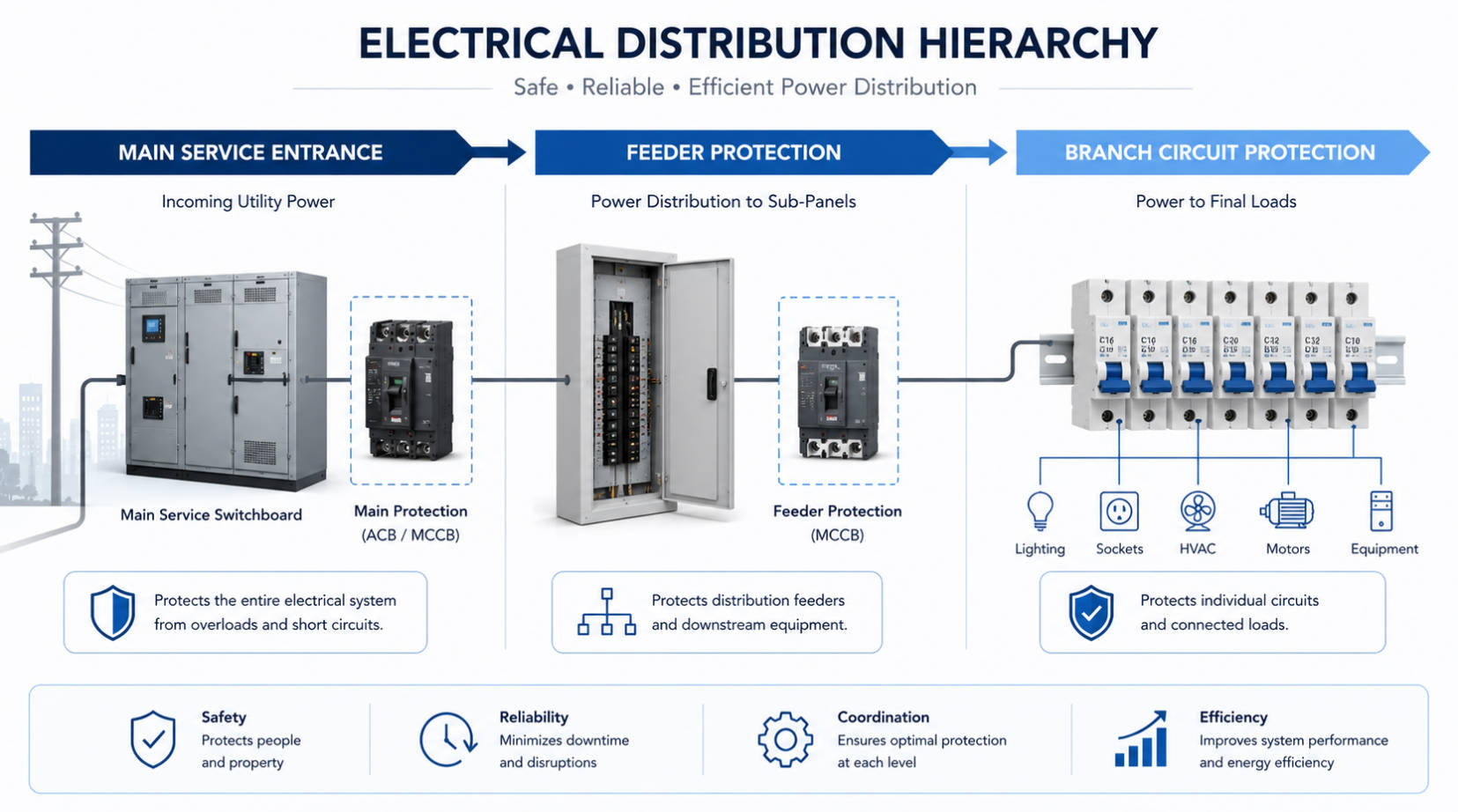
Circuit breakers are resettable devices that open mechanically when a fault is detected. They are widely used in main service disconnects, feeders, and branch circuits. Their flexibility makes them a common choice in industrial panels and distribution systems.
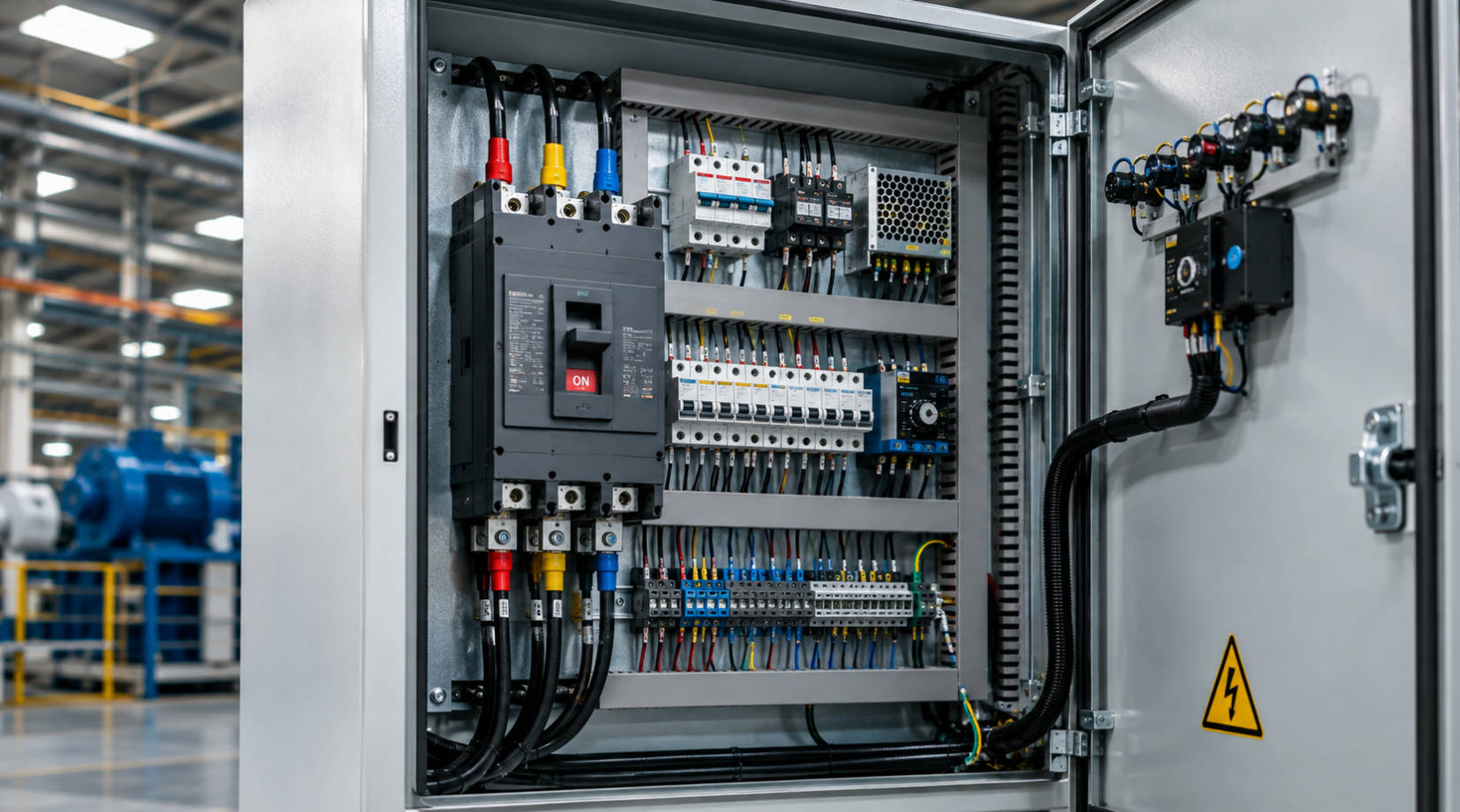
Overcurrent relays are used in more advanced protection schemes. They sense current conditions and trigger a trip command to interrupt the fault through a breaker or contactor. These are especially useful in larger systems that need selective coordination and layered protection.
At the core, overcurrent protection devices are designed to carry normal load current continuously. When current exceeds the preset safe threshold, they must open in time to prevent extensive damage.
That simple idea becomes more complex in real plants because the protection system must balance four goals:
1. Allow normal inrush current during motor starts.
2. Ignore harmless short-duration current spikes.
3. Trip fast enough under real faults.
4. Coordinate with upstream and downstream devices.
This is where engineering quality matters. If a breaker trips too slowly, the fault energy increases. If it trips too quickly, the system may nuisance-trip during normal operation. Good protection design avoids both extremes.
Selecting overcurrent protection is not just a matter of choosing the nearest standard rating. A proper design should evaluate the following factors:
- Load type: motors, capacitors, drives, heaters, or mixed loads.
- Operating current: normal steady-state current and startup current.
- Fault current level: the maximum prospective short-circuit current.
- Interrupting rating: the device must safely clear the available fault current.
- Coordination requirements: downstream faults should trip downstream devices first.
- Ambient conditions: temperature, enclosure ventilation, and installation environment.
- Power quality effects: harmonics and transients can distort current measurement and stress components.
For industrial power systems, the best protection strategy starts with measurement, not assumption. That includes load profiling, short-circuit calculation, and power quality analysis.
This is where many industrial articles stop too early. In reality, overcurrent protection and power quality are deeply connected. Harmonics, low power factor, and reactive power demand all influence how much current flows through a system, which changes protection behavior and thermal stress.
Non-linear loads such as VFDs, rectifiers, and UPS systems can generate harmonic currents. These currents do not always represent useful work, but they still heat conductors and transform current waveforms in ways that affect protective devices.
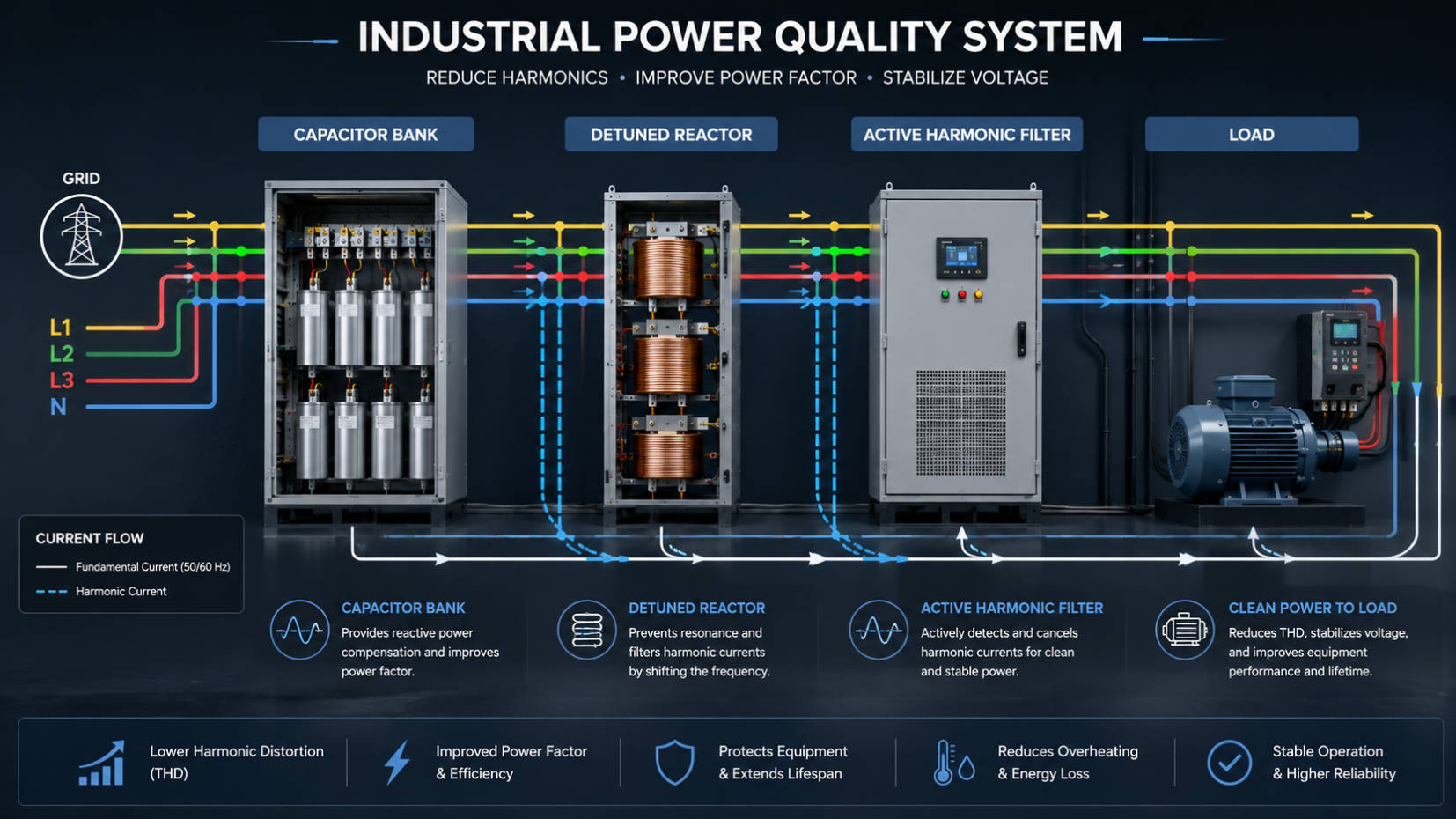
If capacitor banks are used without proper harmonic assessment, they may overheat or resonate with the system. In that case, the protection device may trip repeatedly, or the equipment may fail even if the device is technically "working." That is why capacitor bank design should always account for harmonics and overcurrent limits.
Overcurrent protection is used across almost every industrial power distribution level. Its role changes depending on where it is applied.
At the service entrance, protection devices defend the entire facility from severe faults. These devices must have sufficient interrupting capacity and strong coordination with downstream equipment.
Feeders and branch circuits protect individual production lines, machines, and subpanels. This level is critical because a fault should not shut down the whole plant if only one process section is affected.
Motors create starting surges and repeated operating cycles. Protection must tolerate inrush while still responding to overload and locked-rotor conditions. Poor settings can shorten motor life or create nuisance outages.
Capacitor banks, reactors, and harmonic filters need protection from overload, switching stress, and resonance-related current rise. This is especially relevant for facilities using reactive power compensation systems to improve power factor and reduce penalties.
When overcurrent protection is underspecified or badly coordinated, the consequences can be serious. The most common problems include:
- Cable overheating and insulation aging.
- Transformer damage from sustained overload.
- Capacitor bank failure.
- Frequent breaker trips that stop production.
- Arc flash hazards during fault events.
- Unstable system voltage and repeated equipment resets.
In practice, this means protection is not only about "saving the breaker." It is about preserving the entire electrical ecosystem around the breaker.
From an industrial engineering perspective, good protection is layered. It is not one oversized breaker or one high-speed fuse. It is a coordinated system built around real load behavior, fault studies, and site conditions.
A strong design usually includes:
- Accurate current measurement.
- Device ratings matched to available fault current.
- Time-current coordination.
- Separate consideration for overload and short-circuit behavior.
- Harmonic-aware design for non-linear loads.
- Periodic review after equipment expansion.
For manufacturers serving industries such as metallurgy, petrochemicals, automotive, paper, textiles, building materials, and municipal infrastructure, this level of planning is essential because electrical loads often evolve as production lines expand.
Reactive power compensation equipment improves power factor and frees system capacity, but it also changes the current profile of the electrical network. That means protection must be designed with the compensation system in mind.
For example:
- Capacitor banks may reduce line current, but they must be protected against harmonic resonance.
- Harmonic filters can reduce distortion, but they introduce their own current and thermal limits.
- Hybrid systems may improve performance, but they need carefully coordinated protection settings.
This is one reason why modern industrial power quality solutions should be engineered as a system, not purchased as isolated products.
If you are evaluating an overcurrent protection strategy for an industrial site, the process should be systematic.
1. List all major loads and identify which are linear and non-linear.
2. Measure operating current under normal and peak conditions.
3. Calculate prospective fault current at key distribution points.
4. Review the interrupting rating of each device in the chain.
5. Check time-current coordination between upstream and downstream devices.
6. Evaluate harmonic and reactive power conditions before adding capacitor banks or filters.
7. Reassess after expansion because production growth changes protection needs.
This workflow reduces the risk of underprotection, overprotection, and hidden thermal stress.
The broader market for reactive power compensation and harmonic control is growing because industrial facilities need better power quality, higher efficiency, and stronger reliability. One market report values the sector at about USD 5.4 billion in 2024 and projects it to reach about USD 9.0 billion by 2033, showing that demand is expanding alongside the need for advanced electrical protection.
That growth matters because more compensation systems mean more current-sensitive assets, more complex distribution networks, and more need for intelligent protection. As facilities adopt more automation, drives, and electronic loads, overcurrent protection must evolve from a basic safety function into a key part of power quality engineering.
For industrial customers, overcurrent protection should not be treated as a separate topic from power quality. A manufacturer that provides capacitor banks, reactors, and harmonic control products can add value by designing systems that are safe, efficient, and stable from the start. DINGNUO ELECTRIC CO., Ltd. is positioned to support that need with advanced technology, product service support, and comprehensive solutions for reactive power compensation and harmonic control across multiple industries.
That approach is especially useful in sectors such as metallurgy, petrochemicals, automotive, paper, textiles, building materials, and municipal projects, where electrical reliability directly affects output, quality, and operating cost.
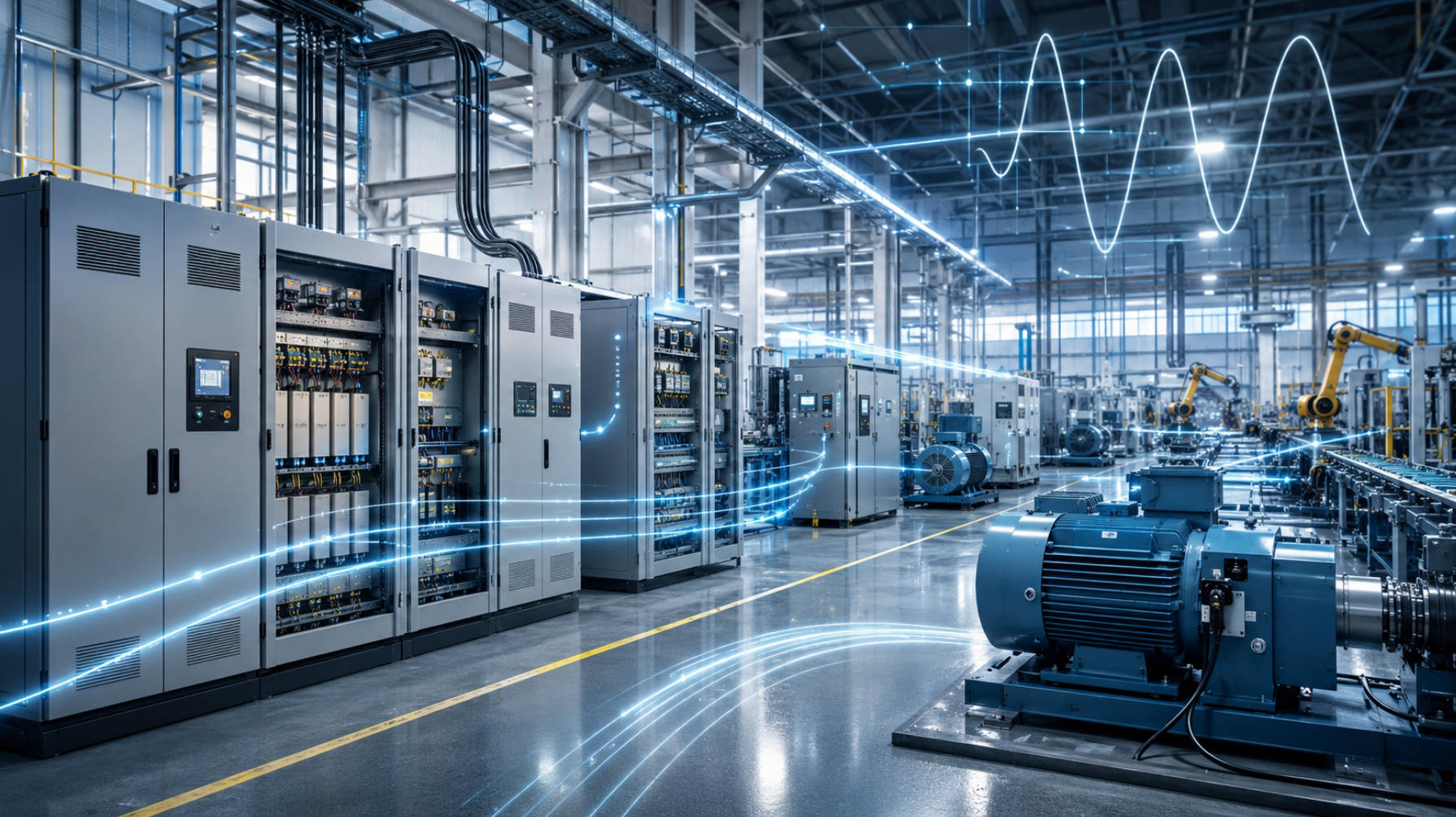
Overcurrent protection is the backbone of electrical safety in industrial power systems. It prevents overloads, short circuits, and ground faults from turning into equipment damage, downtime, and safety incidents.
But in modern facilities, the topic goes further than basic safety. Because harmonic distortion, reactive power, and power factor correction all influence current flow, overcurrent protection must be designed as part of a complete power quality strategy.
For industrial operators, the best next step is a site-specific review of load behavior, fault current, and power quality conditions. For manufacturers like DINGNUO ELECTRIC, this is where technical expertise becomes a competitive advantage.
If your facility is planning a new capacitor bank, harmonic filter, or power quality upgrade, evaluate protection settings before installation to avoid hidden risk and improve long-term system reliability.
It is a safety method that disconnects a circuit when current rises above a safe level, preventing damage and fire risk.
The most common causes are overloads, short circuits, and ground faults.
It helps prevent downtime, equipment damage, and electrical hazards in systems with large motors, drives, capacitor banks, and other demanding loads.
Yes. Harmonics can increase heating, distort current waveforms, and create conditions that stress both protective devices and compensation equipment.
You should evaluate load type, operating current, available fault current, interrupting rating, and coordination requirements before selecting a device.
Yes. Capacitor banks should be designed with harmonic conditions, resonance risk, and current limits in mind so they do not fail prematurely.
1. Overcurrent Protection, Part 1 — https://www.ecmweb.com/content/article/20888007/overcurrent-protection-part-1 [iaeimagazine]
2. Overcurrent Protection: Fundamentals and Applications — https://www.ytelect.com/blog/overcurrent-protection-fundamentals-and-applications_b267 [ytelect]
3. Reactive Power Compensation Solutions Compared — https://deltawye.com/reactive-power-compensation-solutions/ [deltawye]
4. Reactive Power Compensation and Harmonic Control Market — https://datahorizzonresearch.com/reactive-power-compensation-and-harmonic-control-market-20246 [datahorizzonresearch]
5. Overcurrent Protection Fundamentals — https://www.ecmweb.com/power-quality-reliability/article/20915061/overcurrent-protection-fundamentals [eaton]


