
Views: 283 Author: Dingnuo Electric Publish Time: 2026-07-24 Origin: Site


Content Menu
● What Is a Harmonic Filter Cabinet?
● What Is a Harmonic Filter Bank?
● Cabinet and Bank: The Core Difference
● Why Large Factories Need Harmonic Mitigation
>> 1. Function
● Which Option Fits Large Factories Better?
● How to Select the Right Solution
>> Step 2: Study Harmonic Behavior
>> Step 3: Check Space and Layout
>> Step 4: Define Growth Plans
>> Step 5: Match Protection and Cooling
● Industry Application Perspective
● Expert Insight for Plant Owners
● FAQ
>> 1. Is a harmonic filter cabinet the same as a harmonic filter bank?
>> 2. Which one is better for large factories?
>> 3. Can capacitor-based systems cause resonance?
>> 4. What type of loads usually create harmonic problems?
>> 5. Why is harmonic filtering important in industrial plants?
>> 6. Should a factory do a study before buying equipment?
Large factories depend on stable electrical systems. When nonlinear loads such as VFDs, rectifiers, large drives, and automation equipment are added to the network, harmonics, reactive power demand, and voltage instability often appear together. In that environment, the choice between a harmonic filter cabinet and a harmonic filter bank becomes a strategic decision rather than a simple equipment purchase.
For industrial plants, the goal is not only to reduce harmonic distortion. It is also to protect equipment, maintain production continuity, improve power factor, and avoid hidden issues such as resonance and overheating. That is why the right solution must be selected based on the actual electrical conditions of the facility, not on general assumptions.
A harmonic filter cabinet is a packaged, metal-enclosed solution that integrates the main filtering components, protection devices, control elements, and wiring into one finished enclosure. It is designed for easier transport, cleaner installation, and better protection of internal components.
In many industrial projects, the cabinet format is preferred when the owner wants a compact solution with faster commissioning. It is especially useful in plants where electrical rooms are tight, installation time is limited, or the project requires a standardized and orderly appearance. Because most of the integration work is completed before shipment, the site team usually faces less assembly complexity.
A harmonic filter cabinet may include capacitors, reactors, fuses, contactors, breakers, monitoring devices, and ventilation features. The exact configuration depends on voltage level, load type, harmonic profile, and required reactive power compensation.
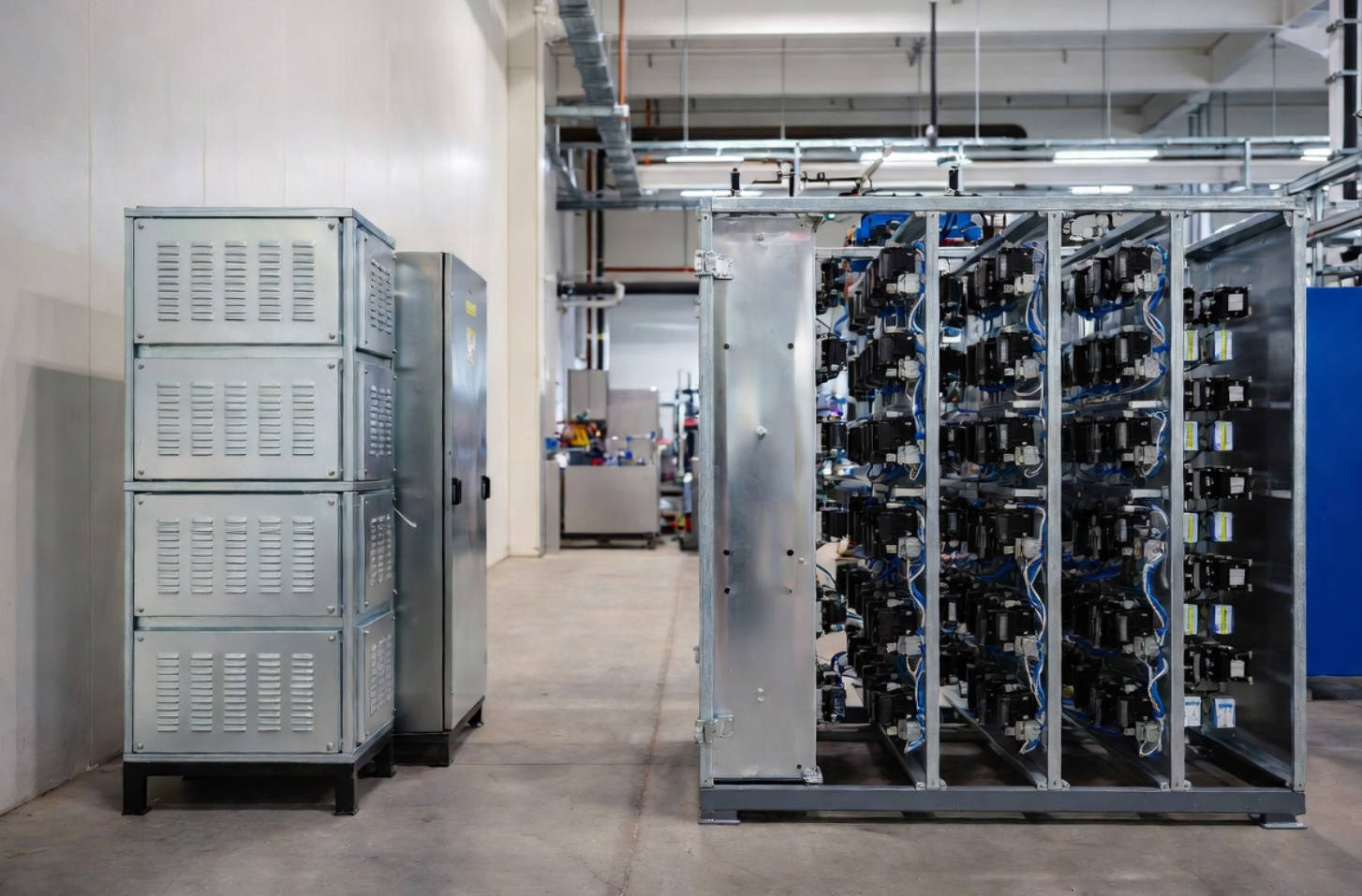
A harmonic filter bank refers to the electrical filtering circuit itself. It is usually built from capacitors, reactors, and sometimes damping elements, and it is designed to absorb or block specific harmonic frequencies in the power system.
Unlike the cabinet, the bank describes the functional electrical package rather than the enclosure style. A harmonic filter bank can be installed in an open structure, a metal-enclosed frame, or inside a cabinet. In large factories, this type of solution is often used when custom tuning is required or when the electrical system has severe harmonic distortion that cannot be solved by a generic arrangement.
A properly designed filter bank can provide strong harmonic mitigation and reactive power support at the same time. In medium-voltage industrial systems, it is common to see filter banks used in plants with large drives, process equipment, and heavy nonlinear loads.
The easiest way to understand the difference is this: the cabinet describes the enclosure and packaged delivery form, while the bank describes the filtering function and circuit design.
A harmonic filter cabinet is usually chosen for convenience, compactness, and factory integration. A harmonic filter bank is usually chosen for electrical performance, tuning flexibility, and application-specific design. In practice, one can contain the other. A plant may purchase a filter bank built inside a cabinet, but the two terms should not be treated as identical.
For large factories, this distinction matters because procurement decisions often focus on physical appearance or installation speed, while engineering decisions focus on harmonic behavior, resonance, and thermal duty. The best project outcomes happen when both sides are considered together.
Large factories rarely have purely linear loads. Variable speed drives, welders, furnaces, compressors, rolling equipment, and automated production lines all create harmonic currents that flow back into the electrical system. These harmonics can distort voltage, increase losses, and reduce the service life of transformers, cables, switchgear, and capacitors.
Reactive power is another major concern. When a factory draws significant inductive load, the power factor drops and the electrical system becomes less efficient. That can lead to higher current, more voltage drop, and unnecessary stress on the distribution network.
If harmonics and reactive power are not managed together, the plant may experience a chain reaction of problems: overheating, nuisance tripping, reduced motor performance, unstable voltage, and unexpected maintenance costs. That is why harmonic filters and reactive power compensation are often designed as part of one coordinated solution.
A harmonic filter bank is built to target harmonic frequencies and reduce distortion in the system. A harmonic filter cabinet provides that function in a packaged and protected enclosure. The cabinet is therefore more about delivery form, while the bank is more about electrical behavior.
A cabinet is usually easier to install because it arrives as a more complete assembly. This can reduce on-site labor, shorten commissioning time, and simplify wiring. A bank may require more site coordination, depending on whether it is delivered as an open frame or as part of a larger custom arrangement.
Cabinets usually perform better in compact electrical rooms. Their enclosed layout helps organize components efficiently and can reduce the footprint needed for the system. Banks may require more physical layout space if they are designed for larger ratings or installed with additional external equipment.
Cabinets often make maintenance more straightforward because the components are grouped, protected, and easier to inspect. Banks can also be maintained effectively, but access and serviceability depend more heavily on the design and installation style.
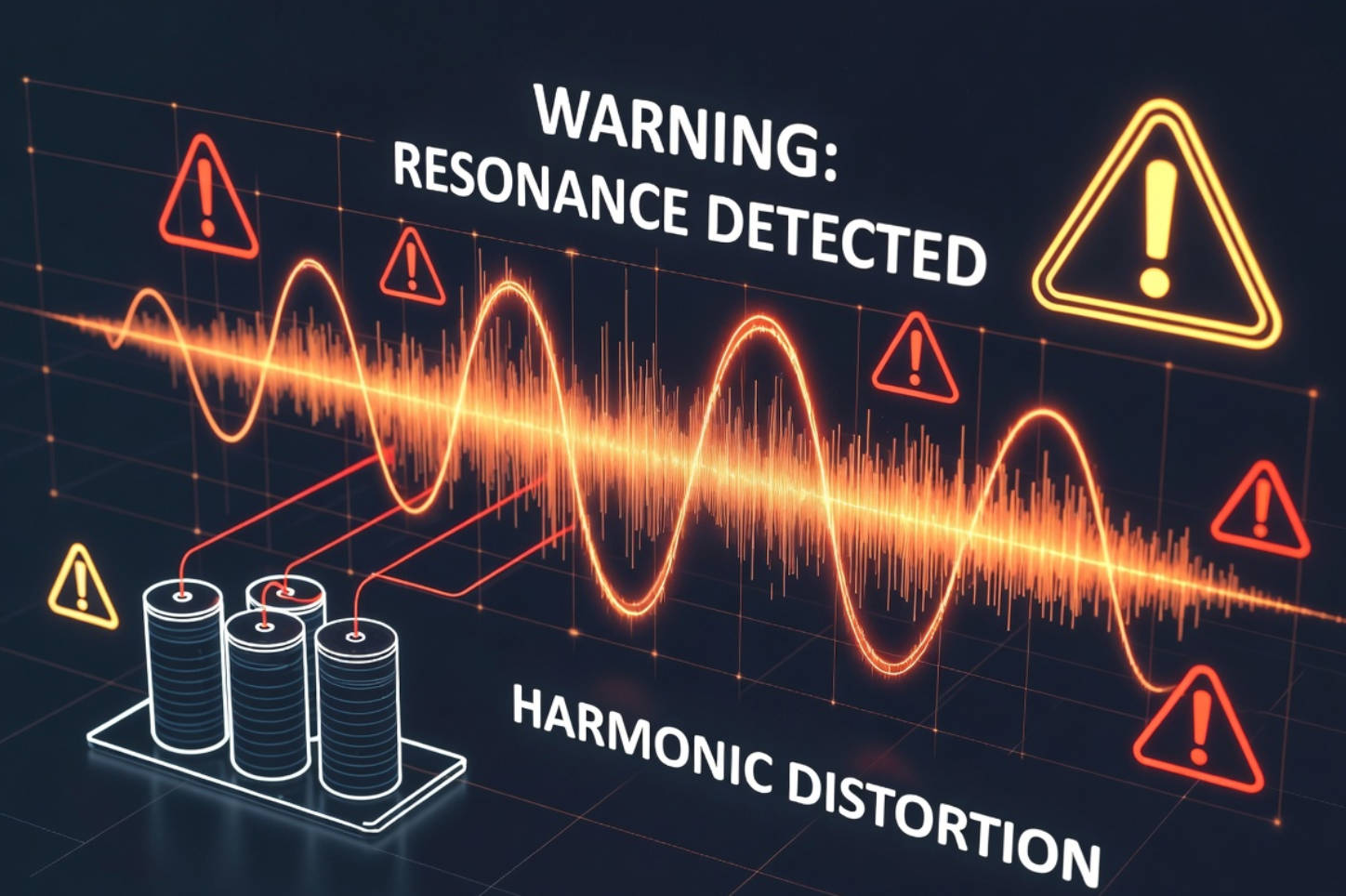
Capacitor-based systems can create resonance if they are not carefully designed. This is one of the most important reasons industrial plants must avoid buying compensation equipment without harmonic analysis. A poorly matched bank can amplify certain frequencies instead of suppressing them.
A custom harmonic filter bank often offers greater tuning flexibility. This makes it more suitable for plants with changing load patterns, large nonlinear demand, or special harmonic spectra. A cabinet-based solution can still be customized, but the packaging format may place more limits on expansion and component arrangement.
| Item | Harmonic Filter Cabinet | Harmonic Filter Bank |
|---|---|---|
| Main role | Packaged enclosure with integrated components | Electrical filtering circuit for harmonic control |
| Best suited for | Compact rooms, faster installation, standardized projects | Custom industrial systems, larger ratings, tuned applications |
| Installation effort | Lower | Medium to high, depending on configuration |
| Space efficiency | High | Depends on design |
| Maintenance access | Generally easier | Depends on layout and enclosure |
| Resonance control | Depends on engineering design | Depends on engineering design and tuning accuracy |
| Flexibility | Good | Very high |
| Typical use | Plants needing a compact, orderly solution | Plants needing deep harmonic mitigation and custom design |
There is no universal winner. The right choice depends on the plant's electrical profile, available space, and operating conditions.
A harmonic filter cabinet is often the better choice when the project needs a compact solution, quick installation, and simplified integration. This is common in factories where the electrical room is crowded, the schedule is tight, or the owner wants a cleaner packaged system.
A harmonic filter bank is often the better choice when the factory has severe harmonics, medium-voltage loads, or a need for highly customized tuning. It is especially relevant in heavy industrial sectors where nonlinear loads are large and continuous.
For many plants, the best answer is a coordinated system that combines harmonic filtering with reactive power compensation in a way that matches actual demand. In that case, the decision is not "cabinet or bank" in a narrow sense, but rather "what design architecture solves the plant problem most safely and efficiently."
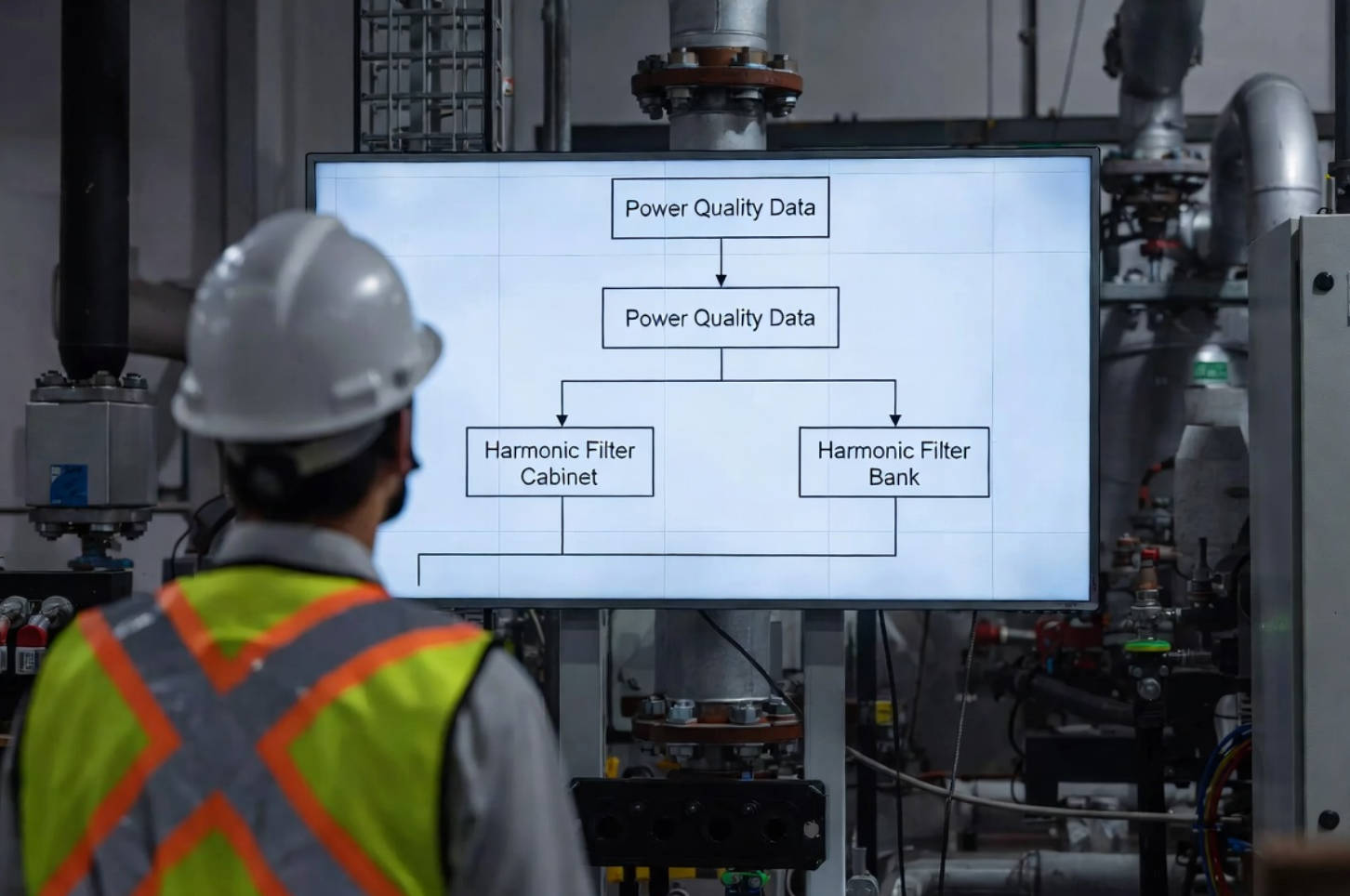
Begin with real operating data. Identify the major nonlinear loads, current distortion levels, and power factor trend across production shifts. Without this information, any filter selection will be guesswork.
A harmonic study helps identify which frequencies are dominant and whether resonance is likely. This step is especially important when the system already contains capacitors or plans to add them.
A compact plant may need a cabinet-style solution simply because the available room is limited. A larger site may have more freedom to use a custom bank arrangement or a multi-branch design.
Factories often expand production lines, add drives, or change process equipment. The selected solution should leave room for future load growth so that the system does not become undersized too quickly.
Heat, switching duty, and electrical stress must all be considered. A well-designed system should include suitable protection, ventilation, and component ratings that match the site environment.
In metallurgy and steel plants, harmonic levels are often high because of large power electronic loads and rapidly changing operating conditions. In petrochemical facilities, system reliability and uptime are critical, so harmonic control must be stable and predictable.
In automotive, paper, textile, and building materials plants, the load mix is often diverse. One area may need reactive compensation, while another area produces strong harmonic distortion. That is where a carefully designed filter architecture becomes especially valuable.
Municipal infrastructure and large public projects face another challenge: long service life. These projects need equipment that can remain stable for many years with minimal intervention. In such cases, an enclosure-based design may be attractive, but only if the electrical study supports it.
Many factories make a common mistake: they buy compensation equipment first and study the system later. This often leads to poor performance, hidden resonance, or extra maintenance cost.
A better approach is to start with the electrical system, not the product catalog. When the plant already knows its harmonic spectrum, load profile, and future capacity plans, the decision becomes much clearer. In many projects, a small investment in system analysis prevents a much larger cost in downtime and correction work.
Another practical point is coordination. Harmonic filtering and power factor correction should not be treated as separate goals. They should be planned as one integrated power quality strategy so that the final system works efficiently under real production conditions.
Consider a large manufacturing plant with multiple VFD-driven production lines and limited indoor space near the main distribution area. In this case, a harmonic filter cabinet may be the most practical solution because it offers a compact layout, organized protection, and easier installation.
Now consider a heavy industrial site with medium-voltage feeders, large nonlinear loads, and a more severe harmonic spectrum. Here, a custom harmonic filter bank may be more appropriate because it can be tuned more precisely to the plant's electrical conditions.
These two examples show the same principle: the best equipment is the one that matches the actual system problem.
For large factories, the difference between a harmonic filter cabinet and a harmonic filter bank is more than terminology. It affects how the system is installed, tuned, protected, and maintained over time.
If the plant needs a compact and packaged solution, a harmonic filter cabinet may be the right direction. If the site needs deeper customization and stronger harmonic control, a harmonic filter bank may be the better fit. In both cases, the final decision should be based on measured electrical data and proper system analysis.
No. A cabinet is the enclosure and packaging format, while a bank is the electrical filtering circuit. A cabinet may contain a bank, but the two terms are not identical.
It depends on the plant's load profile, harmonic severity, available space, and future expansion plans. Cabinet solutions are often better for compact projects, while bank solutions are often better for custom industrial applications.
Yes. If the system is not designed properly, capacitor-based compensation can interact with system inductance and create resonance. That is why harmonic analysis is essential before installation.
Variable frequency drives, rectifiers, welding equipment, large motors with electronic control, and other nonlinear loads are common sources of harmonics in factories.
It helps reduce distortion, improve power quality, protect electrical equipment, stabilize operation, and support long-term reliability.
Yes. A load study and harmonic analysis should be completed first so the final solution can be matched to the actual electrical conditions of the site.
1. NEPSI, “Presentation On Harmonic Filter Design.” https://r5.ieee.org/houston/wp-content/uploads/sites/32/2020/02/3-Harmonic-Filter-Design-Presented-by-NEPSI.pdf
2. Eaton, “Power Factor Correction and Harmonic Resonance.” https://www.eaton.com/content/dam/eaton/products/low-voltage-power-distribution-controls-systems/power-factor-corrections/power-factor-correction-and-harmonic-resonance.pdf
3. Eaton, “Power factor correction: A guide for the plant engineer.” https://www.eaton.com/content/dam/eaton/products/low-voltage-power-distribution-controls-systems/power-factor-corrections/portfo...
4. Intone Power, “Resonance, Capacitor Banks, and Active Harmonic Filters.” https://www.intonepower.com/zh/news/resonance-capacitor-banks-and-active-harmonic-filters/
5. Ampersure, “Power Factor Correction Best Practices for Large Plants.” https://www.ampersure.com/blog/what-are-best-practices-for-power-factor-correction-in-large-plants660


