
Views: 217 Author: Dingnuo Electric Publish Time: 2026-10-24 Origin: Site


Content Menu
● Why Source APF Equipment from China?
>> What Do Recent Industry Figures Actually Show?
● Selection Criteria: How to Evaluate an APF Manufacturer
● APF Manufacturer Comparison: Capacity, MOQ, and Certification
● The Top 10 APF Manufacturers in China
>> 1. DINGNUO ELECTRIC CO., Ltd.
>> 2. Shenzhen Sinexcel Electric Co., Ltd.
>> 4. Shanghai Yingtong Electric Co., Ltd. — YT Electric
>> 5. Hengyi Electric Group Co., Ltd.
>> 6. Elecnova / Jiangsu Sfere Electric
>> 7. Sineng Electric Co., Ltd.
>> 8. Xi'an CoEpower Electric Co., Ltd.
>> 9. Jiangsu Lafaelt Electric Co., Ltd.
>> 10. Xi'an Noker Electric Co., Ltd.
● Technical Buyer's Guide: Specify the System Before Comparing Prices
>> Separate Harmonic Performance from a Marketing Percentage
>> Evaluate Component Specifications, Not Just Brand Names
>> Check Compliance at the Correct Level
● Common Procurement Pitfalls and How to Avoid Them
>> An Overlooked Trap: Buying Current Capacity That Is Already Allocated Elsewhere
● Factory Verification, Samples, and Logistics
>> Use a Three-Stage Qualification Process
>> Define Factory and Site Acceptance Separately
>> Make Logistics Part of the Technical Order
● Conclusion: Select the Most Verifiable Partner
● FAQ
>> 1. How Can I Check Whether a Manufacturer's ISO Certificate Is Expired or Suspended?
>> 2. Does an "IEEE 519-Compliant APF" Guarantee My Facility Will Pass?
>> 3. Can an APF Replace an SVG and a Capacitor Bank?
>> 4. What Should an OEM Buyer Control Before Approving Mass Production?
>> 5. How Can I Compare Two APFs with the Same Ampere Rating?
China offers a broad selection of active power filter manufacturers, from specialist power-quality factories to publicly listed power-electronics companies. For international purchasing managers, the challenge is not finding an APF supplier—it is identifying a manufacturer that can deliver consistent performance, verifiable compliance, dependable production, and practical engineering support.
This guide compares ten Chinese APF manufacturers: DINGNUO ELECTRIC, Sinexcel, Acrel, Shanghai Yingtong Electric, Hengyi Electric, Elecnova, Sineng Electric, CoEpower, Lafaelt Electric, and Noker Electric. Their product portfolios cover different combinations of harmonic mitigation, reactive power compensation, monitoring, and customized power-quality systems.
The central purchasing principle is verification: evaluate the actual factory, specific APF model, test conditions, and contractual commitments rather than relying on a company name or a low-distortion claim.
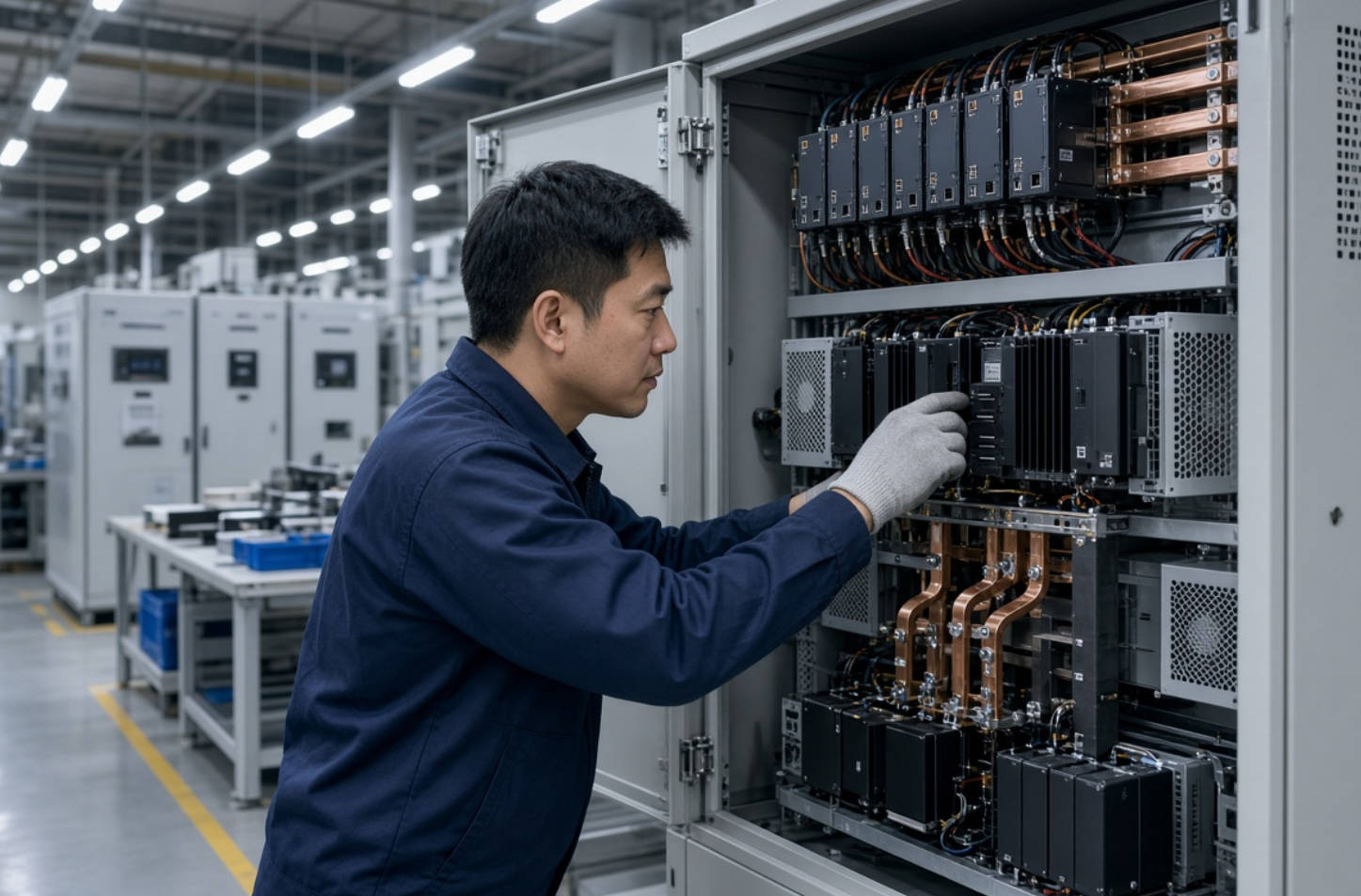
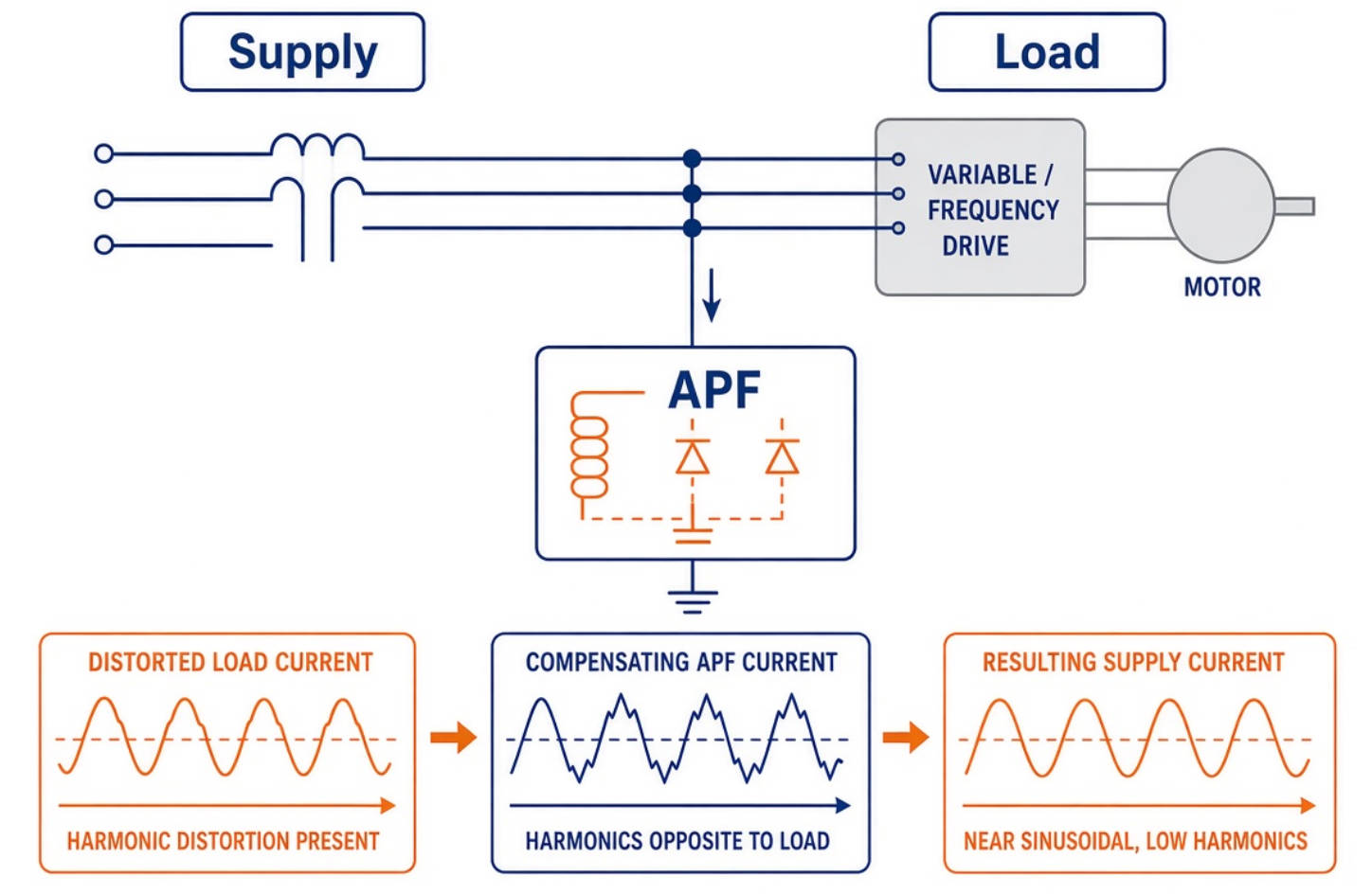
An active power filter, commonly called an APF or active harmonic filter, uses power electronics and current measurements to generate compensating currents that reduce harmonic distortion. Depending on its design and operating mode, it may also provide reactive power compensation and phase-load balancing. These additional functions must be checked against the selected model's available current capacity and control priorities.
China's supplier base gives buyers access to both dedicated harmonic-filter manufacturers and companies offering wider electrical-system packages. Examples include Ningbo-based DINGNUO, Shenzhen-based Sinexcel, Shanghai-based Yingtong, and Jiangsu-based Elecnova and Lafaelt. This geographic spread allows buyers to organize supplier visits around several established electrical-equipment manufacturing areas rather than treating China as one uniform sourcing market.
MarketsandMarkets' China Active Harmonic Filter Market report, published in August 2026, estimates a Chinese market value of $118.1 million in 2025 and forecasts $182.7 million by 2030, representing a reported compound annual growth rate of 9.1%. These are commercial research estimates, not government production or export statistics. The public report page also contains inconsistent summary fields, so buyers should review the underlying methodology before using its figures for investment decisions.
For broader manufacturing context, China's National Bureau of Statistics reported that mechanical and electrical product exports increased by 23.7% year over year during the first three quarters of 2026 and accounted for 64.3% of total merchandise exports. These figures cover a much wider category than APFs and must not be presented as APF-specific export growth.
The practical conclusion is that China offers a substantial electrical-equipment sourcing environment. Market growth alone, however, does not establish any individual supplier's quality or available production capacity.
The companies below were shortlisted using publicly available company profiles, APF product information, application descriptions, and customization statements. No factory audit, independent laboratory comparison, or confidential production-capacity assessment was performed.
For actual supplier qualification, use the following framework.
| Evaluation area | Evidence to request | Purchasing significance |
|---|---|---|
| Factory identity | Business license, manufacturing address, contracting entity, and bank-account ownership | Establishes who manufactures, sells, and warrants the equipment |
| Research and development | Engineering team structure, firmware ownership, design-change process, and relevant technical records | Tests whether customization extends beyond enclosure changes |
| Product performance | Model-specific reports with voltage, load spectrum, temperature, and measurement locations | Makes competing performance claims comparable |
| Quality control | Incoming inspection, serial-number traceability, production tests, and nonconformity records | Helps assess repeatability between sample and production units |
| Compliance | Applicable declarations, certificates, reports, and issuing-body verification | Reduces market-entry and documentation risks |
| Production readiness | Current backlog, material availability, test-station throughput, and delivery commitments | Distinguishes theoretical capacity from available capacity |
| OEM/ODM support | Written customization scope, development charges, ownership terms, and validation responsibilities | Prevents misunderstandings about private-label and engineering services |
| Lifecycle support | Warranty process, spare-parts plan, commissioning responsibilities, and software support | Establishes support obligations after shipment |
Treat this table as a proposed purchasing framework—not as a claim that all ten manufacturers have already passed each requirement.
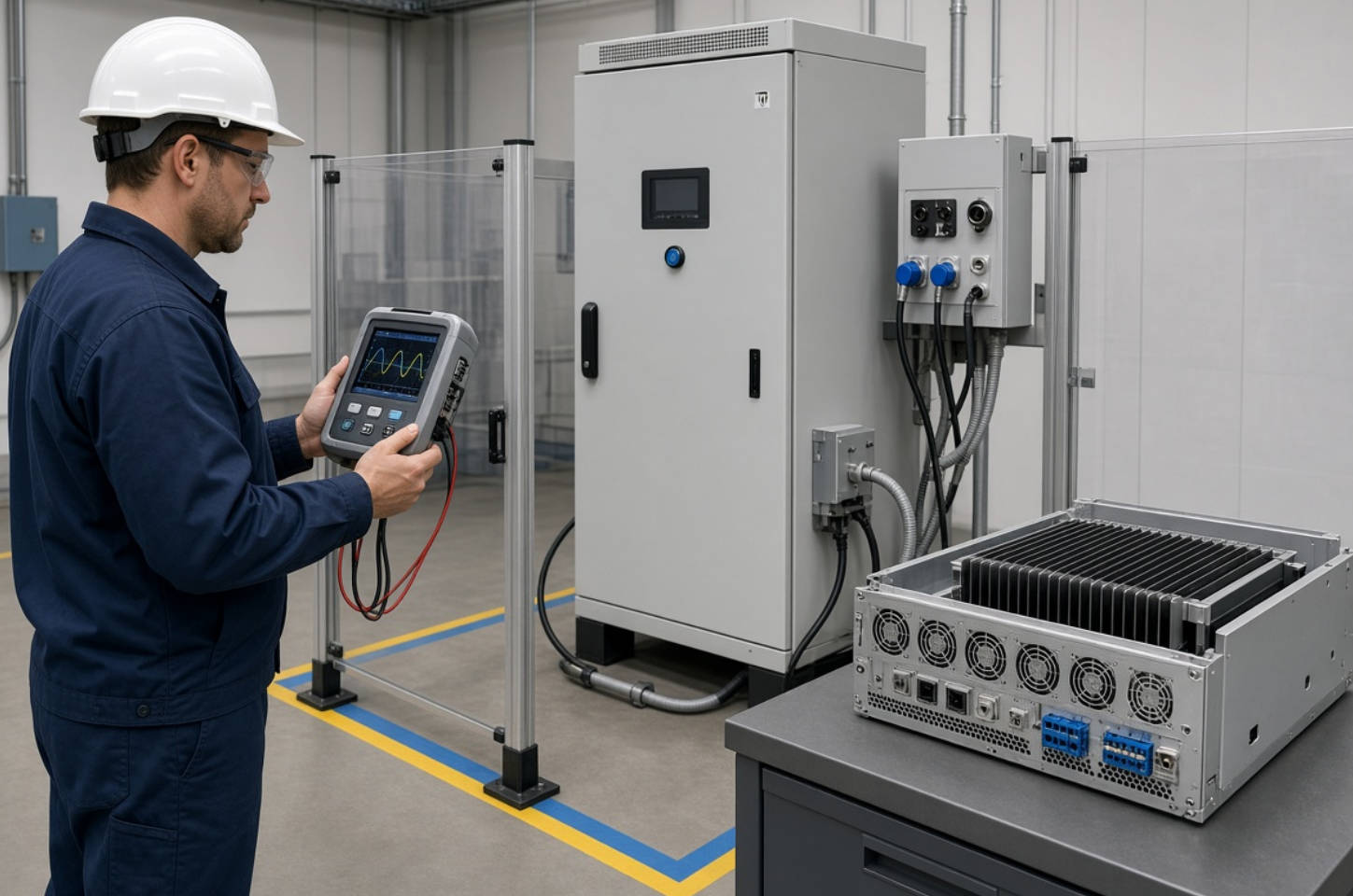
The following comparison separates published statements from information that still requires a quotation or document review.
"Undisclosed" means no dependable APF-specific figure was established from the sources reviewed. It does not mean the manufacturer lacks capacity or certifications.
| Manufacturer | Principal purchasing focus | Published production-capacity information | Public MOQ information | Compliance evidence or limitation |
|---|---|---|---|---|
| DINGNUO ELECTRIC | Customized APF, SVG, capacitor, and reactor packages | APF annual capacity undisclosed | Undisclosed; request pilot and repeat-order terms | Company reports management-system certification and CCC/CQC/CE product certifications; APF model coverage requires confirmation. dingnuopower |
| Sinexcel | Modular AHF systems and wider power-electronics integration | Annual APF output undisclosed; published module range is 25–300 A | Undisclosed | AHF page lists CE, UL, DNV, RINA, CCS, and BV; verify the exact model and approval scope. en.sinexcel |
| Acrel | APF procurement alongside metering and energy-management systems | APF-specific annual capacity undisclosed | Undisclosed | ANAPF product availability is documented; request its applicable compliance package. acrel-electric |
| Shanghai Yingtong Electric | AHF/SVG modules and OEM/ODM partnerships | Company reports combined AHF/SVG module production above 10,000 units in 2021; not APF-only current capacity | Undisclosed | Company profile mentions ISO 9001 and CE; verify current documents and model scope. ytelect |
| Hengyi Electric | Integrated capacitor-based compensation and APF sourcing | APF-specific annual capacity undisclosed | Undisclosed | Industry directory reports ISO 9001; confirm directly with the certificate issuer. us.metoree |
| Elecnova | Power-quality equipment combined with monitoring | APF-specific annual capacity undisclosed | Undisclosed | Request model-specific declarations and reports; general standards statements are insufficient. elecnovapower |
| Sineng Electric | Broader industrial power-electronics procurement | APF-specific annual capacity undisclosed | Undisclosed | Verify the selected APF separately from other product families. investing |
| CoEpower | OEM/ODM harmonic and reactive-power solutions | APF-specific annual capacity undisclosed | Undisclosed | OEM/ODM positioning is public; request the exact APF compliance file. coepowers |
| Lafaelt Electric | Integrated harmonic, reactive-power, and voltage-quality packages | APF-specific annual capacity undisclosed | Undisclosed | Company states it uses ISO 9001 quality management; obtain current supporting documents. lafaelt |
| Noker Electric | Industrial harmonic-filter applications | APF-specific annual capacity undisclosed | Undisclosed | Application information is public; request model-specific safety and conformity evidence. noker-inverter |
For a first order, ask every supplier to quote the same three scenarios: one evaluation unit, a small pilot batch, and an annual call-off agreement. This produces a more useful comparison than assuming a universal MOQ.
Established: 2008
Location: Ningbo, Zhejiang
Market coverage: Domestic and overseas industrial customers; geographic revenue breakdown undisclosed.
DINGNUO focuses on reactive power compensation and harmonic control in distribution systems. Its published portfolio includes intelligent capacitors, reactors, SVGs, and APFs, supported by in-house production and testing equipment. The company also reports more than 40 intellectual-property items across patents, utility models, and software copyrights. These are manufacturer-reported figures rather than independently audited findings.
Its most relevant procurement advantage is the ability to discuss harmonic mitigation alongside capacitor and reactor requirements. This makes it a candidate for buyers seeking a coordinated power-quality package rather than an isolated APF purchase.
For small and medium-sized equipment brands, DINGNUO is worth evaluating as a potentially flexible, cost-conscious engineering partner—not automatically the lowest-priced supplier. Its website explicitly offers product dimensions and features designed around customer requirements, providing a basis for discussing deeper customization.
OEM/ODM discussion scope should include enclosure dimensions, installation interfaces, cabinet layout, branding, documentation, and integration with compensation equipment. Firmware modifications, exclusivity, development ownership, and validation charges require separate written agreement.
The company publishes direct technical-support channels and service commitments. Overseas buyers should nevertheless agree on response times, time-zone coverage, remote commissioning, and the geographic limits of on-site service rather than assuming domestic service promises apply worldwide.
Established: 2007
Location: Shenzhen, Guangdong
Market coverage: China and international markets.
Sinexcel offers a broad power-electronics portfolio that includes active power filters, static VAR generators, and other power-quality equipment. Its AHF page publishes a 25–300 A single-module range, compensation of selected harmonics from the second through the fiftieth order, and configurable priorities for harmonic compensation, balancing, and reactive power.
Its procurement appeal is the combination of modular equipment and clearly described operating modes. Buyers integrating APFs into larger switchboards can use this information to structure technical comparisons.
OEM/ODM suitability requires a direct commercial discussion. Confirm whether the available arrangement covers branded integration, module supply, private labeling, mechanical adaptation, or deeper design changes.
The published certification list is useful for initial screening, but it does not mean every rating and enclosure configuration carries every listed approval. Match each document to the purchase specification.
Established: 2003
Location: Shanghai, with a manufacturing base identified in Jiangyin, Jiangsu
Market coverage: Domestic and international enterprise energy-management markets.
Acrel combines power monitoring, energy management, sensors, protection, and power-quality equipment. Its ANAPF range provides an APF option within this wider product ecosystem.
This makes Acrel a relevant candidate when the purchasing package includes meters, current transformers, gateways, or monitoring software alongside harmonic mitigation.
For OEM/ODM procurement, establish the boundary between configurable system integration and genuine product redesign. Ask which communication registers, alarm outputs, display functions, and cabinet interfaces can be adapted.
Do not infer an APF's approvals from an unrelated Acrel meter or protection relay. Qualification must follow the selected ANAPF model and its manufacturing entity.
Established: 2014 according to its public company profile; earlier engineering experience is described separately
Location: Shanghai
Market coverage: International projects, including company-described deployments across Europe, the Americas, Asia, and the Middle East.
YT Electric specializes in active power-quality equipment, including AHFs, SVGs, load balancers, and hybrid compensation systems. It publicly positions itself as an OEM/ODM manufacturer.
Its website reports combined AHF and SVG module production above 10,000 units in 2021. This is useful historical production evidence, but it should not be converted into an APF-only annual capacity claim or a guarantee of available capacity today.
YT deserves consideration from panel builders and distributors seeking module-based supply relationships. Qualification should address controller ownership, private-label documentation, parallel-operation behavior, approved component substitutions, and repeat-order consistency.
For company-history checks, distinguish the legal entity's establishment date from the accumulated experience of its engineering team.
Established: 1993
Location: Yueqing, Zhejiang
Market coverage: International customers, with an industry directory identifying the United States, Russia, and Turkey among its markets.
Hengyi's portfolio includes capacitors, compensation controllers, intelligent compensation devices, APFs, and SVGs. This breadth makes it relevant for buyers procuring both conventional power-factor correction and active harmonic mitigation.
Its principal purchasing strength is portfolio compatibility: buyers can investigate whether one supplier can support several components of a compensation cabinet.
OEM/ODM scope was not established in the reviewed material. Discuss cabinet integration, product labeling, technical documentation, and combination-system engineering directly rather than assuming complete private-label capability.
Because the establishment date, market examples, and ISO statement cited here come from a third-party directory, verify them against current factory and certification records before approval.
Established: The company's published history traces its origins to 1998
Location: Jiangsu
Market coverage: Worldwide customers across electrical monitoring, power distribution, and power-quality applications.
Elecnova offers active harmonic filters, SVGs, smart capacitor banks, meters, and related electrical-system products. Its published history describes work in sectors including rail transit, commercial buildings, information and communications technology, and healthcare.
Its purchasing relevance lies in combining monitoring and compensation equipment within a coordinated project.
The company discusses customized solutions, but buyers should identify the precise legal manufacturer behind the quotation and establish which engineering changes it will accept. This is particularly important when brand names, affiliated companies, and export entities appear across different documents.
For OEM/ODM projects, confirm communication compatibility, enclosure adaptation, display requirements, documentation language, and responsibility for system-level testing.
Established: 2012
Location: Wuxi, Jiangsu
Market coverage: China and international markets.
Sineng's product portfolio includes photovoltaic inverters, energy-storage equipment, active power filters, static VAR generators, and intelligent power-quality correction devices.
Its wider power-electronics scope makes it a candidate for buyers already managing several converter-based equipment categories.
However, experience in one converter application should not substitute for evidence concerning another. Request APF-specific references, present production arrangements, firmware support, and service responsibilities.
Publicly reviewed information does not establish a standard APF OEM/ODM program. Buyers seeking private-label products should clarify commercial availability, engineering scope, minimum commitments, and approval responsibilities before investing in a detailed design.
Established: Legal incorporation year not confirmed in the reviewed official material
Location: Xi'an, Shaanxi
Market coverage: Global industrial and commercial customers, according to the company.
CoEpower positions itself as an OEM/ODM supplier of harmonic mitigation, power-factor correction, energy-storage, and voltage-sag solutions. Its website describes an engineering team with extensive power-quality development experience, but team experience must not be treated as the company's incorporation date.
Its explicit OEM/ODM positioning makes it relevant for distributors and panel builders exploring customized APF supply.
The next qualification step should be a documented engineering-capability review: who controls the firmware, which mechanical changes are available, how design revisions are validated, and what technical support remains available after delivery.
Request the business license to establish the founding year and contracting entity rather than relying on experience-based marketing language.
Established: Public profiles indicate 2013, while company material lists a tenth-anniversary announcement in February 2024; confirm the legal date
Location: Wuxi, Jiangsu
Market coverage: Domestic projects and overseas industrial applications, including a published Thailand project.
Lafaelt's portfolio includes active harmonic filters, SVGs, capacitors, reactors, dynamic voltage restorers, and active voltage conditioners. Its website also describes an ISO 9001-based quality-management approach.
This range makes it relevant when a project involves several power-quality problems rather than harmonics alone.
For OEM/ODM evaluation, investigate integrated cabinet engineering, installation constraints, communication requirements, and project documentation. Separate genuinely available customization from options that would require a new development program.
A useful diligence point appears in its Thailand project description: some APF quantities are labeled in kvar. Buyers should request corrected, model-specific schedules distinguishing APF current ratings in amperes from reactive-compensation ratings in kvar before using such information for sizing.
Established: Legal incorporation year not confirmed in the reviewed sources
Location: Xi'an, Shaanxi
Market coverage: Published application material includes hospital and cement-industry projects; geographic sales distribution remains unverified.
Noker publishes low-voltage and drawer-type harmonic-filter products alongside industrial application descriptions. A hospital case describes a 400 A installation and reports current distortion falling from 10% to 3%. These are supplier-reported project results, not a universal performance guarantee.
Its application material makes it a candidate for buyers seeking industrial harmonic-filter proposals backed by project discussion.
OEM/ODM availability requires confirmation. Ask specifically about cabinet adaptation, branding, controller settings, communications, and engineering documentation.
For performance qualification, request the original measurement files, instrument details, operating loads, and measurement locations behind any reference case.
IEEE 519-2022 applies harmonic limits at the user's point of common coupling, or PCC, for the overall installation. It does not make a standalone APF universally compliant under every network condition.
Current total harmonic distortion, THDi, and total demand distortion, TDD, use different reference currents. A brochure statement such as "THDi below 5%" therefore does not, by itself, establish compliance with the applicable PCC limits.
Your request for quotation should define:
- The agreed PCC and measurement locations.
- Supply voltage, frequency, transformer arrangement, and earthing system.
- Three-phase three-wire or three-phase four-wire operation.
- Harmonic spectrum across representative operating conditions.
- Existing capacitor banks, reactors, drives, UPS systems, and generators.
- Required harmonic, reactive-power, and balancing priorities.
- Acceptance criteria for both factory and site testing.
APF equipment contains more than power semiconductors. Controller hardware, DC-link capacitors, cooling systems, magnetics, current sensing, busbars, insulation, and protective arrangements all belong in the technical review.
Rather than asking only whether the supplier uses a particular semiconductor brand, request an approved bill of materials and a controlled substitution process. The purpose is not to prescribe one universal design but to establish what has been validated and what may change after sample approval.
Useful review items include:
- Semiconductor part numbers and electrical ratings.
- Capacitor temperature, ripple-current, and lifetime specifications.
- Magnetics insulation and temperature-rise records.
- Cooling-fan specifications and replacement access.
- PCB coating or environmental protection where required.
- Busbar material, dimensions, and joint-control procedures.
- Protective-earth and electrical-safety test records.
Make these contractual review requirements. Do not assume that a familiar component brand proves the assembled product's reliability.
A management-system certificate and a product conformity document serve different purposes.
The European Commission explains that CE marking represents conformity with applicable EU product rules when the product enters the market. It also requires the relevant Declaration of Conformity and supporting technical documentation to be maintained. A decorative CE logo or an unrelated test certificate is not an adequate purchasing file.
For an EU-bound APF, ask the manufacturer and a qualified conformity specialist to identify the applicable legislation and standards for the exact configuration. Where applicable, the documentation review should cover electrical safety, electromagnetic compatibility, and restricted-substance requirements.
Do not assume that changing the cabinet, filters, wiring, cooling, or module arrangement leaves the original evidence fully applicable.
| Procurement risk | What to investigate | Practical control |
|---|---|---|
| Component substitution after sample approval | Whether the production bill of materials matches the evaluated unit | Require approved substitutions and written engineering-change notification |
| Attractive distortion figures without context | Load level, measurement point, supply distortion, and instrument settings | Agree a reproducible test procedure before ordering |
| Unclear current-capacity allocation | Whether harmonic filtering, balancing, and reactive compensation share available capacity | Request simultaneous-function limits and priority settings |
| Large claimed factory capacity | Whether the figure covers APFs, all products, or theoretical output | Request APF-specific throughput and current available production slots |
| Unclear certification scope | Whether documents match the legal manufacturer, model, rating, and enclosure | Verify the actual documents with the issuer or responsible body |
| Undefined overseas support | Who pays for commissioning, travel, replacement parts, and returns | Include responsibilities and response times in the contract |
These are qualification risks to investigate, not allegations against the manufacturers listed.
A subtle purchasing problem arises when buyers compare nominal APF current ratings without checking operating priorities.
Sinexcel, for example, describes modes in which harmonic compensation takes priority, followed by balancing, with remaining capacity available for reactive-power compensation. That makes the allocation rule directly relevant to usable performance.
The procurement lesson is straightforward: do not assume a unit can provide its full headline harmonic-compensation current while simultaneously delivering every additional function at maximum demand.
Require a capacity-allocation schedule for the intended operating mode. Then test the combination your site actually needs—not three functions separately under favorable conditions.
1. Documentary review
Confirm the legal entity, manufacturing address, quality records, conformity documentation, and warranty terms.
2. Factory and engineering review
Use an on-site or independent audit to examine production activities, test arrangements, traceability, and control of outsourced processes.
3. Pilot-order validation
Test the agreed configuration before approving routine production. Retain its hardware revision, firmware version, drawings, settings, and inspection records as the approved baseline.
A factory acceptance test should establish what the supplied equipment can demonstrate under agreed factory conditions. A site acceptance test should establish how the installed system performs under the actual network and load conditions.
Include light-load, normal-load, and high-load operation; agreed dynamic changes; alarm behavior; communication checks; thermal conditions; and recovery after interruption. For parallel systems, include the required operating combinations and fault scenarios.
Avoid accepting a demonstration that uses a different enclosure, firmware version, or compensation mode without documenting why the difference is acceptable.
Before shipment, agree on:
- Cabinet dimensions, lifting arrangements, and transport orientation.
- Moisture and corrosion protection appropriate to the route.
- Packaging strength and protection of internal assemblies.
- Inspection records, photographs, and serial-number lists.
- Spare-parts contents and documentation language.
- The named Incoterms rule, named location, and applicable edition.
- Responsibility for customs classification, duties, insurance, and unloading.
Do not automatically reuse another supplier's customs code. Have the importer's customs adviser classify the actual supplied configuration.
The most useful APF shortlist is not a ranking of promotional claims. It is a comparison of engineering fit, documented performance, available production capacity, customization responsibilities, and lifecycle support.
DINGNUO ELECTRIC is a relevant first discussion partner for buyers seeking coordinated APF, SVG, capacitor, and reactor solutions with customer-specific dimensions and features. Its value proposition should be evaluated through a technical proposal, a defined customization scope, and a controlled pilot order—not assumed from promotional language.
For a project-specific proposal, provide DINGNUO with your single-line diagram, supply characteristics, harmonic measurements, existing compensation equipment, enclosure requirements, destination market, and expected annual demand. Request separate quotations for an evaluation unit, a pilot batch, and repeat production.
Check the certificate number, legal entity, manufacturing address, standard, certified scope, issue date, expiry date, and issuing certification body.
Then verify its current status through the issuer and an appropriate accredited-certification verification service. CertSearch provides certificate-status verification, including information concerning suspension, withdrawal, and expiry. An expiry date alone does not establish that a certificate remains active.
If a database search produces no result, request direct confirmation from the certification body rather than immediately treating absence as proof of invalidity.
No. IEEE 519-2022 applies at the installation's PCC, and the applicable current-distortion assessment depends on system conditions. APF performance, existing loads, network characteristics, and installation design all affect the outcome.
Require a site-specific proposal and a clearly allocated performance obligation. The contract should identify the measurement point, operating conditions, limits, and responsibilities if the installed system does not achieve the agreed result.
Not automatically. Some APFs provide harmonic filtering, reactive-power compensation, and balancing, but those functions may compete for available output capacity.
Ask the supplier to compare the proposed APF-only arrangement against an APF/SVG or coordinated compensation package under the same load profile. The decision should follow measured requirements, operating priorities, lifecycle costs, and system interaction—not product labels alone.
Approve more than the external appearance. Establish the bill of materials, hardware revision, firmware version, drawings, communication map, labels, manuals, test procedure, packaging, and conformity responsibilities.
The supply agreement should also define ownership of custom development, access to service tools, permissible substitutions, engineering-change notification, spare-parts availability, and obligations if a critical component becomes unavailable.
A supplier offering OEM/ODM services should explain these boundaries before accepting the purchase order.
Compare their performance under the same voltage, load spectrum, ambient conditions, enclosure arrangement, and operating priorities.
Also compare available harmonic-compensation current when balancing or reactive compensation is enabled, thermal limitations, neutral-current capability where relevant, measured losses, service access, communications, and warranty responsibilities. Published multifunction operating modes show why nominal amperes alone cannot describe every operating condition.
1. DINGNUO ELECTRIC CO., Ltd. "About Us." Company background, manufacturing capabilities, product portfolio, and customization services. [dingnuopower]
2. MarketsandMarkets. "China Active Harmonic Filter Market (2025–2030)." Published August 2026. Market estimates and growth projections for China’s active harmonic filter sector. [marketsandmarkets]
3. National Bureau of Statistics of China. "National Economy Was Generally Stable with New Achievement Made in High-Quality Development in the First Three Quarters." October 19, 2026. Official economic and mechanical and electrical product export statistics. [english.www.gov]
4. IEEE Standards Association. "IEEE 519-2022: IEEE Standard for Harmonic Control in Electric Power Systems." Harmonic-control requirements and their application at the point of common coupling. [standards.ieee]
5. European Commission, Your Europe. "CE Marking." Official guidance on applicable product requirements, conformity assessment, and manufacturer responsibilities. [europa]
6. International Accreditation Forum. "IAF CertSearch." Guidance on verifying accredited management-system certification and certificate status. [iaf]
7. Sinexcel. "Active Harmonic Filter." Published AHF specifications, compensation functions, operating priorities, and listed approvals. [en.sinexcel]
8. Acrel Electric Co., Ltd. "ANAPF—Active Power Filter." Manufacturer information about its active power filter product range. [acrel-electric]
9. Shanghai Yingtong Electric Co., Ltd. "YT AHF & SVG Production." Manufacturer background and information on active power-quality equipment production. [ytelect]
10. Elecnova. "About Us." Company history and background in power-quality improvement and electrical monitoring systems. [elecnova-pq]
11. Xi’an CoEpower Electric Co., Ltd. "Who We Are." Company overview and OEM/ODM positioning for power-quality equipment. [coepowers]
12. Jiangsu Lafaelt Electric Co., Ltd. "Active Harmonic Filter—Static Var Generator—Power Quality Solution." Manufacturer overview and power-quality product portfolio. [lafaelt]
13. Xi’an Noker Electric Co., Ltd. "Noker Electric Active Harmonic Filter Successfully Used in Hospital." Supplier-reported APF application and project performance information. [noker-inverter]
14. Metoree. "32 Harmonic Filter Manufacturers in 2026." Third-party manufacturer directory containing background information on Hengyi Electric. [us.metoree]
15. Investing.com. "Sineng Electric Co., Ltd. Company Profile." Corporate background, market coverage, and power-electronics product categories. [investing]


