
Views: 237 Author: Dingnuo Electric Publish Time: 2026-10-09 Origin: Site


Content Menu
● Diagnose Power Quality Issues First
>> Identify the Problem Behind the Symptoms
>> Measure Across Representative Operating Conditions
>> Separate Power Factor From Harmonic Distortion
● Select the Right Compensation Technology
>> Match Equipment to the Dominant Problem
>> Choose Capacitor Banks for Suitable Loads
>> Understand Detuned Reactors and Resonance
>> Use Active or Hybrid Solutions When Needed
● Turn Measurements Into an Engineering Specification
>> Calculate Reactive Compensation Requirements
>> Apply the Design to Your Industry
>> Specify Installation and Safety Requirements
>> Define Commissioning Before Purchase
>> Compare Lifecycle Value, Not Just Price
>> 1. What Is the First Step in Solving Power Quality Issues?
>> 2. Can a Capacitor Bank Eliminate Harmonics?
>> 3. When Should a Capacitor Bank Include Detuned Reactors?
>> 4. Is an Active Harmonic Filter Always Better?
>> 5. Should Every Facility Target Unity Power Factor?
>> 6. How Can We Verify a Supplier's Performance Claims?
Selecting the right solution for power quality issues starts with understanding what is happening in your electrical system—not choosing equipment from a catalog. Low power factor, harmonic distortion, voltage fluctuations, and phase imbalance can occur together, but each requires a different engineering response.
For industrial facilities, an unsuitable solution can leave the original problem unresolved or introduce new risks. A capacitor bank may improve displacement power factor, yet adding capacitors without reviewing harmonics can create resonance and overload equipment.
At DINGNUO ELECTRIC CO., Ltd., our focus is manufacturing capacitors and reactors and supporting customers with reactive power compensation and harmonic control solutions. This guide explains how to move from symptoms to a technically justified specification.
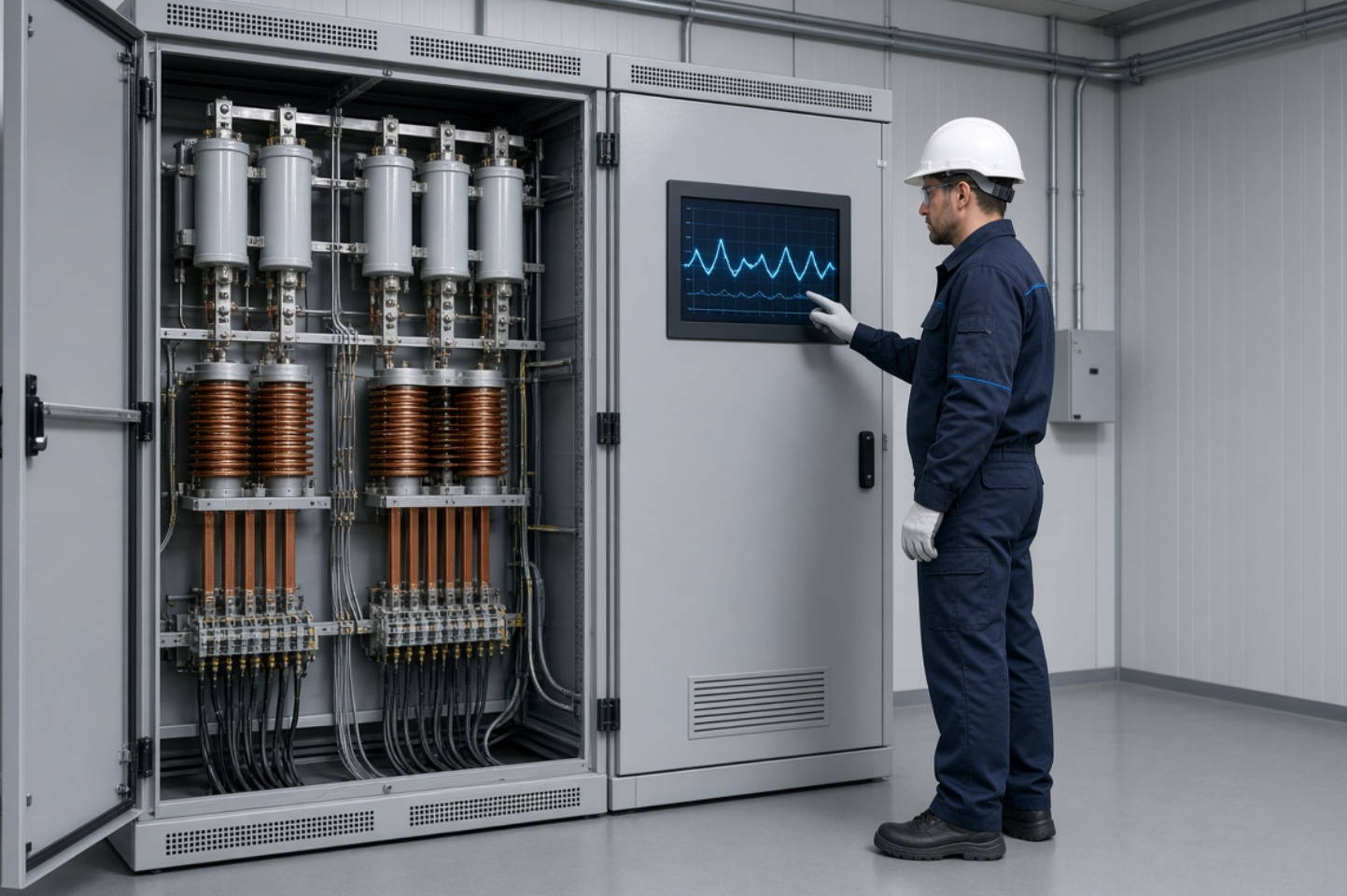
Start by connecting electrical disturbances with operating conditions. Record when equipment trips, which production lines are running, and whether problems coincide with motor starts, welding cycles, or capacitor switching.
Common symptoms provide useful clues, but they are not a diagnosis.
| Observed problem | Possible cause | What to investigate |
|---|---|---|
| Reactive energy charges | Low displacement power factor | Billing rules and reactive demand |
| Transformer or cable overheating | Harmonics, overload, or imbalance | Current spectrum and phase loading |
| Repeated capacitor failures | Resonance or excessive electrical stress | Harmonics, voltage, and reactor coordination |
| Drive or control-system trips | Voltage dips, transients, or other faults | Event waveforms and protection records |
| Neutral conductor overheating | Triplen harmonics or phase imbalance | Neutral current and load distribution |
The engineering priority is evidence. Replacing failed components without identifying their operating stress can turn maintenance into a repeating cycle.
A single reading rarely captures an industrial facility's electrical behavior. Monitor normal production, maximum demand, light-load periods, and major switching events. Extend the monitoring period when operating cycles vary significantly.
For repeatable measurements, specify a suitable power quality analyzer and clearly define its measurement method. IEC 61000-4-30:2025 addresses power quality measurement methods, with a corrigendum published in July 2026. Confirm the applicable edition when writing your specification.
Collect the following information:
- Supply voltage, frequency, and transformer ratings.
- Active power, reactive power, and apparent power.
- True power factor and displacement power factor.
- Voltage and current harmonic spectra.
- Voltage dips, swells, interruptions, and imbalance.
- Existing capacitor stages, reactors, and switching arrangements.
- Production schedules and planned load additions.
Measurements should cover the proposed installation point and, where relevant, the point of common coupling. These locations may reveal different conditions and require different acceptance criteria.
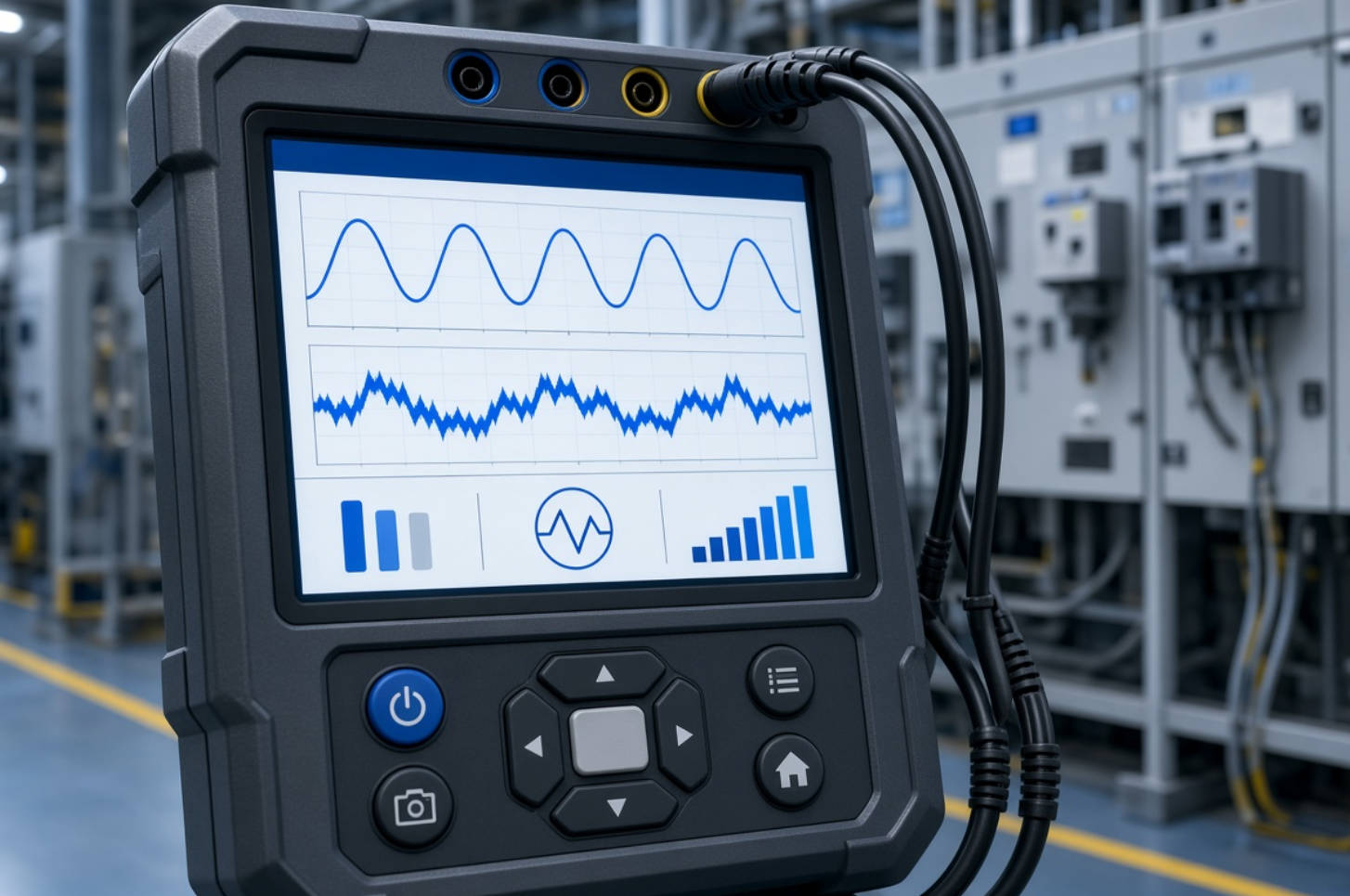
Displacement power factor concerns the phase relationship between fundamental-frequency voltage and current. Capacitors can compensate for the lagging reactive demand associated with many inductive loads.
True power factor also reflects waveform distortion. A facility can therefore have a good displacement power factor while its overall power factor remains lower because harmonic currents are present.
This distinction changes equipment selection. More capacitance is not automatically the answer to a low true power factor reading.
Similarly, distinguish current total harmonic distortion from total demand distortion. THDi uses the fundamental current as its denominator; TDD uses a defined maximum demand load current. At light load, THDi can rise even when harmonic current in amperes does not increase.
For harmonic compliance, avoid treating "less than 5% THDi" as a universal requirement. IEEE 519-2022 applies its steady-state distortion limits at the user point of common coupling, with current limits dependent on system conditions.
Choose the solution according to measured conditions, required response, and installation constraints.
| Solution | Main purpose | Suitable application | Key limitation |
|---|---|---|---|
| Automatic capacitor bank | Reactive power compensation | Relatively stable inductive loads | Requires harmonic and resonance assessment |
| Detuned capacitor bank | Compensation with resonance-risk management | Systems containing nonlinear loads | Not a substitute for comprehensive harmonic filtering |
| Tuned passive filter | Targeted harmonic reduction | Predictable harmonic spectrum | Sensitive to network and load changes |
| Active harmonic filter | Dynamic harmonic current compensation | Variable nonlinear loads | Requires correct current rating and sensing |
| Static var generator | Dynamic reactive compensation | Rapidly changing reactive demand | Harmonic capability depends on the model |
| Hybrid arrangement | Combined compensation and filtering | Mixed, changing industrial loads | Needs coordinated controls and capacity allocation |
These technologies are complementary, not interchangeable. Confirm each product's capabilities rather than assuming that every electronically controlled compensator performs all power quality functions.
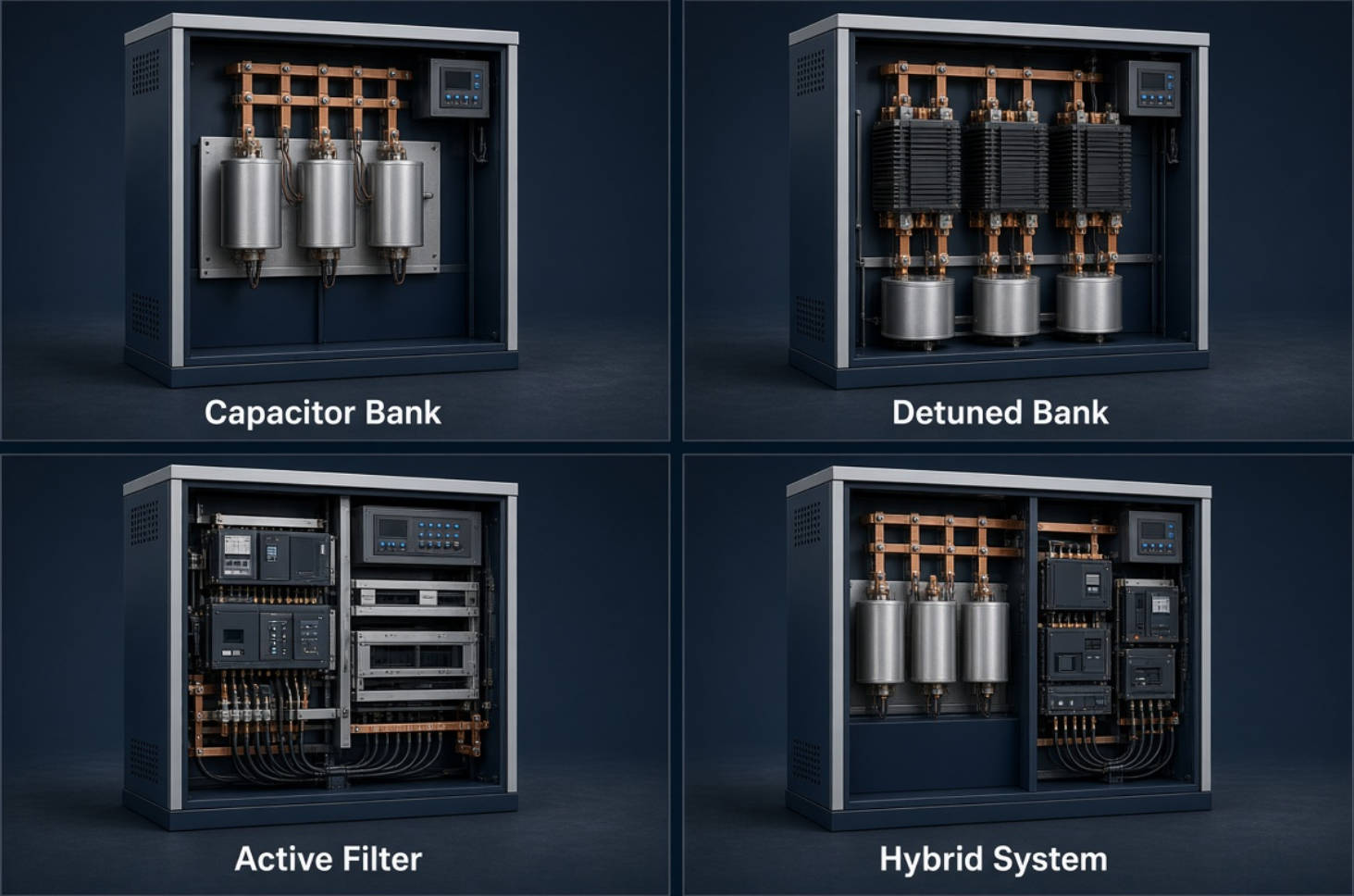
An automatic capacitor bank switches compensation stages as reactive demand changes. It can reduce reactive current and improve displacement power factor when correctly sized and controlled.
For facilities with relatively steady motor loads, this may be an economical starting point. However, selection must consider minimum load as well as peak demand.
Overcompensation can produce leading power factor during light-load operation. Appropriate stage sizes, controller settings, and switching arrangements help avoid this condition.
Specify discharge provisions, protection, ventilation, and switching devices suitable for capacitor duty. The equipment should fit the electrical system and operating environment—not merely the required kvar rating.
Capacitors interact with the inductance of the supply network. Under unfavorable conditions, that interaction can amplify harmonic currents or voltages.
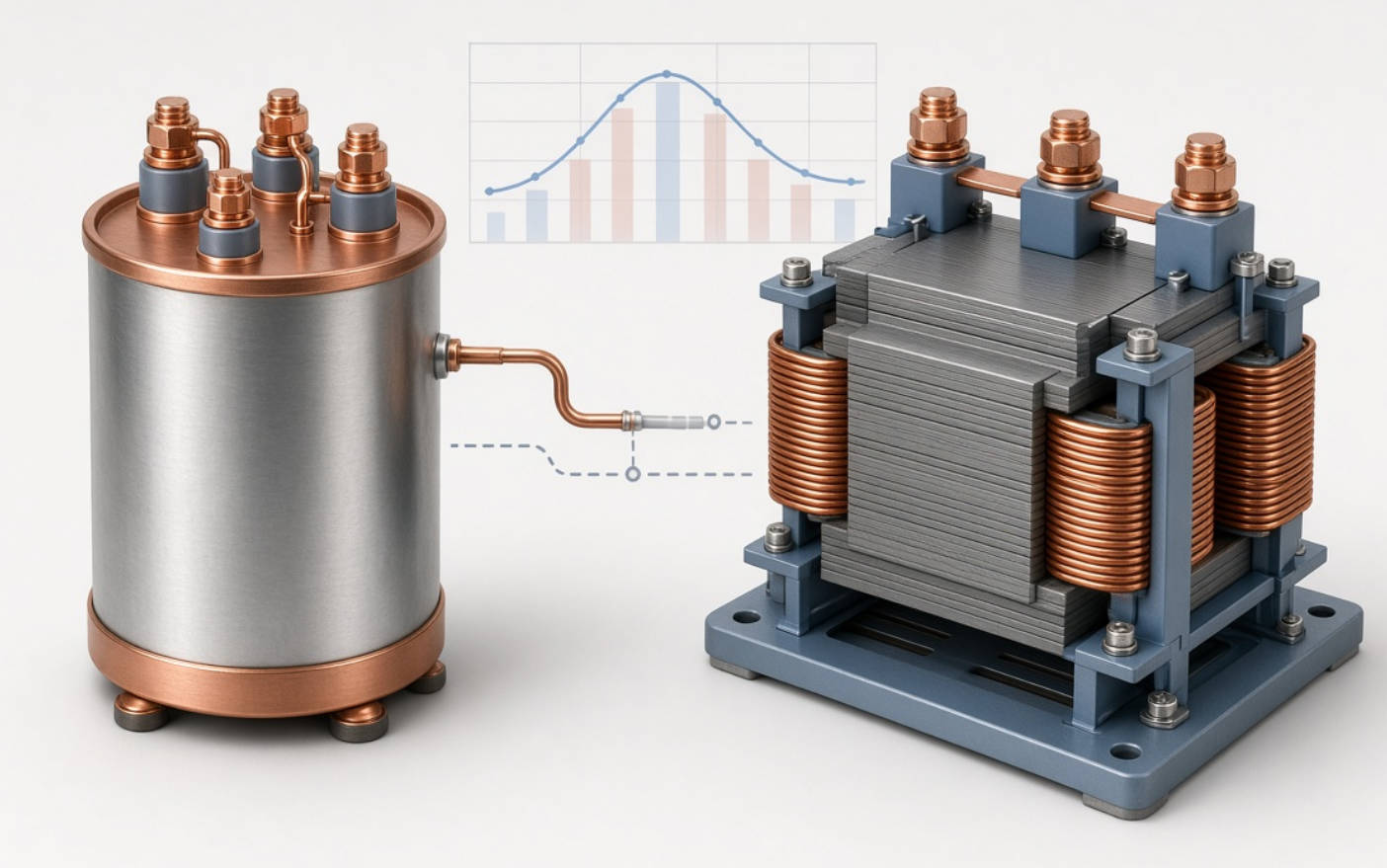
A detuned reactor is connected in series with a capacitor stage. The combination is normally selected so its resonant frequency lies below the lowest significant harmonic targeted by the design.
The essential point is coordination. Reactor selection changes the electrical conditions experienced by the capacitor, including its fundamental-frequency voltage.
Do not replace an existing capacitor with another unit based only on nominal kvar. Confirm capacitance, voltage rating, reactor characteristics, current capability, and thermal performance together.
A detuned bank primarily provides reactive compensation while managing resonance risk. It may absorb some harmonic current, but it should not be presented as a guaranteed solution to every harmonic compliance problem.
An active harmonic filter measures current and injects compensating current to reduce selected harmonic components. It is particularly relevant when nonlinear loads vary throughout production.
A static var generator primarily provides dynamic reactive compensation. Some models offer additional harmonic or imbalance functions, but these capabilities must be confirmed in the technical specification.
For mixed loads, a hybrid design can allocate stable reactive demand to capacitor stages and variable demand or harmonic compensation to electronic equipment.
Do not size an active filter from transformer kVA alone. Review harmonic current in amperes, operating diversity, compensation priorities, and expected expansion. If the same equipment performs several functions, verify how those functions share its available capacity.
For a predominantly sinusoidal load, an initial compensation estimate is:
Qc=P[tan(cos−1PF1)−tan(cos−1PF2)]
Here, P is active power in kW, PF1 is the initial displacement power factor, and PF2 is the target.
For an illustrative 500 kW load improving from 0.80 to 0.95, the estimated compensation is approximately 211 kvar.
This is a preliminary calculation, not a complete equipment specification. Actual selection must account for load variation, harmonic conditions, capacitor terminal voltage, and stage configuration.
The example is hypothetical and does not represent a measured DINGNUO customer project.
Industry labels help identify likely challenges, but measured load behavior should determine the final design.
In metallurgy, fluctuating process loads may require fast compensation and careful disturbance monitoring. Automotive facilities can combine welding equipment, drives, and automated production systems, creating different requirements across individual feeders.
Paper, textile, and building-material plants often operate multiple motor-driven processes. Where variable-frequency drives are present, reactive compensation and harmonic control should be evaluated separately.
Petrochemical and municipal installations may place additional emphasis on continuity of service, environmental conditions, and maintenance access.
Rather than copying another factory's equipment list, ask: Which loads create the disturbance, when does it occur, and where must performance improve?
A successful design must remain reliable after installation. Include the conditions that influence equipment performance and maintenance.
- Ambient temperature, altitude, dust, moisture, and enclosure requirements.
- Cooling clearances and access for inspection.
- Short-circuit withstand and protective-device coordination.
- Current transformer location, ratio, polarity, and connection.
- Capacitor discharge arrangements and safe isolation procedures.
- Compatibility with standby generators and changing network configurations.
- Space and electrical capacity for future expansion.
Installation and inspection should be performed by qualified personnel. Capacitors can retain stored energy after disconnection, so isolation alone does not establish that equipment is safe to touch.
Write acceptance criteria before comparing quotations. Otherwise, suppliers may promise different outcomes under different conditions.
A practical commissioning sequence is:
1. Verify wiring, protection, earthing, and current transformer connections.
2. Confirm controller settings and compensation-stage operation.
3. Test representative production and light-load conditions.
4. Measure power factor, harmonic current, and voltage distortion.
5. Inspect temperatures and check for abnormal noise or repeated switching.
6. Record baseline and post-installation results using comparable conditions.
Acceptance should specify the measurement location, load conditions, applicable limits, and reporting method. Equipment nameplate capacity alone does not prove system-level performance.
Assess purchase cost alongside maintenance, cooling, replacement components, downtime exposure, and expansion flexibility.
Power factor correction may reduce reactive charges where the electricity tariff includes them. It can also release upstream capacity and reduce some distribution losses.
However, avoid assuming a fixed percentage reduction in active energy consumption. Financial benefits depend on the tariff, load profile, and existing network losses.
For a meaningful proposal from DINGNUO ELECTRIC CO., Ltd., provide your single-line diagram, transformer details, electricity bills, load schedule, and available power quality measurements. Request a recommendation that explains capacitor–reactor coordination, expected performance, installation requirements, and the verification plan.
Measure the electrical system under representative operating conditions. Combine analyzer data with production logs, equipment alarms, and electricity bills. This helps distinguish reactive demand, harmonics, voltage events, and imbalance before selecting equipment.
A conventional capacitor bank is not a general-purpose harmonic filter. Its main function is reactive power compensation. In a harmonic-rich system, capacitors can interact with network inductance, so resonance must be assessed before installation.
Consider detuned reactors when nonlinear loads and measured harmonic conditions create a resonance or capacitor-overloading risk. Select the reactor and capacitor as a coordinated combination. A generic reactor percentage should not replace a network assessment.
No. An active filter is useful for variable harmonic loads, but it may be unnecessary when the principal issue is stable reactive demand. Choose equipment according to the problem, required performance, and lifecycle cost.
Not necessarily. The target should reflect utility requirements, operating variation, and the risk of leading power factor. A suitable controlled target is generally more useful than pursuing unity without considering light-load behavior.
Request the proposed measurement point, operating assumptions, equipment ratings, and acceptance procedure. Distinguish laboratory product capability from installed-system performance. Require comparable before-and-after measurements rather than relying on an unsupported percentage improvement.
1. Original article: YT Electric, "[How to Select the Solution for Power Quality Issues]," January 14, 2025. Used as the requested topic reference. Retrieval exposed only limited article content, so a comprehensive line-by-line assessment was not possible. [ytelect]
2. Company information: DINGNUO ELECTRIC CO., Ltd., company description supplied in this request. Supports the statements about capacitor and reactor manufacturing, reactive power compensation, harmonic control, and industry applications. No public company URL or verified customer comments were supplied.
3. Harmonic assessment: IEEE Standards Association, "[IEEE 519-2022: IEEE Standard for Harmonic Control in Electric Power Systems]." Supports the distinction between installation-level harmonic assessment and limits applied at the user point of common coupling. [standards.ieee]
4. Measurement methods: International Electrotechnical Commission, "[IEC 61000-4-30:2025 — Power Quality Measurement Methods]." Defines measurement and interpretation methods for voltage, current, harmonics, imbalance, and other power quality parameters. [webstore.iec]
5. Measurement-standard update: International Electrotechnical Commission, "[IEC 61000-4-30:2025/COR1:2026]," published July 17, 2026. Supports the note about checking the applicable edition and corrigendum. [webstore.iec]
6. Capacitor–reactor coordination: Schneider Electric, "[Power Factor Correction]," technical catalogue, 2020. Supports detuning principles, capacitor current stress, harmonic assessment, and coordinated capacitor/reactor selection. [www1.lk]
7. Detuned-bank operation: Schneider Electric, "[Power Factor Correction — Schneider Electric Digest Plus]_0000041932.xml/$/LowVoltageStandardAutomaticCapacitorBanksCPT_0000085054)." Describes staged automatic compensation and tuning below the dominant harmonic to avoid resonance and amplification. [productinfo.se]_0000041932.xml/$/LowVoltageStandardAutomaticCapacitorBanksCPT_0000085054)
8. Dynamic compensation principles: CoEpower, "[How Active Harmonic Filters Eliminate Harmonics While Static Var Generators Improve Power Factor]," July 23, 2026. Used for the basic distinction between harmonic-current compensation and dynamic reactive compensation—not as evidence of guaranteed DINGNUO product performance. [coepowers]


